

When a friend with reactive skin asks how I get that fresh, lit-from-within clean girl look without her cheeks going blotchy by noon, I give her the short version first, because that is the part she can use tomorrow morning. Clean girl makeup for sensitive skin comes down to prepping calm skin, swapping heavy foundation for a light tint, leaning on cream textures, keeping fragrance out of it, and taking everything off gently at night. It is not a dramatic answer, but it has held up through years of my own flare-ups.
I write for women across the United States who want beauty that feels kind rather than punishing. I love a good product as much as anyone, but with sensitive skin the real win is comfort: a face that still feels like skin by 3 p.m., with no tightness, no stinging, and no urge to scrub it all off the moment I get home.
My own road to this look was not tidy. For a long time I piled on coverage to hide irritation that the coverage was quietly feeding. The fix turned out to be fewer products chosen more carefully, plus a habit I now treat as non-negotiable: patch-testing anything new on my jaw before it ever touches my whole face. This guide walks through that minimal routine step by step, the textures I avoid, and the version I reach for when I have five minutes and one eye open.
| Question | Short answer |
|---|---|
| Who is this for? | Women with reactive or easily irritated skin who want a fresh, low-coverage look that stays comfortable all day. |
| How long does it take? | Around five to ten minutes once your small kit is set; the quick version takes under five. |
| What does it cost? | You can build it from a handful of fragrance-aware products: a tint, a cream blush, and a tinted balm cover most of it. |
| Will it irritate my skin? | Less than heavy makeup tends to, especially if you patch-test new items and remove everything gently at night. |
| Is it right for everyone? | If your skin reacts often or you have a diagnosed condition, check with a dermatologist before changing products. |
Letting bare skin lead
Key takeaway: Clean girl makeup for sensitive skin starts before any product goes on. The calmer your bare skin, the less the makeup has to do, and the less it can go wrong.
The honest truth is that this look is mostly skin, not makeup. When my face is calm and hydrated, three tiny products read as glow. When my face is irritated and tight, no amount of tint hides it, and the makeup just sits on top looking patchy and feeling worse. So I treat my skincare as the real foundation and the makeup as a light finish layered over it.
That reframe took the pressure off in a way I did not expect. I stopped asking makeup to fix redness or texture and started asking it only to add a little warmth and life. Heavy coverage always promised to hide my reactive patches, but it tended to cling to them and draw the eye straight there by mid-afternoon.
If your skin is going through a rough stretch, give it a few gentle days before you layer much on. A flaring barrier is not the moment for a new product or a fuller face. Some mornings the kindest clean girl look is good moisturizer, balm on the lips, and nothing else, and that counts.
Prepping skin so makeup sits well
Prep is where sensitive skin makeup is won or lost. I keep it simple: a gentle, fragrance-free cleanse, a hydrating layer while the skin is still damp, and a few quiet minutes before anything pigmented goes on. Rushing this is how I used to end up with tint gripping dry patches.
I cleanse with something creamy and unscented, then pat on a plain hydrating serum or a basic moisturizer while my face is still a little wet, which helps it sink in instead of pilling later. If I am going outside, a fragrance-free mineral sunscreen goes on next and doubles as a smoothing base. Zinc-based formulas tend to sit kindly on my reactive skin.
Then I wait. Giving each layer a minute or two to settle is the least glamorous tip I have and the one that changed my results most. When I rush, the tint slides and separates. When I let the base set, everything after it glides on instead of gripping.
One more prep habit: clean hands and clean tools. Sensitive skin reacts to more than ingredients, and a grubby brush or sponge can trigger a breakout that looks exactly like a product reaction. I wash my blush brush weekly and let my fingers do a lot of the work, since warm fingertips press cream products in more gently than anything else.

A skin tint, not a full foundation
The swap that matters most: Trade heavy foundation for a tinted moisturizer or skin tint. It evens tone, lets your skin breathe, and gives the lit-from-within finish the clean girl look is built on.
This is the heart of the whole approach. Instead of full-coverage foundation, I reach for a light tinted moisturizer or skin tint. It blurs redness just enough, lets real skin show through, and never looks like a mask when it inevitably wears down through the day. For reactive skin, less product sitting on the barrier is almost always the gentler choice.
I apply it with my fingers, pressing rather than rubbing, and I do not try to cover everything. The goal is sheer and even, not flawless. Where I want a touch more, around the nose or over a blemish, I tap on a second thin layer in that one spot instead of coating my whole face.
If a single spot really needs hiding, I use a tiny amount of a gentle concealer just there, patted with a fingertip and softened at the edges. One small dot is plenty. The clean girl finish falls apart the moment the base looks heavy, so I would rather see a little of my real skin than build a wall of product that my sensitive face will resent by lunchtime.
Cream blush, my favorite step
If I could keep only one makeup product, it would be cream blush. It is the step that takes the look from washed-out to alive, and cream textures are far kinder to sensitive skin than powders, which can cling to dry patches and feel chalky. A dab of cream melts in and looks like a flush from a brisk walk.
I dot a little on the apples of my cheeks and blend up toward my temples with my fingers. Warm hands make cream blush melt into the skin so the edges disappear. I build slowly, because it is far easier to add a second tap than to tone down a stripe that went on too strong.
Color matters less than you might think; soft rosy or peachy tones flatter almost everyone and read as natural. Sometimes I press the same blush onto my lips so the whole face looks pulled from one quiet palette. That little trick is the clean girl look in a nutshell: a few warm tones, lightly placed, doing double duty.

A brushed-up brow
Brows are where this look quietly comes together, and they need almost nothing. I brush mine straight up and a little out with a clean spoolie, which opens the eyes and gives that fresh, slightly undone look without a scrap of color. On most days that is genuinely all I do.
If I want them to hold, I use a clear or tinted brow gel, choosing a fragrance-free formula since the area sits close to my eyes and my skin there is thin and reactive. A few light strokes set them in place. I skip hard pencil lines entirely, because sharp, drawn-on brows fight the soft feeling of the rest of the face.
For anyone with sparse spots, a couple of feathery strokes with a fine pencil in the direction of the hair fill gaps without looking drawn. The aim is groomed, not constructed. Brushed-up brows are the cheapest, fastest upgrade I know, and they ask nothing of sensitive skin.
Tinted balm and a soft glow
For lips I almost always reach for a tinted balm rather than a matte lipstick. It gives a wash of color, keeps my lips comfortable, and matches the easy feeling of everything else. Matte formulas can be drying, and a flaking lip undoes the whole fresh look, so balm wins for me nearly every day.
I choose tinted balms without added fragrance or strong flavor where I can, since my lips sting easily and a tingly, minty balm is usually a sign of an irritant I will regret. A soft berry, or my own lip color just a little richer, keeps things natural.
For glow, I keep it gentle. A tiny bit of cream highlighter, or even a dab of balm, on the tops of my cheekbones, the bridge of my nose, and my cupid's bow catches the light and looks like healthy skin rather than makeup. I press it on with a fingertip in the smallest amount, because cream glow looks like dewy skin while heavy shimmer can settle into texture and emphasize the very things I would rather soften.
Setting lightly and a tiny kit
Keep it small: A reliable clean girl kit for sensitive skin is just a few fragrance-aware pieces, set with the lightest touch so the skin still looks like skin.
Most days I do not set anything at all, because the dewy finish is the point. If I am oily in a few places or it is hot out, I press a small amount of finely milled, fragrance-free powder just on my T-zone with a fluffy brush, leaving my cheeks glowy. Setting the whole face flat would erase the very glow I built.
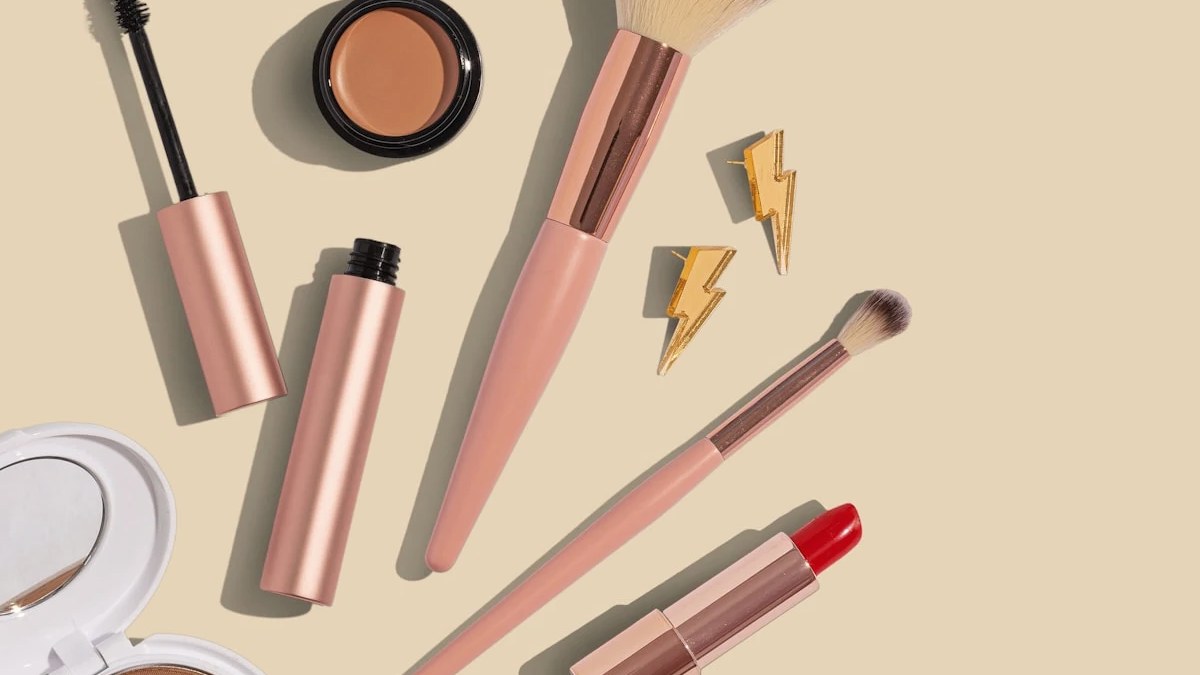
The kit itself stays tiny on purpose. A gentle cleanser, a plain moisturizer, a mineral sunscreen, a skin tint, one cream blush, a brow gel, a tinted balm, and maybe a cream highlight. That is the entire thing. A small kit is easier on sensitive skin because every product is one you have tested and trust, with nothing random thrown in on a whim.
When I do add something new, it earns its place slowly. I patch-test it, use it on its own for a week, and only then fold it into the routine. Sensitive skin does much better with a short, familiar lineup than with a drawer full of half-tried products that make it impossible to tell what caused a reaction.
Textures and ingredients I skip
Sensitive skin tends to react to formulas and habits, not just single ingredients, so I think in terms of what to avoid as much as what to buy. Added fragrance is the first thing I screen out, since it is one of the most common triggers in makeup and brings no benefit to my skin. Unscented or fragrance-free on the label is my default.
I am also cautious with heavy, long-wear formulas built to be transfer-proof, because the same ingredients that make makeup last all day can be hard to remove and rough on a delicate barrier. Powdery, mattifying products are another thing I use sparingly, since they can settle into dry areas and feel tight. Cream and liquid textures almost always suit reactive skin better.
The habit that protects me most is patch-testing. Before any new product touches my whole face, I wear it on my jaw or inner forearm for a couple of days and watch for redness, itching, or bumps. It feels slow, but it has saved me from many miserable weeks. One new thing at a time, so if my skin protests I know exactly what to blame.
I want to be clear that none of this is medical advice. If your skin reacts often, stays inflamed, or flares no matter how gentle you are, a dermatologist can help in ways a new tint cannot. Persistent irritation deserves a professional eye, and makeup choices are a comfort layer on top of real skin health, not a substitute for it.
The under-five-minute face
On rushed mornings I have a version of this that takes under five minutes, and it still looks intentional. After my usual moisturizer and sunscreen, I press on tint where I need it, dab cream blush on my cheeks and lips, brush my brows up, and add balm. Done.
The reason it works in a hurry is that every product goes on with fingers and forgives imperfection. There is no blending out a powder, no precise line to draw, no setting step to fuss over. Cream textures and a light hand mean a few quick taps look soft rather than half-finished.
I keep this micro-kit together in one small pouch so I am not hunting for pieces when I am already late. Tint, blush, balm, spoolie. Knowing the quick version exists is what keeps the habit alive on the days I have no time, because a five-minute face I will actually do beats a ten-step look I skip. The smallest version that still feels like me is the one worth keeping.

Why this matters more than it seems
The heart of it: Clean girl makeup for sensitive skin is not about a bigger makeup bag. It is about a calmer one, and letting your skin be the main character.
How we do makeup quietly shapes how we feel about the face underneath it. For years I used heavy coverage to hide irritation that the heavy coverage was partly causing, a small daily message that my real skin was a problem to conceal. Shifting to light, comfortable makeup was as much an emotional change as a cosmetic one. It let me stop fighting my face.
It matters practically too, because for sensitive skin, makeup is another set of products sitting on the barrier for hours. Fragrance, harsh formulas, and aggressive removal all add up. Choosing gentle, fragrance-aware makeup and taking it off kindly means your makeup works with your skin instead of slowly undermining the repair you are doing everywhere else.
There is a quiet psychology in lighter makeup that goes beyond the skin itself. When I stopped using heavy coverage to hide my face, I slowly stopped seeing my face as something that needed hiding, and that shift in self-perception mattered as much as any change in my complexion. Makeup that enhances rather than conceals sends a daily message that the skin underneath is acceptable as it is, which is its own kind of care.
What I learned the hard way
My mistake was chasing flawless, that airbrushed evenness that erases every pore and mark. The more I caked on to achieve it, the more my skin reacted, and the more I needed to cover the next day. It was a loop I built myself, and I genuinely thought more product was the way out of it.
Lightening up felt risky, like showing too much, but it broke the cycle almost immediately. My skin calmed, and strangely I got more compliments wearing less, because cared-for skin reads as glow in a way coverage never quite fakes. The lesson was that flawless was the wrong goal. Healthy was the one that actually looked good, and felt good too.
I also learned that for sensitive skin, the makeup itself is only half the equation, and removal is the other, often-neglected half. Aggressive scrubbing and harsh removers undo the gentleness of everything else, while a soft cleanse and patient hands let the skin end the day calm. How you take it off, I came to believe, matters just as much as what you put on, and few people talk about that.
How to know it's working
You will know a gentler makeup approach is working from how your skin looks both with makeup on and, crucially, with it off.
- Your bare skin is calmer over time, not worse, because the makeup is no longer aggravating it.
- Makeup applies more smoothly, since the surface underneath is hydrated and comfortable.
- You reach for less coverage because there is less to cover, a quiet upward spiral.
- Removal feels gentle and quick, leaving skin soft rather than stripped or stinging.
- You feel like yourself with makeup on, enhanced rather than hidden behind it.
If your skin reacts after makeup days, suspect fragrance or harsh removal first. Switching to fragrance-aware products and a soft cleanse usually solves more than changing the makeup itself.
When this won't fit your life
Some days and some occasions call for fuller makeup, and there is nothing wrong with that. Soft beauty is a default, not a rule, and choosing more coverage for a wedding or a hard day is your right. The goal is that heavy makeup is a choice you make, not a mask you feel you cannot leave the house without.
And if breakouts or irritation persist no matter how gentle your makeup, the cause may be a skin condition rather than the products. A dermatologist can help where a switch of foundation cannot. Makeup choices support comfortable skin, but they do not treat what needs real medical care underneath.
Hold the whole approach as permission rather than another rule, because soft beauty should never become its own pressure. Some days you will want more makeup, some days none, and both are completely fine. The goal was never to mandate a minimal face. It was to free you from feeling you must hide behind a full one, so that makeup becomes a choice you enjoy rather than armor you depend on.
Helpful sources and next reads
Reliable external sources
More from Sabrina Saturno
You may also love


FAQ
What exactly is "clean girl" makeup?
It is a fresh, minimal look that lets healthy skin show through, built on a few cream products, groomed brows, and a glossy lip instead of full coverage.
Is clean girl makeup actually good for sensitive skin?
Generally yes, because it uses fewer products and lighter layers. The look matters less than choosing fragrance-aware formulas and removing everything gently at night.
Should I use foundation or a skin tint?
For sensitive skin I almost always prefer a skin tint or tinted moisturizer. It is lighter on the barrier and gives a more natural, lived-in finish than full foundation.
Why cream blush instead of powder?
Cream melts into skin and looks like a real flush, while powder can cling to dry patches and feel chalky on reactive skin. Warm fingers blend it best.
How do I keep makeup from irritating my skin?
Patch-test new items, screen out added fragrance, lean on cream textures, and take everything off with a gentle, fragrance-free cleanser each night.
What does patch-testing actually involve?
Wear one new product on your jaw or inner forearm for a couple of days and watch for redness, itching, or bumps before letting it near your whole face.
Is fragrance really a problem in makeup?
It is one of the most common triggers for sensitive skin and adds nothing your face needs, so fragrance-free or unscented is a safe default to look for.
How do I remove this look gently?
Use a soft, fragrance-free cleanser and patient hands. Skip vigorous scrubbing and harsh wipes, which undo the gentleness of everything you did during the day.
Can I really do this look in under five minutes?
Yes. Tint where needed, cream blush on cheeks and lips, brushed-up brows, and tinted balm is a complete, finished face that takes almost no time.
Do I need setting powder?
Usually not, since the dewy finish is the point. A little fragrance-free powder pressed onto the T-zone is enough if you tend to get oily there.
What if my skin reacts even to gentle makeup?
Stop the newest product, give your skin a few calm days, and see a dermatologist if irritation persists. It may be a skin condition rather than the makeup.
How small can my makeup kit really be?
Very small. A tint, one cream blush, a brow gel, and a tinted balm cover the whole look, alongside your gentle cleanser, moisturizer, and sunscreen.
Will wearing less makeup actually look better?
Often, yes. Cared-for skin reads as glow in a way coverage cannot fake, and many people find they get more compliments wearing less, not more.
Conclusion
Clean girl makeup for sensitive skin was never about a trend or a fuller makeup bag for me. It is about letting calm, cared-for skin be the main event and asking a few gentle products to add warmth rather than hide anything. Prep well, choose fragrance-aware creams, patch-test what is new, and take it all off kindly at night.
Start with the tint, the blush, and the balm, and let the rest grow only if you want it to. Some days you will do the full five-minute version, some days just balm and sunscreen, and both are a complete, pretty face. The look that lasts is the one that leaves your skin feeling like skin.