
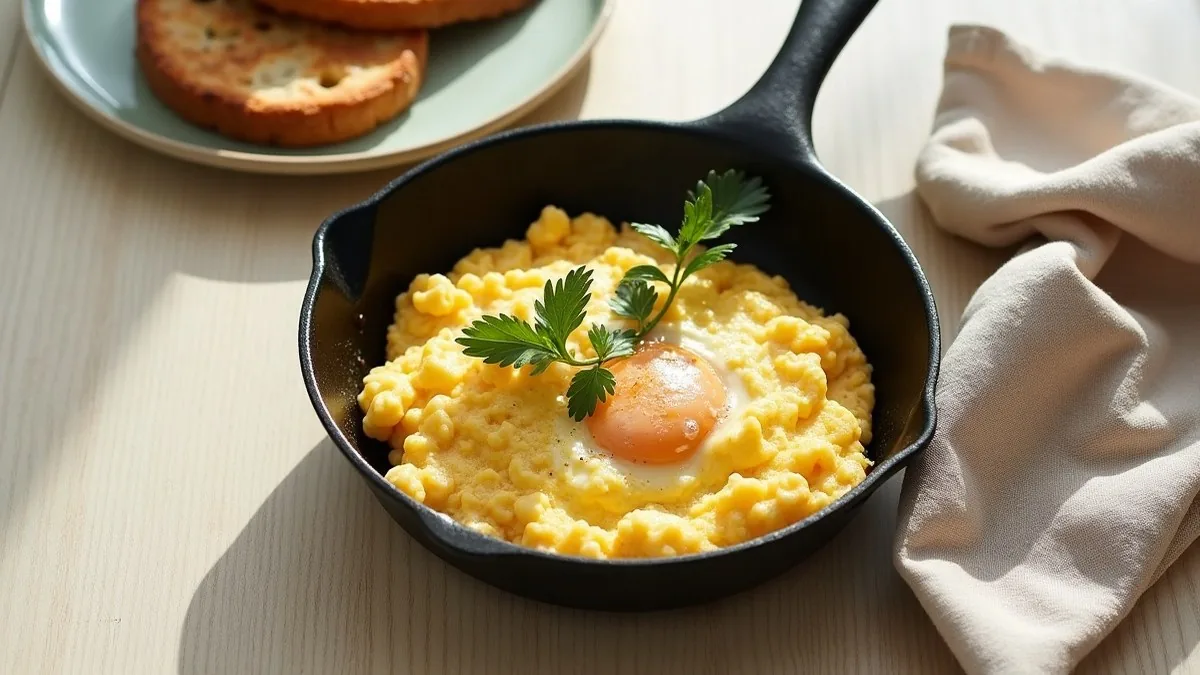
Two scrambled eggs land at roughly 180 to 220 calories once you count the fat you cook them in, with about 12 to 13 grams of protein, 10 to 16 grams of fat, and almost no carbohydrate. That is the short, honest answer, and it is the one I reach for most mornings. The wider range is not me hedging. It is the butter, the oil, the splash of cream, the cheese you may or may not add. The eggs themselves are steady. Everything around them is where the number moves.
I started paying attention to this because I was tired of guessing. For years I treated eggs as either a health food or a guilty thing depending on whatever headline I had read that week. One month they were a perfect protein, the next they were going to clog my arteries, and I let the noise decide my breakfast for me. Then I actually looked at the numbers, cooked the same two eggs a dozen different ways, and watched how the plate changed. This piece is what I wish someone had handed me back then: the real facts, the cooking variables, and how I build a breakfast that holds me until lunch.
I am not a dietitian, and I will say that more than once, because eggs sit near a few real medical questions like cholesterol. What I can give you is a clear, specific, unfussy account of what two scrambled eggs actually deliver, where the calorie swings come from, and the small choices that make them taste better and keep you fuller. I will lean on USDA and Harvard figures where it matters so you are not taking my word for the numbers. Let us get into the parts that matter on a normal Tuesday.
| What | Two plain eggs | How it changes |
|---|---|---|
| Calories | About 180 | Add 90 to 120 for a tablespoon of butter or oil |
| Protein | 12 to 13g | Cheese or milk adds a couple grams |
| Total fat | About 10g | Climbs to 16 to 22g with added fat |
| Carbohydrate | Under 1g | A splash of milk adds a gram or so |
| Choline | About 290mg | Near half a day's needs, mostly in the yolks |
| Cholesterol | About 370mg | All in the yolks; whites have none |
The actual numbers for two scrambled eggs
Baseline: Two plain large eggs are about 180 calories and 12 to 13g protein; the fat you cook in moves everything else.
Let me give you the plain-egg baseline first, because that is the part that does not lie to you. Two large eggs, scrambled with nothing added, come in around 140 to 160 calories on their own. The moment a pan and fat enter the picture, you are realistically at 180 to 220. According to the USDA, a large egg is roughly 72 calories and 6.3 grams of protein, so two land near 144 calories and just under 13 grams of protein before you cook anything. You can confirm the raw figures yourself at USDA FoodData Central.
The protein is the headline I care about. Twelve to thirteen grams from two eggs is a genuinely useful amount for a breakfast, and it is complete protein, meaning it carries all the amino acids your body cannot make on its own. That is rare for something this cheap and this fast. Carbohydrate is essentially zero, which is why eggs sit so quietly in your stomach and do not spike anything. The fat is around 10 grams plain, mostly in the yolks, and that is before any butter joins the party.
One detail worth flagging: egg sizes are not standard. The figures here assume large eggs, which is what most US cartons hold. If you buy extra-large or jumbo, nudge every number up a little, since a jumbo egg can carry a gram or two more protein and a handful more calories than a large one. It is a small thing, but it is part of why two people can scramble two eggs and get genuinely different totals. When I quote numbers, I am always picturing the standard large egg you find in the dairy aisle.
How the cooking fat changes everything
The big variable: A tablespoon of butter or oil adds roughly 100 calories, which is why scrambled egg numbers swing so widely online.
Here is the thing nobody tells you when they post a tidy calorie figure: the eggs barely change, but the fat you scramble them in does all the heavy lifting. A tablespoon of butter is about 100 calories and 11 grams of fat. A tablespoon of olive oil is roughly 120. So two eggs cooked in a generous pat of butter can quietly become a 280-calorie plate, and that is fine, but you should know it is the butter talking, not the eggs.
This is exactly why you see scrambled egg nutrition listed as anything from 140 to 280 calories depending on the source. They are all sort of right. They just cooked them differently. I use a small nonstick pan and either a teaspoon of butter or a light spray, which keeps me closer to the 180 to 200 range. When I want them richer and more restaurant-soft, I use more butter on purpose and simply count it. The trick is not avoiding fat. It is knowing which number you are actually eating.
If you add a splash of milk or cream for fluffier eggs, that adds a small amount too, maybe 10 to 30 calories and a gram of protein, nothing dramatic. Cheese is the other quiet multiplier: a sprinkle of cheddar can add 50 to 110 calories fast.
None of this means you should fear the fat. Fat is what makes scrambled eggs taste like something you want to eat again tomorrow, and a little butter genuinely improves the texture. My only rule is honesty. If I am tracking my food for any reason, I count the butter as its own line, because pretending the eggs did it when the butter did it is how people end up confused about their own meals. Know your number, then choose it on purpose. That is the entire skill here, and it takes about a week to internalize.

Why the protein matters more than the calories
The real value: Complete protein at breakfast is what keeps the mid-morning crash away, and two eggs deliver a meaningful dose.
If I had to defend two scrambled eggs with one sentence, it would be about the protein, not the calorie count. Twelve to thirteen grams first thing in the morning changes the shape of the next four hours. Protein is slow to digest and steadying on blood sugar, which is why a protein-anchored breakfast tends to hold you until lunch in a way that toast or cereal simply does not.
For a while I genuinely thought my eleven o'clock snacking was a willpower problem. It was a breakfast problem. The pastry-and-coffee mornings left me hungry and shaky by mid-morning, and the egg mornings just did not. Same person, different first meal. That was the whole difference. I wrote more about building meals around this idea in my piece on eating kind, not strict, because the principle goes way beyond eggs.
The mechanism is not complicated. Protein blunts the rise and fall of blood sugar that fast carbohydrates set off, so instead of a spike and a crash, you get a gentler curve that does not leave you grasping for a snack an hour later. You do not need to track any of this to feel it. You will notice it in the simple fact of arriving at lunch hungry but not desperate, which, when you have spent years white-knuckling through mid-morning, feels close to a small revelation.
Worth knowing: the protein is split between the white and the yolk, so eating whole eggs gives you the full dose. Egg-white-only scrambles trade away a few grams of protein along with most of the micronutrients. For most people, the whole egg is the better deal.
There is also a satiety angle that the calorie label never captures. Protein is the most filling of the three macronutrients, gram for gram, and breakfast is the meal where that fullness pays off most, because it sets the tone for how you eat the rest of the day. A breakfast that actually fills you tends to quiet the snacking and the second-guessing that a sugary start sets in motion. Two eggs are a small lever, but they pull on the whole day, which is why I keep coming back to them even on mornings I am tempted by something sweeter and faster.
The micronutrients hiding in the yolks
Underrated: Choline, vitamin D, B12, and selenium all live mostly in the yolk, which makes whole eggs nutritionally richer than whites alone.
This is the part that surprised me most. Two eggs are not just protein and fat, they are quietly one of the better micronutrient sources in a normal kitchen. The standout is choline, a nutrient most people have never heard of and most diets fall short on. Two eggs deliver roughly 290 milligrams, which covers a big chunk of the daily target, and it matters for brain and liver function. Eggs are one of the richest everyday sources there is.
Two eggs also bring a useful hit of vitamin D, which is genuinely hard to get from food, plus vitamin B12, selenium, riboflavin, and a little vitamin A. The Harvard Nutrition Source has a balanced rundown of eggs if you want to read further. The thread running through all of it is the yolk. Almost every interesting nutrient in an egg lives in the yolk, which is the part diet culture spent years telling us to throw away. I eat the whole egg, every time, and I think most people should.
Eggs also carry lutein and zeaxanthin, two antioxidants tied to eye health, and they are in a form the body absorbs well because of the fat alongside them. None of this makes two eggs a miracle food, and I want to be careful not to oversell it. But it does mean that a plate most people think of as basic is quietly doing more than the protein number alone suggests. For the price of a couple of eggs and five minutes, that is a lot of nutrition density, and it is the kind of everyday value that does not make headlines but adds up over years of breakfasts.
The cholesterol question, answered honestly
Honest note: Two eggs hold about 370mg of dietary cholesterol, but for most healthy people that affects blood cholesterol far less than once feared.
I cannot write about scrambled eggs without addressing cholesterol, because it is the first thing people raise. Two eggs contain about 370 milligrams of dietary cholesterol, all of it in the yolks. For decades that number scared everyone off. The current understanding is more relaxed: for most healthy people, dietary cholesterol from eggs has a smaller effect on blood cholesterol than the saturated fat and overall pattern of the diet does. Eggs in moderation fit comfortably into a healthy eating pattern for most adults.
That said, I am not your doctor, and most is not everyone. If you have high cholesterol, heart disease, diabetes, or a family history that worries you, this is a real conversation to have with your own doctor or a registered dietitian, not something to settle from a breakfast article. Some people are more sensitive to dietary cholesterol than others, and that is worth knowing about yourself. I am giving you the general picture, not a personal clearance.
What helped me make peace with eggs was zooming out. A single food rarely makes or breaks anyone's health, and obsessing over one number on one plate usually costs more peace than it buys benefit. The eggs are not the whole diet. They sit inside everything else you eat, and that wider pattern is what actually matters most. So I eat them, I keep an eye on the rest of my week, and I let my doctor track the bloodwork. That division of labor has served me better than any headline ever did, and it freed me to enjoy breakfast again.

How I actually scramble them well
Method: Low heat, gentle stirring, and pulling the pan early gives soft, custardy eggs instead of rubbery ones.
Numbers aside, eggs you do not enjoy are eggs you will not repeat, so technique matters. My method is low and slow. I beat two eggs with a pinch of salt, melt a small amount of butter in a cold-to-medium pan, and pour them in before the pan gets hot. Then I stir gently and almost constantly with a spatula, pushing the eggs into soft folds rather than letting them set flat.
The single biggest mistake is heat that is too high. Hot, fast eggs turn rubbery and weep water onto the plate. The fix is patience: keep the heat gentle and pull the pan off while the eggs still look slightly underdone, because they keep cooking from residual heat for another few seconds. Salting at the start, not the end, also helps them stay tender. I learned all of this by ruining a lot of breakfasts first.
If you want them creamier without much added fat, a small splash of milk works, though it does loosen the texture. Cooking on a cold morning with a slow pan and good coffee nearby has become one of my favorite small rituals, the same way a quiet morning tea is, which I wrote about in my calm morning tea piece.
A couple more small things I have learned. Take the eggs off the heat a touch early even when you are in a hurry, because rushing the last twenty seconds is where good eggs go rubbery. Use a soft silicone spatula so you can fold rather than chop them, which keeps the curds large and tender. And season at the table with a little extra salt or pepper if you like, but go easy in the pan, because eggs do not need much to taste like themselves. None of this changes the nutrition, but it is the difference between eggs you tolerate and eggs you genuinely look forward to.
And the ones you look forward to are the ones you keep eating, which is the only way nutrition facts turn into actual habits.
Pairing two eggs into a real breakfast
Balance: Add fiber and a little carbohydrate, and two eggs become a complete, genuinely filling breakfast rather than a snack.
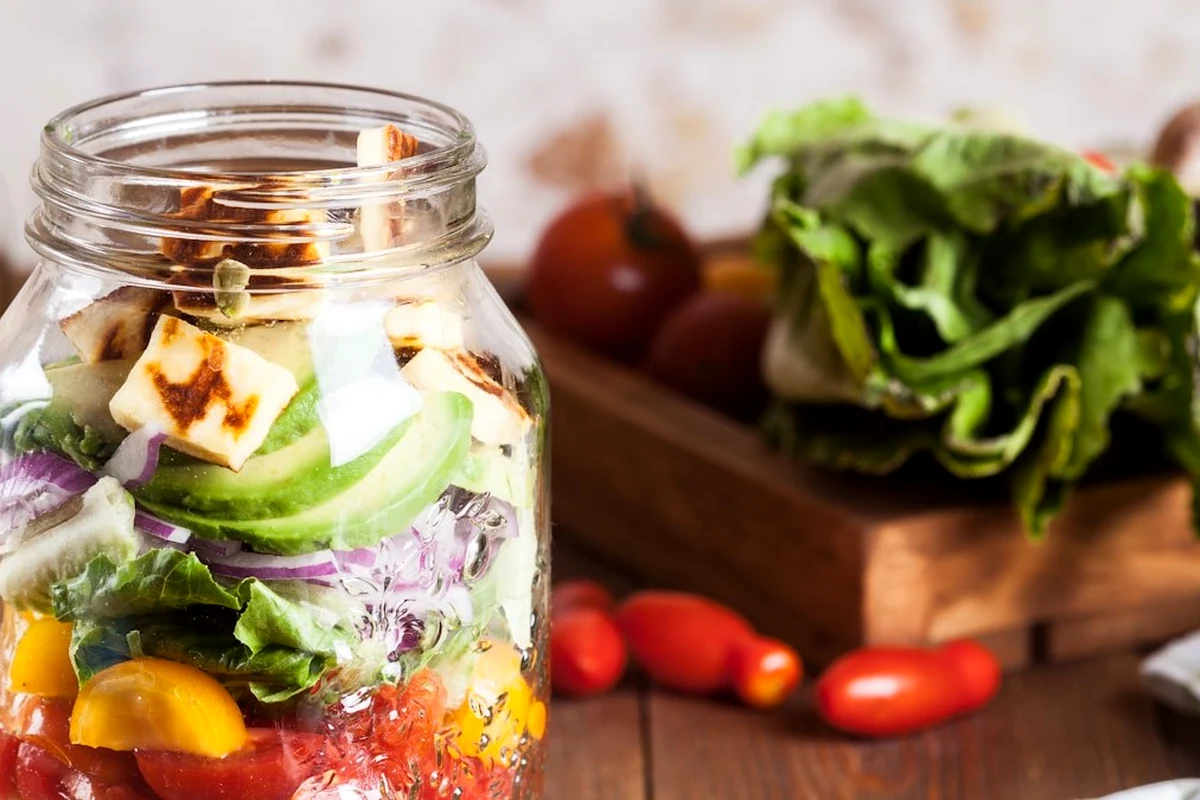
Two scrambled eggs on their own are a strong start but not quite a full breakfast for most people, and that is by design. The point is to build around them. Protein is handled, so what you want to add is fiber and a sensible carbohydrate to round things out and keep energy steady. My default is eggs plus a slice of whole-grain toast and something green or a tomato on the side.
Fruit works beautifully here too, and so do sauteed spinach, mushrooms, or avocado folded into the eggs at the end. Avocado adds healthy fat and fiber and makes the whole plate feel more substantial. If I am hungrier, I add half an avocado or a handful of berries rather than just doubling the eggs, because the variety carries the meal further. A protein-and-fiber breakfast is the steadiest one there is.
The calorie math stays friendly: eggs, a slice of toast, and some fruit lands you a filling, balanced breakfast in the 350 to 450 range, which is a genuinely good number for how long it holds you.
A small habit that helped me was thinking in terms of what the plate is missing rather than what to cut. Two eggs already cover protein and fat, so I do not need more of either. What they lack is fiber and a little slow carbohydrate, so that is what I add, every time. Once you see it that way, building breakfast stops being about restriction and starts being about completing a plate. The eggs are the anchor, and the vegetables, fruit, or whole grain are the parts that round it into a meal you can stand behind nutritionally and actually look forward to.
How two eggs compare to other breakfasts
Context: Calorie for calorie, eggs deliver more protein and staying power than most fast-carb breakfasts.
It helps to put two eggs next to the breakfasts they replace. A medium bagel runs around 250 to 300 calories with maybe 10 grams of protein, but it is mostly fast carbohydrate that digests quickly and leaves you hungry sooner. A bowl of sweetened cereal can be similar in calories with far less protein and a faster crash. A pastry is mostly sugar and fat dressed up as breakfast, which I say with love, because I ate a lot of them.
Two scrambled eggs at around 180 to 220 calories give you more protein and far more staying power per calorie than almost any of those. That is the quiet argument for them. They are not magic and they are not the only good answer, but calorie for calorie they punch above their weight on protein, micronutrients, and how long they keep you full. For an everyday, affordable, complete-protein breakfast, they are genuinely hard to beat.
I am not saying never eat a bagel or a bowl of cereal, because I do, and they have their place. The point is to know the trade. A fast-carb breakfast is lighter on protein and burns off quicker, so if I choose one, I do it knowing I will likely be hungry sooner. On the mornings I need to be sharp and even-keeled through a long stretch, the eggs win on merit, not on virtue. It is less about good and bad foods and more about matching the breakfast to the kind of morning ahead of me.
When this won't fit your life
Honest fit: Eggs suit most people, but allergies, specific cholesterol concerns, or simple taste mean the principle matters more than the food.
Eggs are not for everyone, and I would rather say so plainly. If you have an egg allergy, this entire article is academic for you, and that is completely fine. If you have high cholesterol or a heart condition, the number of eggs that fits your life is a question for your doctor, not for me, and your individual health always outranks a general rule of thumb. Some people also just do not like eggs, which is reason enough.
The good news is that the real lesson transfers cleanly. The point was never eggs specifically. It was anchoring breakfast with enough complete protein to carry you steadily into the day. Greek yogurt, cottage cheese, beans, tofu, smoked salmon, or last night's leftovers can all do that job. Hold the principle, which is protein and substance at breakfast, more tightly than you hold the eggs, and you will be fine on the mornings eggs are not the answer.
Helpful sources and next reads
Reliable external sources
More from Sabrina Saturno
You may also love
FAQ
How many calories are in 2 scrambled eggs?
Plain, about 140 to 160 calories. Cooked in butter or oil, realistically 180 to 220. The cooking fat is what moves the number.
How much protein is in 2 scrambled eggs?
About 12 to 13 grams, and it is complete protein with all the essential amino acids your body cannot make on its own.
Why do calorie counts for scrambled eggs vary so much?
Because the eggs barely change but the cooking fat does. A tablespoon of butter or oil adds roughly 100 to 120 calories on its own.
Are 2 scrambled eggs a healthy breakfast?
For most people, yes. They are protein-rich, low in carbohydrate, and full of useful nutrients. Pair them with fiber for a complete meal.
Is it better to eat whole eggs or just whites?
Whole eggs for most people. The yolks hold the choline, vitamin D, B12, and a few grams of protein you lose by skipping them.
How much cholesterol is in 2 eggs?
About 370 milligrams, all in the yolks. For most healthy people this affects blood cholesterol less than once believed, but check with your doctor if you have concerns.
Does adding milk change the nutrition much?
Only slightly. A splash of milk adds maybe 10 to 30 calories and a gram of protein, plus a softer, fluffier texture.
What is choline and why do eggs matter for it?
Choline supports brain and liver function, and most diets fall short of it. Two eggs deliver around 290 milligrams, making them one of the richest everyday sources.
Will 2 scrambled eggs keep me full until lunch?
Often, especially paired with fiber. The protein digests slowly and steadies blood sugar, which is why eggs tend to hold you longer than fast carbs.
How do I make scrambled eggs less rubbery?
Cook them low and slow, stir gently, salt at the start, and pull the pan off while they still look slightly underdone. They finish from residual heat.
Are scrambled eggs good for weight management?
They can be. They are high in protein and satiety per calorie, which helps with fullness, as long as you watch the added cooking fat and cheese.
What should I eat with 2 eggs for a balanced breakfast?
Add fiber and a little carbohydrate: whole-grain toast, fruit, avocado, or sauteed vegetables. That turns two eggs into a complete, lasting meal.
How many calories are 2 eggs with cheese?
Add roughly 50 to 110 calories depending on the amount and type of cheese, plus a couple grams of extra protein and fat.
The version that lasts
The version of this that lasts for me is almost boring, and I mean that as a compliment. Two eggs, a small amount of butter, low heat, a slice of toast, and whatever fruit is on the counter. It is the same most mornings, and the sameness is the point. I stopped needing breakfast to be exciting once I noticed how much steadier the rest of my day felt when it was just reliable.
Knowing the real numbers took the anxiety out of it. I am not guessing whether two eggs are good or bad anymore. I know they are about 180 to 220 calories, generous on protein, quietly rich in the nutrients I would otherwise miss, and easy on my schedule. The cholesterol question, I handed to my doctor, and I would gently suggest you do the same if it weighs on you. Facts beat headlines.
If you take one thing from all of this, let it be the principle rather than the egg. Anchor your morning with real protein and a little substance, cook it in a way you actually enjoy, and let it be simple enough to repeat without thinking. Two scrambled eggs happen to be one of the best, cheapest answers to that. But the morning that holds you steady is the one worth keeping, in whatever form it takes.