
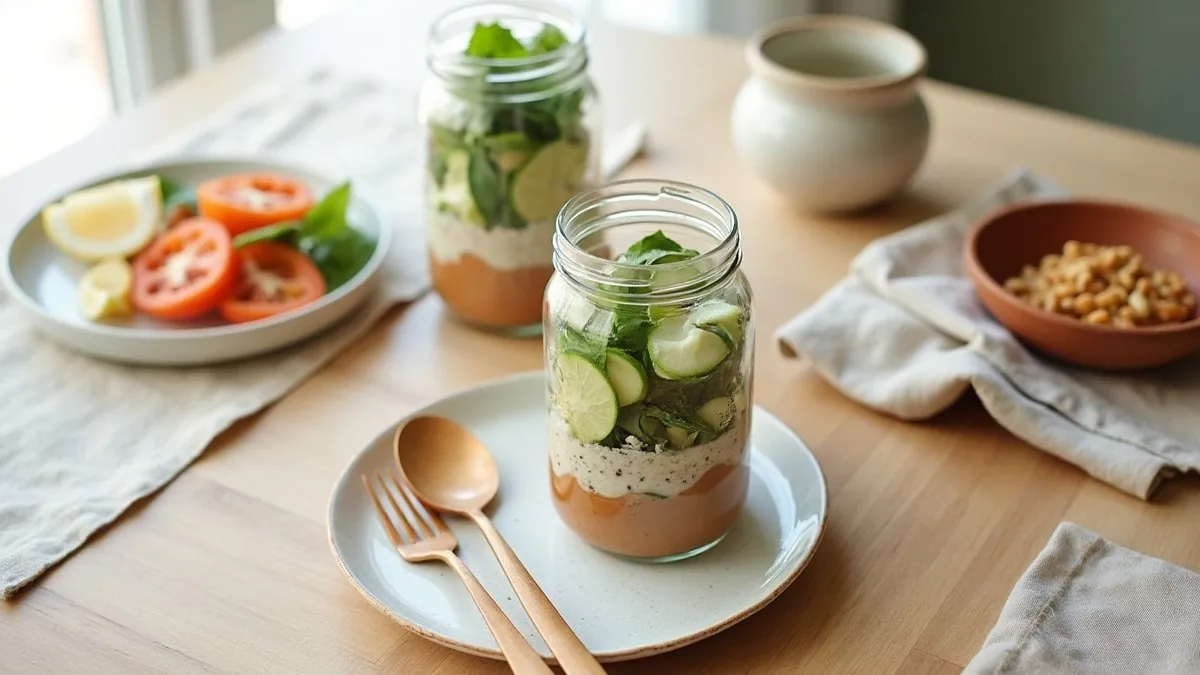
When a friend texts me, frazzled, asking how I manage to eat well during a packed week, I send back the same thing every time: I do not cook seven dinners on Sunday. I cook a handful of ingredients that can become almost anything. A pot of grains, a tray of roasted vegetables, a protein or two, a sauce. By Wednesday night, when my brain is fried and the fridge light feels like an interrogation, dinner is a ten-minute assembly job instead of a decision I have no energy left to make.
This guide is for women juggling jobs, kids, caregiving, commutes, and the quiet exhaustion that comes from feeding other people all day. You do not need a second refrigerator, color-coded containers, or a free Sunday afternoon you will never actually have. You need a small set of building blocks and a rhythm loose enough to survive a week that refuses to go to plan.
I came to this the slow way, through batches of identical chicken-and-rice tubs I grew to resent by Tuesday. What finally stuck was looser, friendlier, and forgiving of the fact that my appetite and my schedule both change their minds constantly. Below is the exact way I prep now, the foods that genuinely last, the bowls I throw together, and what I do on the weeks when even a power hour is too much to ask.
| Question | Short answer |
|---|---|
| What should I prep? | Components, not full meals: a cooked grain, a protein, roasted or raw vegetables, plus one good sauce or dressing. |
| How long does Sunday prep take? | Around 60 to 90 minutes of mostly hands-off cooking, with three things going in the oven and on the stove at once. |
| How long do the components keep? | Most cooked grains, proteins, and roasted vegetables hold three to four days refrigerated in airtight containers. |
| What if I have no time at all? | Do the 20-minute version: wash greens, hard-boil eggs, and roast one tray of vegetables while you tidy. |
| Is this safe for every diet? | The method adapts, but build it around your own allergies, conditions, or medical guidance rather than a generic template. |
Blocks, not boxes: why I stopped cooking full meals
The core idea: Prep four or five versatile components instead of seven finished dinners. Components recombine endlessly, so you eat what you actually want each night.
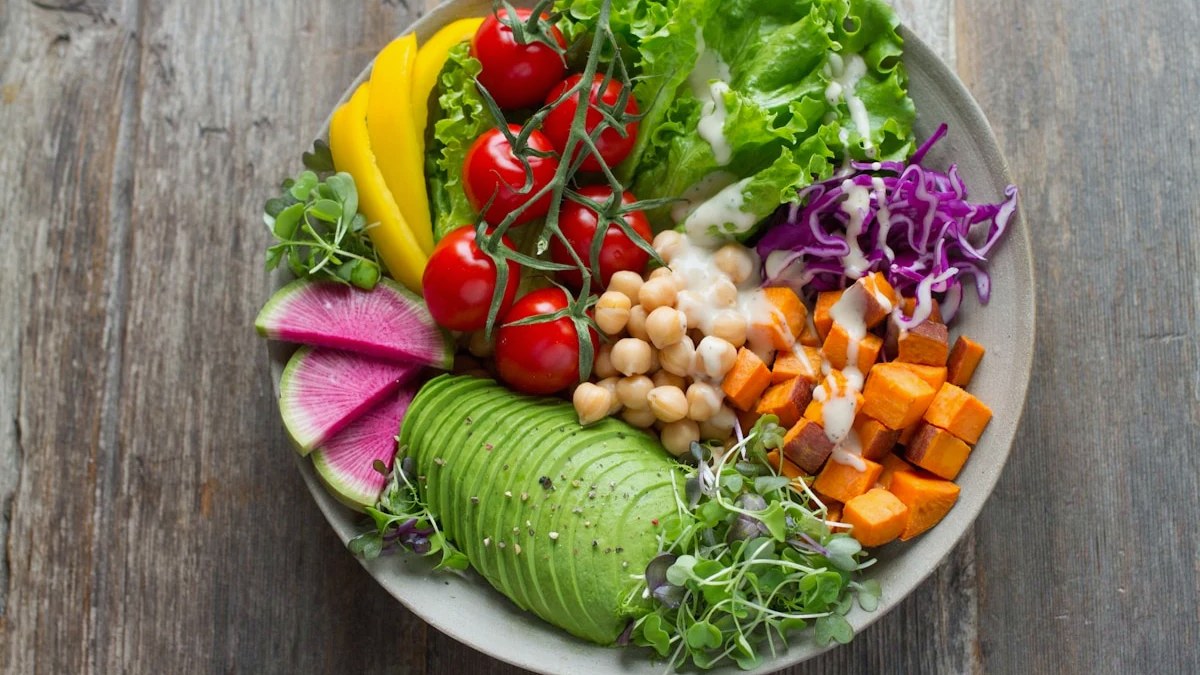
The single change that made meal prep stick for me was deciding to cook ingredients, not meals. Instead of seven sealed dinners decided on Sunday, I cook a base of grains, a protein or two, a big tray of roasted vegetables, something fresh and crunchy, and one sauce that ties it together. None of those is a meal on its own. All of them are the start of a dozen meals.
Finished meals fail because appetite is a moving target. On Sunday I think I will want chicken and rice five times. By Tuesday the thought of it makes me reach for my phone and a takeout app. Components do not lock me into anything. Tuesday-me gets a grain bowl, Wednesday-me wraps the same protein in a tortilla, Thursday-me piles it over greens. Same prep, different mood, no resentment.
There is a practical kindness in this too. When a component goes a little soft or you simply tire of it, you swap one element rather than throwing out a whole molded dinner. The cooked farro becomes a side, the roasted vegetables get folded into eggs, the leftover chicken disappears into a quesadilla. Very little gets wasted because nothing was committed to a single fate.
I usually aim for one starchy base, one to two proteins, one big batch of vegetables, a handful of raw extras, and a sauce or dressing. That is the whole framework. Everything else in this guide is just how I get those things into the fridge without losing my Sunday, and how I turn them into food I actually look forward to.
Inside my 60 to 90 minute Sunday rhythm
How it flows: Start the oven and a pot of grains first, prep vegetables while they cook, add a quick protein, and stir a sauce together while everything finishes.
My power hour is mostly waiting, not chopping. The trick is to start the slow, hands-off things first so the oven and stove do the work while I move around them. I put a sheet pan of vegetables in a hot oven and a pot of grains on the back burner before I do anything else. Those two anchor the whole session and need almost no attention once they are going.
While the oven runs, I prep the protein. Some weeks that is chicken thighs on a second sheet pan, some weeks it is a pot of lentils, a block of crumbled tofu, or a tray of meatballs. I season simply with salt, olive oil, and whatever spice blend I am into that month, because plain components take flavor better later. Heavy seasoning now locks the ingredient into one cuisine, and I want options on Wednesday.
The last ten minutes are for the things that make boring components taste alive: a jar of lemon-tahini dressing, a quick salsa, a yogurt-herb sauce, or just good olive oil and a wedge of lemon. A sauce is the difference between sad desk lunch and something you are glad to eat. I make one or two, screw the lids on tight, and they carry the whole week.

I clean as I go, which is the unglamorous secret to ever doing this again. A sink of soapy water, the cutting board rinsed between tasks, containers lined up open on the counter ready to fill. By the time the oven timer goes, the kitchen is already mostly tidy, and the only thing left is to portion the warm food into containers and let it cool before the lids go on. Putting hot food away sealed traps steam and shortens its fridge life.
What actually keeps in my fridge all week
Not everything survives four days, and learning what does saved me a lot of slimy disappointment. Cooked grains like rice, farro, quinoa, and barley hold beautifully for three to four days in airtight containers. Roasted hardy vegetables, think sweet potato, carrots, broccoli, cauliflower, and squash, keep their texture and reheat well. Cooked chicken, lentils, beans, hard-boiled eggs, and firm tofu are all reliable through midweek.
The things that wilt fast I treat differently. Leafy greens go in a container lined with a paper towel to catch moisture, and I keep dressing separate so nothing turns to mush. Cut avocado, fresh herbs, and anything with a delicate texture I leave for the day I will eat them. Knowing which camp each food falls into lets me prep heavily on the durable things and lightly on the fragile ones.
Storage matters more than people expect. Glass containers, lids that actually seal, and a quick label with the date keep me honest about what to eat first. I keep the oldest components at the front so they get used, and I do a thirty-second fridge scan every couple of days to plan the next dinner around whatever needs eating soonest.
One quiet rule I follow: when in doubt about freshness, I trust my nose and toss without guilt. Wasting one container of grains is not a moral failure, and forcing down food that smells off just to avoid waste is its own kind of unkindness. The point of all this is to make eating easier, not to turn the fridge into a guilt cabinet.
Mix-and-match bowls and plates I throw together
The assembly formula: Grain plus protein plus vegetable plus something crunchy plus a sauce. Change one element and the whole plate feels brand new.
This is where the components pay off. My loose formula is a base, a protein, a vegetable, a fresh or crunchy element, and a sauce. On Monday that might be quinoa, roasted chicken, broccoli, sliced cucumber, and lemon-tahini. On Tuesday I keep the chicken and broccoli but swap to a tortilla, add shredded cheese, and the same lunch becomes a warm wrap. Nothing new was cooked, yet it feels like a different meal.
I lean on a few combinations that never let me down. Roasted sweet potato, black beans, rice, a spoon of salsa, and avocado for a burrito bowl. Farro, white beans, roasted vegetables, and a drizzle of good olive oil for a Mediterranean plate. Greens, hard-boiled egg, leftover protein, and a sharp vinaigrette when I want something lighter. Each one comes together in the time it takes the microwave to warm the base.
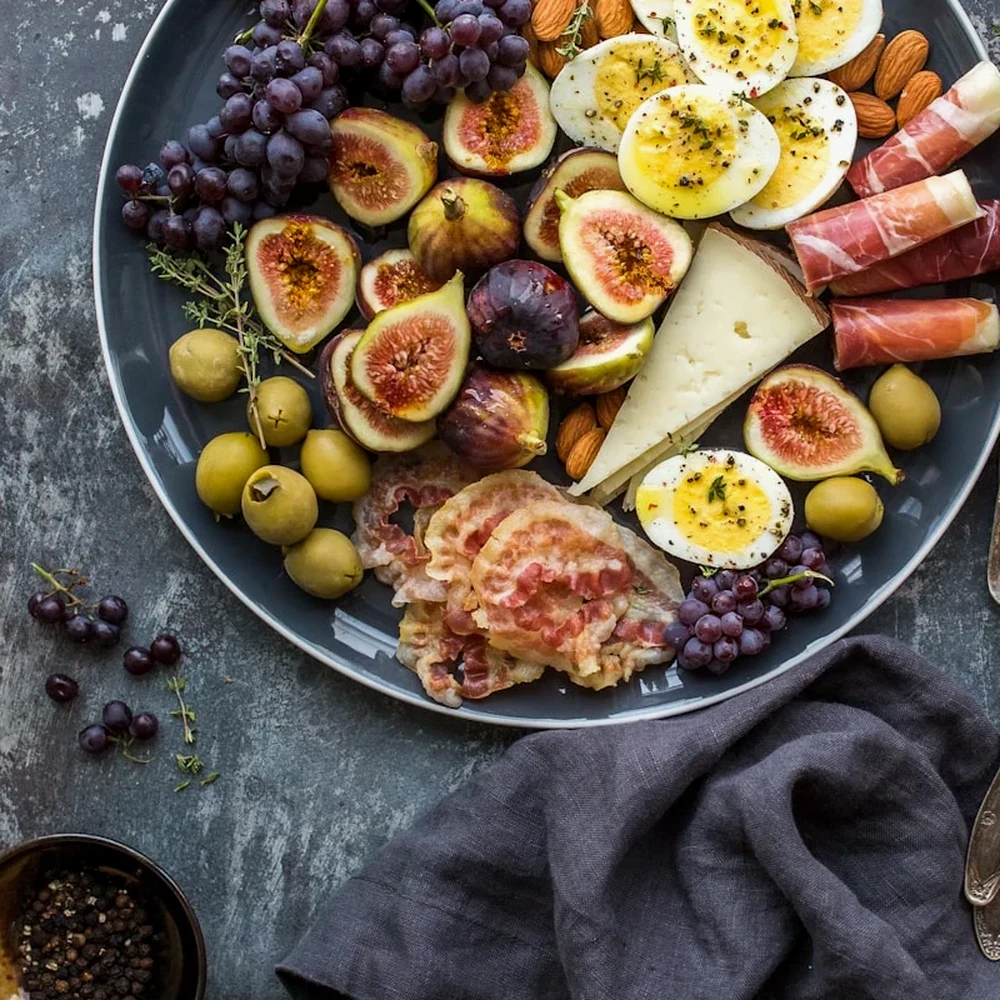
Breakfast and snacks come from the same pantry of parts. Hard-boiled eggs with a piece of fruit, roasted vegetables folded into a quick scramble, or grains warmed with a little milk and cinnamon when I want something cozy. The components do not care what time of day it is, which means one Sunday session quietly covers more than just dinner.
When I feel the boredom creeping in, I change the sauce before I change anything else. The same chicken-and-grain bowl tastes Greek with tzatziki, Mexican with salsa and lime, and Asian-inspired with a sesame-soy drizzle. Sauce is the cheapest, fastest way to keep a week of similar ingredients from feeling like a punishment.
The freezer as my back pocket
The freezer is where my prep stops being a one-week thing and starts covering the weeks I cannot cook at all. Whenever I make a pot of soup, chili, lentils, or a batch of meatballs, I portion a few extra servings into containers and freeze them flat. On the brutal weeks, a frozen homemade dinner that just needs reheating feels like a gift from a kinder, more organized version of me.
I also keep the freezer stocked with shortcuts that make fresh prep faster. Frozen vegetables roast or steam just as well as fresh and never go bad waiting for me. Cooked grains freeze and thaw cleanly. Browned ground meat, individually frozen chicken, and bags of frozen fruit for smoothies all turn a bare fridge into a real meal with very little effort.
The one habit that makes the freezer useful instead of a mystery graveyard is labeling. A piece of tape with the name and date means I actually eat what is in there instead of excavating unidentifiable bricks in six months. I try to rotate through frozen meals every few weeks so the back stock stays fresh and genuinely helpful rather than forgotten.
The grocery flow that makes prep faster
Good prep starts at the store, not the stove. I shop with the component framework in mind rather than a list of specific recipes. That means I am buying a starch or two, a couple of proteins, a big pile of vegetables in both the durable and the fragile categories, some fresh extras, and the ingredients for one or two sauces. I am not matching every item to a predetermined dinner, which makes the list shorter and the cart cheaper.
I keep a running list on my phone all week and add to it the moment I notice a component running low. Sunday morning I do a quick fridge and pantry scan, fill the obvious gaps, and head out with a plan loose enough to flex around whatever looks good or is on sale. Buying seasonal and discounted produce keeps the cost down and quietly decides half my vegetables for me.
Budget-wise, components are forgiving. Dried beans, lentils, rice, eggs, frozen vegetables, and in-season produce are some of the cheapest food in the store, and they form the backbone of nearly every bowl I make. I save the splurges for the one or two things that make a meal feel special, a good cheese, nice olive oil, or a protein I genuinely enjoy, and let the humble staples carry the rest.
When I only have twenty minutes
The bare minimum: Wash a bag of greens, hard-boil a few eggs, and roast one tray of vegetables. Even that much makes weeknight eating dramatically easier.
Some Sundays the power hour is simply not happening, and pretending otherwise just leaves me with nothing. On those weeks I do a stripped-down twenty-minute version that still moves the needle. I put one sheet pan of vegetables in the oven, set a pot of eggs to boil, and wash and dry a container of greens while both cook. Three small actions, almost entirely hands-off, and the worst weeknights suddenly have a foundation.
That tiny bit of prep is often enough to keep me out of the takeout app, which is the real goal. With roasted vegetables, hard-boiled eggs, and washed greens on hand, plus pantry staples like canned beans and a pouch of microwave rice, a real plate is ten minutes away on the hardest night. It is not a Pinterest spread, but it is warm, it is mine, and it did not require a decision when I had none left.
I have made peace with the fact that prep scales to the week I am actually in. A full session some weeks, a single sheet pan others, and in a genuinely overwhelming stretch, leaning on frozen meals and simple shortcuts with zero guilt. Feeding yourself at all is the win on a hard week, and this method is only ever here to make that win a little easier to reach.
Why this matters more than it seems
The heart of it: The meal prep that saved me was smaller than the one I imagined, and far easier to repeat. I prep ingredients, not rigid meals.
Meal prep matters because the hardest moment in eating well is not knowledge, it is the tired Wednesday evening when there is nothing ready and takeout is one tap away. A little preparation moves the decision earlier, to a calmer moment, so the exhausted version of you can eat well without deciding anything. It is less about food and more about removing friction at exactly the wrong time of day.
It matters too because the right kind of prep is what makes every other good nutrition habit actually happen. Balanced plates, protein at meals, more vegetables, all of it depends on those things being easy to reach when you are depleted. Prep is the quiet infrastructure underneath eating well, and without it, good intentions rarely survive a genuinely busy week.
There is a real reason prep matters more than knowledge when life gets busy. The hardest moment in eating well is not deciding what is healthy, it is the depleted weeknight when nothing is ready and takeout is one tap away. Prep moves the decision earlier, to a calmer moment, so the exhausted version of you can eat well without deciding anything, which is the entire point of doing it in advance.
What I learned the hard way
My first attempts at meal prep were the Instagram version, ten identical containers cooked on a Sunday that I was thoroughly sick of by Tuesday and throwing out by Thursday. The rigidity was its own downfall, because appetite and real life do not run on a fixed menu decided three days earlier.
What finally worked was prepping flexible ingredients instead of finished meals, a few cooked grains, a protein, washed and chopped vegetables, ready to become a hundred different things. The lesson was that the goal was never to predetermine every meal, it was to make good meals easy to assemble. Smaller, looser prep was more sustainable, less wasteful, and infinitely more forgiving of an unpredictable week.
I also learned that flexible prep beats rigid prep precisely because real life is unpredictable. Ten identical containers ignore the fact that appetite and plans shift, which is why they end up wasted and resented. Prepping adaptable ingredients instead, a grain, a protein, some vegetables, ready to become many different meals, respects the chaos of a real week rather than pretending you can predetermine every dinner three days out.
How to know it's working
Good meal prep shows up in how your hardest evenings go, which is the only real test of any system.
- On a tired weeknight, a decent meal is genuinely ten minutes away, not a takeout decision.
- You waste less food, because flexible ingredients adapt instead of expiring as rejected meals.
- You eat better on busy days without it requiring willpower or fresh motivation.
- Prep feels manageable and worth it, rather than a dreaded Sunday marathon.
- You stop relying on takeout by default, simply because the easier option is now the good one.
If your prep keeps going to waste, it is probably too rigid or too much. Prep fewer things, more flexibly, and let them become many meals rather than predetermining each one.
When this won't fit your life
If you have dietary restrictions or medical needs, build your prep around your specific guidance, because the flexible approach still has to serve your individual requirements. The method adapts to any way of eating, but what you prep should reflect your needs, not just a general template.
And in a genuinely overwhelming season, even light prep may be too much, and leaning on convenience foods, frozen meals, or simple shortcuts is not a failure. Feeding yourself at all is the win when life is hard. Prep is a tool to make good eating easier, never another standard to feel guilty about missing.
Hold prep as a tool that serves you rather than a standard to live up to, and scale it to whatever your week can bear. Some weeks that means a full session, some weeks it means washing a bag of greens and calling it done, and in an overwhelming season it may mean leaning on frozen meals without guilt. Feeding yourself at all is the win, and prep is only ever there to make that easier.
Helpful sources and next reads
Reliable external sources
More from Sabrina Saturno
You may also love


FAQ
How long do prepped components actually last in the fridge?
Most cooked grains, proteins, and roasted hardy vegetables hold three to four days in airtight containers. Cool food fully before sealing the lid, since trapped steam shortens its life. Fragile items like greens, herbs, and cut avocado are best prepped lightly and eaten within a day or two.
What are the best components to prep first if I am new to this?
Start with a pot of rice or quinoa, a tray of roasted vegetables, and a simple protein like chicken thighs or a batch of beans. Add one sauce, such as lemon-tahini or a quick salsa. Those four or five things alone cover lunches and dinners for several days.
How is this different from cooking seven full meals on Sunday?
Full meals lock you into a fixed menu decided days ahead, which is why so many end up wasted. Prepping components keeps every meal flexible. The same grains, protein, and vegetables become a bowl, a wrap, or a salad depending on your mood that night, so far less goes to waste.
I genuinely have no free time. What is the smallest version that helps?
Do the twenty-minute version: roast one sheet pan of vegetables, hard-boil a few eggs, and wash a container of greens while they cook. Paired with pantry staples like canned beans and microwave rice, that small base is often enough to skip takeout on your hardest weeknight.
How do I keep prepped food from getting boring by Wednesday?
Change the sauce before you change anything else. The same chicken and grains taste Greek with tzatziki, Mexican with salsa and lime, or Asian-inspired with a sesame drizzle. Keeping two sauces on hand lets one set of components feel like several different meals across the week.
Is component meal prep expensive?
It tends to be cheaper than recipe-by-recipe shopping. Beans, lentils, rice, eggs, frozen vegetables, and in-season produce form the backbone of most bowls and cost very little. Save any splurge for one or two items that make a meal feel special and let the humble staples do the heavy lifting.
What containers work best for keeping things fresh?
Glass containers with lids that seal well are my favorite, since they reheat cleanly and let me see what is inside. Date a piece of tape on each one and keep the oldest at the front so it gets eaten first. For greens, a paper towel in the container catches moisture and slows wilting.
Can I freeze prepped components?
Yes, and the freezer is what stretches prep across weeks. Soups, chili, lentils, meatballs, and cooked grains all freeze well in flat, labeled portions. Frozen homemade dinners are a lifesaver on weeks you cannot cook at all, as long as you label and rotate through them so nothing gets forgotten.
How do I adapt this for a specific diet or allergy?
The framework stays the same, but the components reflect your needs. Swap in gluten-free grains, plant proteins, dairy-free sauces, or whatever your situation calls for. If you have a medical condition, allergy, or are managing a health issue, build your prep around guidance from a qualified professional rather than a generic plan.
Does this work if I am cooking for a family, not just myself?
It works especially well, because components let everyone build their own plate. The picky eater skips the sauce, the teenager doubles the protein, and you still cooked once. Just scale the batch sizes up and lean a little more on the freezer for the inevitable busy nights.
How do I know the prep is actually working for me?
Watch your hardest evenings. If a decent meal is genuinely ten minutes away on a tired weeknight, if you waste less food, and if you reach for takeout less by default, the system is doing its job. If your containers keep going uneaten, you are likely prepping too much or too rigidly.
What should I do on weeks when even a power hour feels like too much?
Scale down without guilt. Some weeks that means a single sheet pan, some weeks it means leaning entirely on frozen meals and shortcuts. Prep is a tool to make eating easier, never a standard to feel bad about missing. Feeding yourself at all is the win when life is genuinely hard.
How far ahead can I prep before food quality drops?
I prep for the coming three to four days and use the freezer for anything beyond that. Cooking on Sunday for the back half of the week often means relying on the freezer or doing a quick midweek top-up. A short Wednesday refresh of greens or a new sauce keeps the second half of the week appealing.
Conclusion
Meal prep stopped feeling like a chore for me the day I quit cooking dinners and started cooking parts. A pot of grains, a protein, a tray of vegetables, and a good sauce ask for an hour or so on Sunday and then quietly carry a whole imperfect week. The exhausted Wednesday version of me eats well without making a single decision, and that is the entire point.
You do not have to do all of it. Cook five components or roast one sheet pan, fill the freezer or lean on it, scale up for the family or keep it just for you. Let the prep bend around the week you are actually living in. When it makes feeding yourself easier, keep it. When even that is too much, frozen dinners and shortcuts are a perfectly good answer, and you have my full permission to use them. For the calendar around this session, spread across the whole week, see my weekly meal prep schedule.