
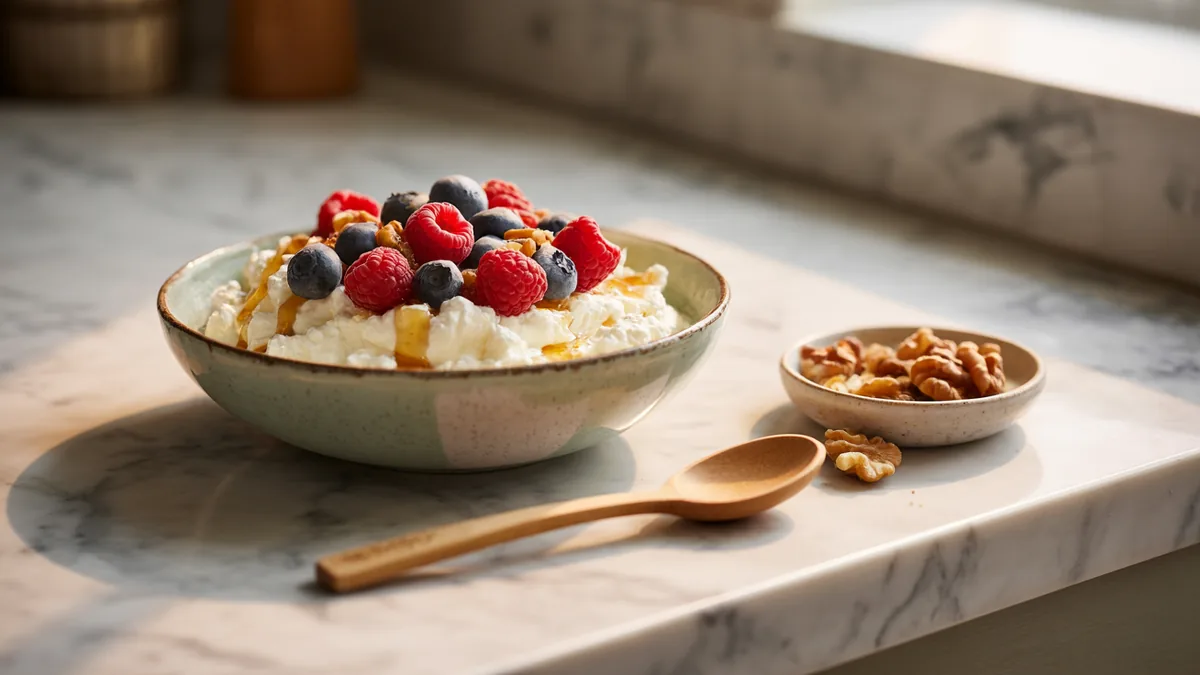
One cup of cottage cheese carries about 24 to 28 grams of protein for roughly 160 to 200 calories, and a half cup lands near 12 to 14 grams. That is the honest headline, and it is the number I reach for when someone asks me why I keep a tub of it in the fridge at all times. The protein is genuinely high for how cheap and how effortless the food is. Everything else about it, the calories, the fat, the sodium, moves around depending on which tub you grabbed.
I came to cottage cheese late, and a little sheepishly. For years I filed it under sad diet food, the beige spoonful next to a canned peach half in an old magazine. Then I started paying attention to protein at breakfast and snacks, actually counting what I was getting, and cottage cheese kept winning on the math. Two dollars, no cooking, fifteen grams of protein in a small bowl. I felt silly for having ignored it for so long, so I dug into the real numbers instead of the reputation.
I am not a dietitian, and I will repeat that where it matters, because dairy sits near a few real questions like sodium and lactose. What I can give you is a clear, specific account of how much protein cottage cheese actually delivers, how the fat percentage and brand shift the totals, and the small ways I make it something I look forward to rather than tolerate. I lean on USDA figures for the baseline so you are not taking my word for the numbers. Let us get into what a normal spoonful really gives you.
| What | Typical amount | How it changes |
|---|---|---|
| Protein per cup | 24 to 28g | Some strained brands push past 28g |
| Protein per half cup | 12 to 14g | A useful snack-sized dose on its own |
| Calories per cup | 160 to 200 | Whole-milk versions sit at the top of that |
| Fat per cup | 2 to 10g | Nonfat near zero; 4% around 9 to 10g |
| Sodium per half cup | 300 to 460mg | Varies a lot by brand; some sell low-sodium |
| Calcium per cup | About 180 to 200mg | A quiet bonus most people overlook |
The actual protein in cottage cheese
Baseline: A full cup of low-fat cottage cheese gives about 24 to 28g protein; a half cup lands near 12 to 14g.
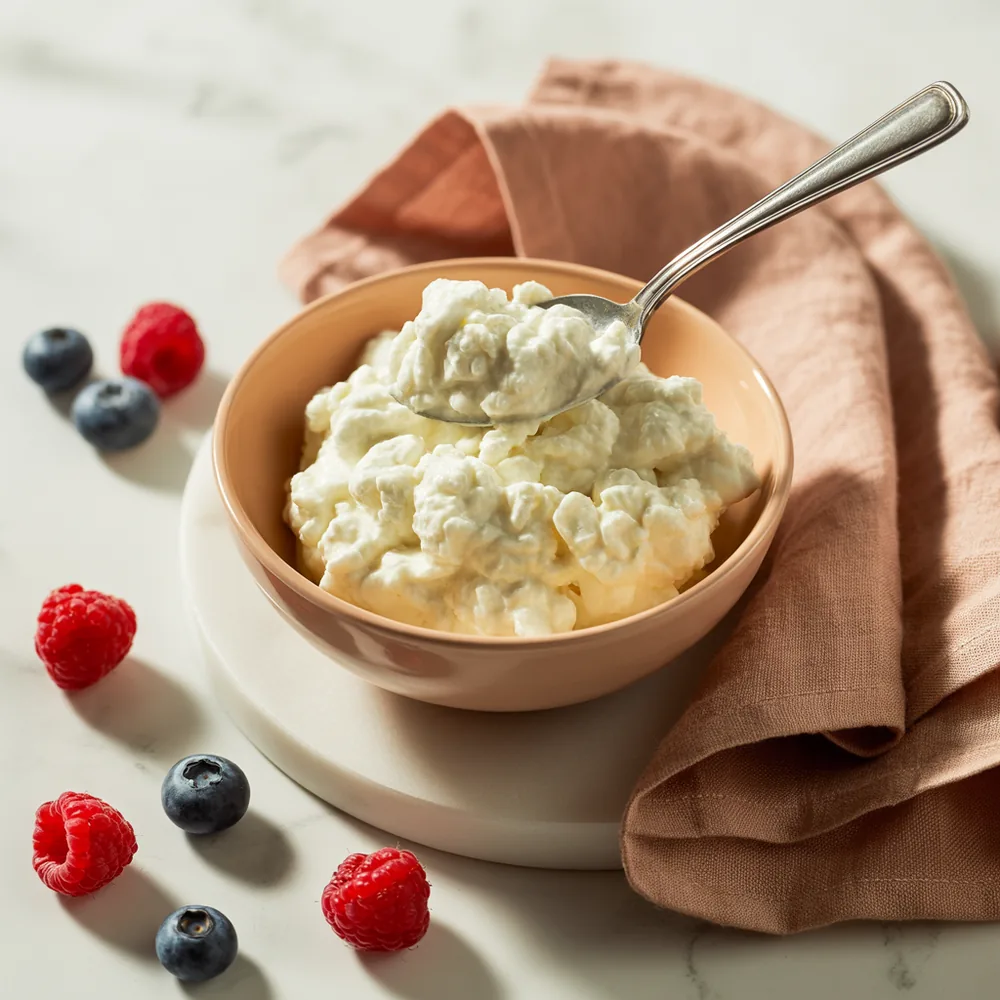
Let me give you the plain baseline first, because that is the part that holds steady no matter how you dress it up. A cup of low-fat, 2 percent cottage cheese runs about 180 calories and lands somewhere between 24 and 28 grams of protein. Cut that to the more realistic snack portion, a half cup, and you get roughly 12 to 14 grams for around 90 to 100 calories. That half-cup number is the one I actually use most, because it is a genuine protein hit for a small, quiet bowl.
On a per-100-gram basis, low-fat cottage cheese sits near 11 to 12 grams of protein, which is high for something with this much water and this few calories. You can confirm the raw figures yourself at USDA FoodData Central, where the standard entries for creamed and low-fat cottage cheese are listed out gram by gram. The protein is the headline, and it barely wavers between the low-fat styles.
Carbohydrate is low, usually 4 to 8 grams a cup, most of it the natural milk sugar lactose. That is worth flagging if you are lactose sensitive, and I will come back to it. But for protein per calorie, cottage cheese is quietly one of the strongest picks in the dairy aisle, and it takes zero effort to serve. That combination, high protein and no cooking, is the entire reason it earned permanent fridge space in my kitchen.
How the fat level changes the numbers
The main variable: Fat percentage mostly moves calories and fat, not protein; nonfat to 4% swings calories by 60 to 80 a cup.
Here is the part that trips people up at the shelf. Cottage cheese comes in nonfat, 1 percent, 2 percent, and 4 percent, and those numbers refer to milkfat, not protein. The protein stays roughly the same across all of them. What changes is the calorie and fat count. Nonfat cottage cheese can be as low as 100 to 120 calories a cup with almost no fat, while 4 percent creamed cottage cheese climbs to 200 to 220 calories with 9 or 10 grams of fat.
I go back and forth. The 4 percent is creamier and genuinely tastes better, so I use it when cottage cheese is the star of the bowl. The 2 percent is my everyday middle ground. Nonfat I only buy when I want the leanest possible protein and plan to add flavor and fat from somewhere else, like nuts or olive oil. None of these are wrong. They are just different trades, and knowing which tub you grabbed keeps you from being surprised by the calorie math later.
One quiet detail: the fattier versions keep you full a little longer and taste less sour, which for me makes them easier to eat consistently. A food you actually enjoy is a food you repeat, and repeating it is where the protein habit pays off. So I rarely chase the lowest number. I pick the version I will happily eat three mornings a week, and let the fat grams land where they land.
Why cottage cheese protein is worth it
The real value: A high dose of complete protein for very few calories, with almost no prep, which is rare.
If I had to defend cottage cheese in one line, it would be the protein-per-effort ratio. Fifteen grams of protein in the time it takes to open a lid is a genuinely useful thing to have on a rushed morning. And it is complete protein, meaning it carries all the essential amino acids your body cannot make on its own, because it comes from milk. That puts it in the same quality tier as eggs and Greek yogurt, not the lower tier of most plant proteins eaten alone.
The reason this matters to me is the same reason I care about protein at breakfast in general. A protein-anchored start steadies blood sugar and holds off the mid-morning crash that leaves you hunting for a snack by eleven. I wrote about building meals around that idea in my piece on eating kind, not strict, and cottage cheese slots right into it. It does the same steadying job as eggs, just cold and with no pan to wash.
There is also a satiety angle the calorie label never captures. Protein is the most filling of the three macronutrients gram for gram, and cottage cheese layers that protein with a thick, creamy texture that feels more substantial than its calorie count suggests. A half cup at ninety calories can genuinely tide me over, which is not something I can say about ninety calories of crackers. That is the quiet efficiency that keeps me coming back to it.
The slow-release protein detail people miss
Underrated: Most of cottage cheese's protein is casein, which digests slowly and keeps you fuller for longer.
This is the part that surprised me most once I looked into it. The protein in cottage cheese is roughly 80 percent casein, the slow-digesting milk protein, and only about 20 percent whey. Casein forms a soft curd in the stomach and releases its amino acids gradually over hours rather than all at once. In plain terms, it is a slow, steady drip of protein rather than a fast splash, which is exactly why it hangs on to your hunger longer.
That slow-release quality is the reason cottage cheese has an old reputation as a nighttime snack for people who lift weights. A small bowl before bed gives a gentle supply of protein through the overnight fast. I am not chasing muscle gains at midnight, but I have noticed that a cottage cheese snack in the late afternoon carries me to dinner far better than a faster carbohydrate would. The mechanism is not magic, it is just digestion speed, and it works quietly in your favor.
You do not need to track any of this to feel it. You will notice it in the simple fact of staying satisfied for a few hours after a small serving, which for a cold, no-cook food is a genuinely good return. If you want a companion snack that leans on the same protein-forward logic, my roundup of high protein snack ideas keeps cottage cheese in steady company.
The sodium trade-off worth knowing
Honest note: Cottage cheese is salty; a half cup can carry 300 to 460mg of sodium, so check the tub.
I cannot write an honest piece about cottage cheese without raising sodium, because it is the one number that genuinely gives me pause. The salt is part of how cottage cheese is made and preserved, and it adds up faster than people expect. A half cup can carry anywhere from 300 to 460 milligrams of sodium depending on the brand, and a full cup can push past 800. For context, the general daily guidance sits around 2,300 milligrams, so a big bowl is a real slice of that.
For most healthy people this is not a reason to avoid cottage cheese, it is a reason to be aware of the rest of the day. If cottage cheese is your protein at breakfast, you might go lighter on salt at lunch. If you watch your blood pressure or your doctor has flagged sodium for you, this is a real conversation to have with them, not something to settle from an article. Many brands now sell a low-sodium or no-salt-added version, and those are worth seeking out if salt is a concern for you.
I keep it in perspective. One salty food inside an otherwise whole-food week is rarely the thing that tips the scale, and the protein cottage cheese delivers is worth a little sodium awareness. The American Heart Association has a clear rundown of daily sodium targets if you want to see where a serving fits in your own numbers. Knowing the figure lets you choose it on purpose rather than be surprised by it.
Cottage cheese vs Greek yogurt and eggs
Context: Cottage cheese edges out Greek yogurt on protein per cup and rivals eggs, with a saltier profile.
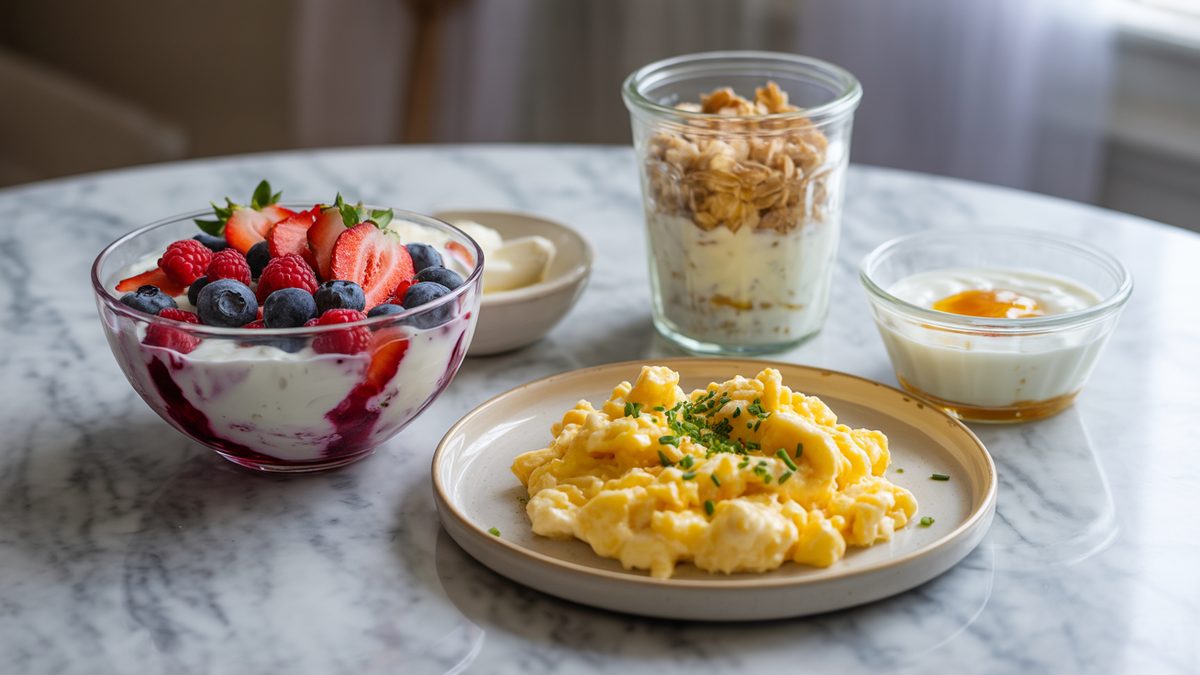
It helps to put cottage cheese next to the protein foods it competes with at breakfast. A cup of plain low-fat Greek yogurt gives around 18 to 22 grams of protein, so cottage cheese usually edges it out slightly per cup, though the two are close. Greek yogurt wins on tang and on being lower in sodium, while cottage cheese wins on that thick, savory versatility. I keep both, honestly, and reach for whichever suits the bowl I am building.
Against eggs, the comparison is friendly. Two scrambled eggs give about 12 to 13 grams of protein, similar to a half cup of cottage cheese, but the eggs need a pan and the cottage cheese does not. If you want the full breakdown on eggs, I laid it out in my piece on 2 eggs scrambled nutrition. The honest takeaway is that these are all strong, complete-protein options, and the best one is whichever you will actually eat on a normal Tuesday.
Cost is part of the story too. Cottage cheese is one of the cheapest complete proteins in the store, often cheaper per gram of protein than Greek yogurt or eggs depending on where you shop. For an everyday, no-cook, affordable protein, it is genuinely hard to beat, which is exactly why it deserves a spot in more fridges than it currently occupies.
If the yogurt side of that comparison is what you came for, I broke the whole thing down separately in Greek Yogurt Protein: How Much Per Cup, including how much the strained brands actually differ.
Why the tub in your hand may say something different
Read the label: Strained and high-protein brands can hit 25 to 30g per serving; always trust the tub over any chart.
Here is where a general chart stops being enough. Cottage cheese protein varies more by brand than most foods, because some companies strain their cottage cheese for a thicker, higher-protein product. A few popular brands now advertise 25 grams of protein in a single serving, and the strained tubs can push toward 28 to 30. Others, especially the softer, wetter styles, land closer to the 22 to 24 range per cup. The differences are real and they are printed right on the container.
So my one firm rule is to trust the tub over any number you read online, including mine. Flip it over, look at the serving size, which is usually a half cup or 4 ounces, and read the protein line. Then decide whether that is the protein density you want. A tub claiming 14 grams per half cup is doing more for you than one claiming 11, even though both are cottage cheese. It takes five seconds and it makes every number in this article specific to what you are actually eating.
The same goes for sodium and added ingredients. Some tubs are just milk, cream, and salt, while others fold in stabilizers or extra sodium. I am not precious about it, but I do glance at the label, because that quick look is the difference between guessing and knowing. Once you find a brand whose numbers and taste you like, you can stop reading and just buy it, which is the payoff for the one careful trip.
How I actually eat it, sweet and savory
Method: Treat it like a blank protein base, then push it sweet with fruit or savory with tomato and pepper.
Numbers aside, cottage cheese you do not enjoy is cottage cheese you will not repeat, so how you serve it matters as much as what it contains. I think of it as a blank, creamy protein base that will happily go sweet or savory. On the sweet side, I top a bowl with berries, a drizzle of honey, and a few crushed walnuts, which turns it into something close to a dessert that happens to carry fifteen grams of protein.
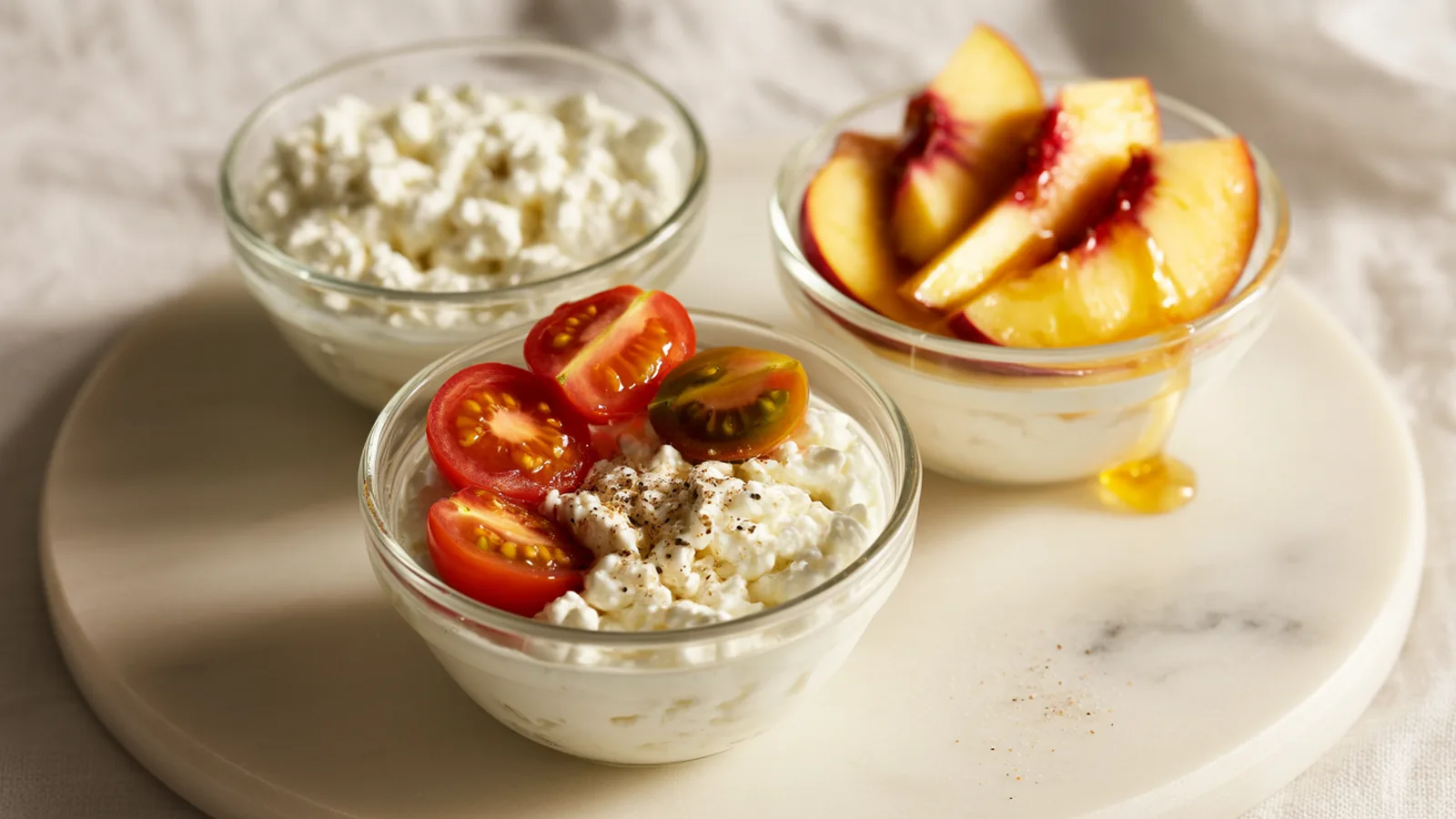
On the savory side, cottage cheese with halved cherry tomatoes, cracked black pepper, a pinch of flaky salt, and a little olive oil is one of my favorite fast lunches. It scoops onto whole-grain toast beautifully, which folds fiber into the protein and makes a genuinely complete little meal. If you want a framework for balancing a bowl like this, my balanced breakfast bowl formula is the shape I build most of these from.
A couple of small tricks I have learned. If the texture puts you off, blend cottage cheese smooth and it becomes a thick, high-protein spread or dip that hides the curds entirely. Stir a spoonful into scrambled eggs for creaminess and extra protein. And keep the toppings varied week to week, because the fastest way to quit a healthy habit is to eat the exact same version until you resent it. Variety is what has kept cottage cheese in my rotation for years now, not discipline.
When cottage cheese won't fit your life
Honest fit: Lactose intolerance, dairy allergy, sodium limits, or simple dislike all make the principle matter more than the food.
Cottage cheese is not for everyone, and I would rather say so plainly than pretend it is a universal answer. If you have a dairy allergy, it is off the table entirely, and that is completely fine. If you are lactose intolerant, cottage cheese does contain some lactose, though the amount is moderate and some people tolerate it better than milk. Lactose-free cottage cheese exists now and is worth trying if regular dairy bothers your stomach. If sodium is a flagged concern for you, this is a food to discuss with your doctor rather than lean on daily.
Some people also just do not like the texture, and no amount of berries or pepper will change that. That is reason enough to skip it. The good news is that the real lesson transfers cleanly, because the point was never cottage cheese specifically. It was getting a meaningful dose of complete protein into a snack or breakfast with almost no effort. Greek yogurt, eggs, edamame, tofu, or a scoop of protein in oats can all do that same job. Hold the principle, which is easy protein that keeps you full, more tightly than you hold the tub, and you will be fine on the days cottage cheese is not the answer.
Helpful sources and next reads
Reliable external sources
More from Sabrina Saturno
You may also love
FAQ
How much protein is in a cup of cottage cheese?
About 24 to 28 grams for low-fat cottage cheese, at roughly 160 to 200 calories. Strained, high-protein brands can push past 28 grams a cup.
How much protein is in a half cup of cottage cheese?
Roughly 12 to 14 grams for around 90 to 100 calories, which is a genuinely useful protein hit for a small, no-cook snack.
Does the fat percentage change the protein?
Barely. Nonfat, 2 percent, and 4 percent cottage cheese have similar protein. The fat level mostly changes calories and fat, not the protein line.
Is cottage cheese a complete protein?
Yes. Because it comes from milk, it carries all the essential amino acids your body cannot make, putting it in the same quality tier as eggs and Greek yogurt.
Is cottage cheese or Greek yogurt higher in protein?
They are close, but cottage cheese usually edges out Greek yogurt slightly per cup. Greek yogurt is typically lower in sodium and tangier.
Why is cottage cheese so filling?
Most of its protein is casein, which digests slowly and releases amino acids over hours. That slow drip is what keeps you satisfied longer than a fast carbohydrate.
Is the sodium in cottage cheese a problem?
It is worth knowing about. A half cup can carry 300 to 460 milligrams of sodium. For most healthy people that is fine in context, but check with your doctor if sodium is flagged.
Can I eat cottage cheese if I am lactose intolerant?
Maybe. It contains moderate lactose, and some people tolerate it better than milk. Lactose-free cottage cheese is widely available if regular dairy bothers you.
Is cottage cheese good for weight management?
It can be. It is high in protein and satiety per calorie, which helps with fullness, as long as you keep an eye on portion size and added toppings.
Is cottage cheese good before bed?
It has an old reputation for it because the casein protein releases slowly overnight. A small bowl is a reasonable protein-forward evening snack for many people.
What is the healthiest way to eat cottage cheese?
Pair it with fiber and color. Berries and nuts on the sweet side, or tomato, pepper, and whole-grain toast on the savory side, turn it into a complete little meal.
Does cottage cheese have carbs?
A little. Usually 4 to 8 grams a cup, mostly the natural milk sugar lactose. It is a low-carbohydrate, high-protein food overall.
Which cottage cheese has the most protein?
The strained, high-protein brands. Some advertise 25 grams a serving and can reach 28 to 30. Always trust the number printed on the tub you buy.
The version that lasts
The version of this that lasts for me is almost boring, and I mean that kindly. A tub of 2 percent cottage cheese in the fridge, a half cup in a bowl, and whatever topping fits the mood, sweet with berries or savory with tomato and pepper. It is the same most weeks, and the sameness is the point. I stopped needing my protein to be exciting once I noticed how much steadier my afternoons felt when it was just reliable and already there.
Knowing the real numbers took the guesswork out of it. I am not wondering whether cottage cheese counts as real protein anymore. I know a half cup gives me 12 to 14 grams, a full cup gives 24 to 28, and the fat percentage moves the calories but not much else. The sodium I keep an eye on, and the brand I check on the tub. That small amount of knowing is what turned a food I once dismissed into one I quietly rely on.
If you take one thing from all of this, let it be the principle rather than the curds. Anchor a snack or a breakfast with a real dose of complete protein, pick a version you actually enjoy, and keep it easy enough to repeat without thinking. Cottage cheese happens to be one of the cheapest, laziest answers to that. But the snack that holds you steady is the one worth keeping, in whatever form you will actually eat.