
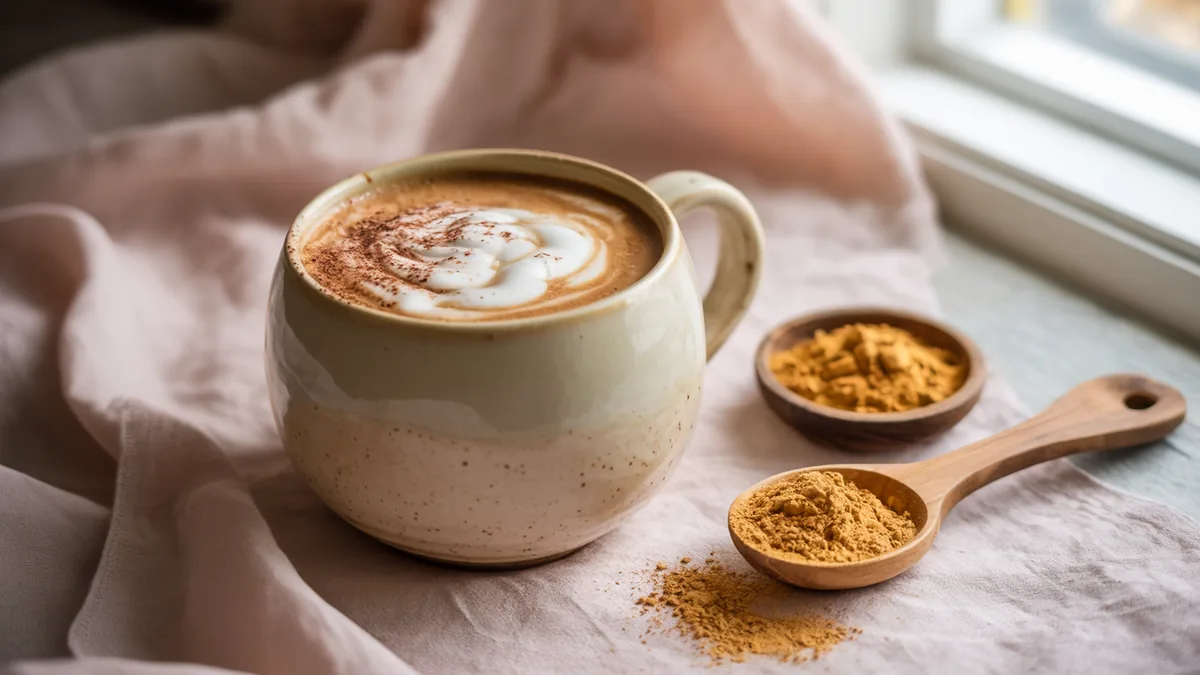
If you searched for an adaptogen latte recipe, here is mine in one line: warm your milk, whisk in a small measured dose of one adaptogen powder, sweeten lightly, add a warming spice, and sip. The base is that simple, and below I share an ashwagandha version, a mushroom version, a maca morning cup, and a cacao one.
Let me be honest up front, because it matters more here than with most drinks. Adaptogens are herbs and mushrooms with real cautions, not magic dust, and the evidence for most of them is early and modest. I treat an adaptogen latte as a warm, tasty cup with a traditional ingredient stirred in, never as a treatment, and I read the safety notes every single time.
That honesty is the whole spirit of this site. If you love the warm-milk format, this is a cousin of my golden milk and my moon milk, just built around a single adaptogen at a time so you always know exactly what you are drinking and why.
| Version | Adaptogen + amount | Best for |
|---|---|---|
| Ashwagandha bedtime | 1/2 tsp ashwagandha | A calm wind-down, no caffeine |
| Reishi mushroom | 1/2 to 1 tsp reishi | An earthy evening cup |
| Maca morning | 1 tsp maca | A malty, mellow start to the day |
| Cacao adaptogen | 1 tbsp cacao + 1/2 tsp adaptogen | A cozy hot-chocolate treat |
| Base spice | Cinnamon, pinch of salt | Rounds out any version |
| Sweetener | 1 to 2 tsp honey or maple | Softens the earthy powders |
What an adaptogen latte actually is
Short version: warm or iced milk with a spoon of adaptogen powder, a little sweetener, and a warming spice stirred in.
An adaptogen latte is, plainly, a milky drink with a spoon of adaptogen powder stirred into it. That is the whole concept. You warm some milk, whisk in a half teaspoon of something like ashwagandha or reishi, add a little honey and a shake of cinnamon, and pour it into your favorite mug. It is not foamy art from a cafe and it is not a magic potion. It is a cozy, faintly earthy drink that tastes like a malted, spiced version of warm milk, and it gives you a small ritual to wrap your hands around.
So what is an adaptogen? The short, honest answer: it is a loose marketing term for certain plants and mushrooms, like ashwagandha, reishi, maca, and tulsi, that some traditions have used for a long time and that get talked about as helping the body handle stress. The science is early and limited, and I want to be upfront about that from the first paragraph. The Cleveland Clinic explainer on adaptogens is a calm, plain-language read if you want the real picture. I drink these because the ritual is nice and the flavor grew on me, not because I think a mug fixes my cortisol.
Here is where I draw clear lines, because I have a few cozy drinks on this site and they are genuinely different. This is not my golden milk recipe, which is turmeric-based and built around warm anti-inflammatory spices. It is also not my moon milk recipe, which is specifically a bedtime ashwagandha milk with a sleep angle. And it is not my matcha latte, which is a green-tea drink. The adaptogen latte is the umbrella idea: pick any adaptogen, build a simple milky base, and go. I will point you to the others when their version fits better than mine.
I came to these slowly and a little skeptically. A friend handed me a reishi latte at her kitchen counter a couple of winters ago and I braced for something medicinal and grim. It tasted earthy, a bit like coffee's mellow cousin, weirdly soothing. I did not feel transformed. But I liked the warm mug at the end of a long day, and I liked that it was not coffee at 8pm. That is the honest origin story. A nice drink, a small habit, no miracles promised.
What you need
The lineup: milk, one adaptogen powder, a little honey or maple, cinnamon, a pinch of salt, and an optional coffee or cacao base.
The beauty of this drink is how little it asks of you. You need one adaptogen powder, not all of them, plus pantry basics you almost certainly already own. Here is my standard single-mug list. Pick one powder from the adaptogen line and skip the rest.
- 1 cup milk of choice. Oat milk is my default for body and froth, but any milk works. More on this below.
- 1/2 to 1 teaspoon adaptogen powder. Choose one: ashwagandha (start at 1/2 tsp, it is strong and bitter), reishi mushroom (1/2 to 1 tsp), maca (1 tsp, malty and mild), or tulsi (1/2 tsp, a bit like minty clove).
- 1 to 2 teaspoons honey or maple syrup. Earthy powders genuinely need a little sweetness to soften them. Do not skip this on your first try.
- 1/4 teaspoon ground cinnamon. The friendliest spice to pair with these powders. Warm and rounding.
- A tiny pinch of salt. Sounds odd, but it tames the bitterness and makes everything taste fuller.
- A splash of vanilla, optional, maybe a quarter teaspoon. Makes the whole mug taste more like a treat.
- Optional base: a shot of espresso or 1/2 cup brewed coffee for a morning maca version, or 1 tablespoon cacao or cocoa powder for the chocolate version.
That is the entire shopping list. The only thing I would actually go buy on purpose is the one adaptogen powder you want to try, and I will say plainly in the safety section that where you buy it matters a lot. Everything else is honey, milk, and cinnamon, which is to say, things on your counter right now.
How I make the base latte
The trick: whisk the powder into a small amount of warm milk first to make a smooth paste, then add the rest. No clumps.

The single mistake everyone makes the first time is dumping powder straight into a full mug of hot milk. Adaptogen powders, especially reishi and ashwagandha, clump like cocoa does. You get a gritty raft floating on top and a bitter sludge at the bottom. So I always do a tiny paste step first. It takes ten extra seconds and it is the whole difference between cafe-smooth and grim-and-grainy.
Here is exactly how I build one mug. Warm the cup of milk in a small pot over medium-low heat, or microwave it for about ninety seconds, until it is steamy but not boiling. Pour two or three tablespoons of that warm milk into a separate mug or small jar, add your adaptogen powder, the cinnamon, the pinch of salt, and the honey, and whisk hard with a small whisk or a milk frother until it is a smooth, glossy paste with no dry lumps. This is the secret move. Treat the powder like cocoa and it behaves like cocoa.
Now pour the rest of the warm milk into the paste, add the vanilla, and whisk again until it is uniform and a little frothy on top. If you have a handheld frother, run it for ten seconds for a proper foamy cap. Pour it into your favorite mug, dust a little extra cinnamon over the foam, and that is the base adaptogen latte. From cold milk to mug, it is about five minutes, most of which is the milk warming.
If you do not own a frother, a jar with a tight lid is your best friend. Make the paste, add the warm milk, screw the lid on tight, wrap a towel around it because it is hot, and shake for ten seconds. You get foam and an even mix and one fewer tool to wash. I do this more often than I admit, usually because the frother is dirty in the sink.
A couple of small things I learned the slow way. Do not let the milk actually boil, because boiled oat or nut milk can get a skin and a slightly cooked taste that fights the earthy powder. Steamy is the target. And taste before you commit to the sweetness, because ashwagandha and reishi are noticeably bitter and you may want a second teaspoon of honey, while maca is mild and malty and often needs less. The base recipe below is the ashwagandha version, the one I make most, but the method is identical for every powder. Master the paste step once and you can make all four.
My four versions, by mood
Four ways: an ashwagandha bedtime cup, an earthy reishi mushroom latte, a malty maca morning, and a cozy cacao adaptogen treat.
I do not drink the same one every day. Each adaptogen has its own flavor and its own time of day for me, so here are the four versions that actually live in my rotation. All of these use the same paste-then-pour method from above. The only thing that changes is the powder, the base, and the hour I reach for it.
The ashwagandha bedtime latte. This is my base recipe and my most-made cup. Half a teaspoon of ashwagandha, warm milk, honey, cinnamon, a pinch of salt, no caffeine. It is earthy and a touch bitter, which the honey rounds out, and I drink it in the evening as a wind-down ritual. If you specifically want the bedtime, sleep-focused version with a fuller story around it, I wrote that one out in detail as my moon milk recipe, so head there for the cozy nighttime treatment. This page keeps it as one option among four.
The reishi mushroom latte. Reishi is a mushroom, and yes, it tastes a little like the forest, in a good way, like coffee's mellow earthy cousin. I use half to one teaspoon, lean on the cinnamon and a touch more honey, and sometimes add a teaspoon of cacao to bridge the earthiness. This is an evening cup for me, calm and a bit grounding in flavor. If reishi alone tastes too strong, the cacao version below is a gentler doorway into mushroom powders.
The maca morning latte. Maca is the friendliest of the bunch by a mile. It tastes malty and a little nutty, almost like a caramel-adjacent thing, and it is mild enough that newcomers usually like it right away. I use a teaspoon, and this is the one I build on a coffee base: pull a shot of espresso or use half a cup of strong brewed coffee, then top with the maca milk. It tastes like a homemade malted latte and the caffeine is real, so this is a daytime drink, full stop.
The cacao adaptogen latte. This is the crowd-pleaser and the one I make for skeptics. A tablespoon of cacao or cocoa powder turns the whole thing into a grown-up hot chocolate, and the chocolate hides almost any earthy powder underneath. I usually pair it with half a teaspoon of reishi or ashwagandha, extra honey, and a bigger pinch of salt. It tastes like a cozy treat first and a wellness drink second, which is honestly the right order. If you have only ever found adaptogen powders bitter and off-putting, start here.
One practical note across all four. I keep the powders in small labeled jars in one spot, because three brown powders look identical and I have absolutely made a maca latte that was secretly reishi. Label your jars. Your future groggy self will thank you.
Choosing your milk and your base
My pick: barista oat milk for body and froth, plus an optional coffee or cacao base depending on the version.
Milk does a lot of work here, because earthy adaptogen powders need a creamy, slightly sweet backdrop to taste good. My ranking, learned the boring way through many mugs. Oat milk is my number one, especially a barista blend, because it has body, froths well, and brings a natural sweetness that softens bitter powders. Coconut milk from a carton is a close second and a little richer, lovely with the cacao version.
Dairy milk is genuinely great if that is your thing. Whole milk froths like a dream and its fat carries the spice and rounds the bitterness better than most plant milks. Almond milk works but tastes thin and can let the earthy powder come through too sharply, so I push the honey up a notch when I use it. Soy milk is solid and high in protein. I would steer clear of unsweetened, watery nut milks for your first try, because they give the powder nothing to hide behind, and a bare ashwagandha latte in thin almond milk is a tough first impression.
For the base, you have a real choice that changes the whole drink. No base at all keeps it caffeine-free and gentle, which is what I want for the ashwagandha and reishi evening cups. A coffee base, espresso or strong brew, turns the maca version into a morning malted latte and adds real caffeine, so save that for daytime. A cacao base turns any of them into a cozy chocolate drink and is the friendliest entry point. You can also stir in a little brewed tulsi tea instead of plain water if you want a herbal, slightly minty backbone, though I keep it simple most days. Match the base to the time of day and you will not accidentally caffeinate yourself at 9pm.
The note that really matters: these are supplements
Read this one: adaptogens are supplements with real cautions, not cures. Talk to your doctor or pharmacist before using them.
I need to slow down and be genuinely honest here, because this is the part of the article that matters most and the part most recipe blogs skip. Adaptogens are not a fun flavor like cinnamon. They are supplements, with real effects and real cautions, and the evidence behind the popular claims is limited and early. This drink is a tasty warm beverage with a traditional ingredient stirred in, not a treatment for stress, sleep, hormones, energy, or anything else. I am not making any medical claim, and you should be skeptical of anyone who does.
The single most important step: talk to your doctor or a pharmacist before you start using any adaptogen, especially if you take any medication, have a health condition, or are pregnant or breastfeeding. A pharmacist is genuinely great for this because they can check interactions for free. For balanced background, the NIH NCCIH page on ashwagandha lays out what is and is not known, and the NIH Office of Dietary Supplements fact sheets are the place to look up any specific ingredient before you buy it.
Now the specific cautions, because they are not the same for every powder. Ashwagandha is the one to be most careful with. It is not recommended in pregnancy or breastfeeding, and people with thyroid conditions, autoimmune conditions like lupus or rheumatoid arthritis, or anyone on sedatives, thyroid medication, blood-sugar or blood-pressure drugs should avoid it or clear it with a doctor first, because it can interact. There are also rare reports of liver injury linked to ashwagandha supplements, which is exactly why this is not a casual everyday-for-everyone thing. Stop and see a doctor if you feel unwell after taking it.
The others have cautions too. Maca is generally considered food-like and gentle, but if you have a hormone-sensitive condition it is worth asking your doctor about. Reishi and other mushroom powders can interact with blood thinners and blood-pressure medication and may upset some stomachs, so go slow. And do not assume more is better with any of these. Stick to the small amounts on the label, not heaping spoons.
Two more honest points. Quality and sourcing matter enormously, because supplements are loosely regulated, and powders have been found contaminated or mislabeled. Buy from a reputable brand that does third-party testing, look for a seal from a tester like NSF or USP, and skip the cheapest mystery bag online. And please keep the whole thing in perspective: a mug now and then is a small amount and a nice ritual, but it is still a supplement, not a vitamin you take for granted. When in doubt, leave the powder out and just enjoy a spiced warm milk, which is delicious on its own.
How I actually drink it
My ritual: one powder at a time, evening for the calm ones, morning for maca, and never on an empty, anxious day.

Here is the honest rhythm of how this fits my life, because a recipe only matters if you actually make it and a supplement only makes sense if you are sensible about it. I do not drink an adaptogen latte every single day, and I do not stack three powders into one mega-mug. I pick one adaptogen, drink it a few times a week at most, and pay attention to how I feel. That measured approach is half of doing this responsibly.
My favorite slot for the calm versions, ashwagandha or reishi, is the evening, somewhere in that hour after dinner when I want a warm thing in my hands but absolutely do not want coffee. I make the mug, dim the kitchen lights, and drink the first half before I touch my phone. That small pause is genuinely most of the appeal. The maca version is the opposite, a morning or early-afternoon cup, usually on a coffee base, when I want something a little more interesting than plain coffee.
I drink it slowly, because it is warm and because the powder likes to settle, so I give it a stir halfway down. I always make it with food nearby rather than on a jittery empty stomach, especially the coffee-based maca one. And I keep a simple rule for myself: if I am pregnant, sick, starting a new medication, or just feeling off, the powder comes out and I make a plain cinnamon honey milk instead. It is still cozy. It still counts as a ritual. It is just safer, and safe is not boring.
It has also quietly become a thing I make for friends who are curious, and I am careful there too. I always tell them it is a supplement, suggest they start with the gentle cacao or maca version, and mention the doctor-or-pharmacist line out loud rather than handing over a mystery mug like it is nothing. The nicest moments are when someone takes a skeptical first sip of the cacao reishi one and goes, oh, that just tastes like good hot chocolate. That is the right reaction. It is a nice drink first. Everything else is a maybe, and I treat it like one.
When this won't fit your life
Real talk: if you are pregnant, on certain medications, or just want a simple warm drink, skip the powder entirely.
I am not going to pretend this is for everyone, because it genuinely is not. If you are pregnant or breastfeeding, or you take medication for your thyroid, blood pressure, blood sugar, mood, or sleep, or you have an autoimmune or hormone-sensitive condition, the smart move is to skip the adaptogen powder unless your doctor specifically okays it. There is no flavor good enough to be worth ignoring that. Make the spiced honey milk underneath instead and you lose nothing but a question mark.
There is also the simple matter of taste. Ashwagandha and reishi are earthy and bitter, and not everyone is going to enjoy that, no matter how much honey you add. If you try the cacao version and still find it medicinal and off-putting, that is a perfectly valid answer, and you might be happier with my turmeric-based golden milk recipe or my green-tea matcha latte, both of which are cozy warm drinks without the supplement question hanging over them.
And if what you actually want is a no-fuss, pour-and-drink moment, this is one step more than that. There is a paste to whisk, a powder to measure, and a real need to think about whether the ingredient suits you today. For me the ritual is worth it a few evenings a week, and the honesty is the point: a tasty warm cup with a traditional ingredient, treated with respect, not a magic fix. If that framing sounds right to you, welcome. If it does not, the warm milk underneath is waiting and it never needed the powder to be lovely.
Helpful sources and next reads
Reliable external sources
- NIH NCCIH: ashwagandha
- NIH Office of Dietary Supplements: fact sheets
- Cleveland Clinic: what are adaptogens
More from Sabrina Saturno
You may also love


FAQ
What is an adaptogen latte?
It is a warm or iced milk drink with a spoon of adaptogen powder, like ashwagandha or reishi, plus a little honey and cinnamon stirred in. A cozy drink, not medicine.
What adaptogen should I start with?
Maca is the friendliest, malty and mild, and the cacao version hides any earthy powder. Save stronger ashwagandha and reishi for once you know you like the flavor.
Is an adaptogen latte good for stress or sleep?
The evidence is early and limited, so I make no health claims. It is a soothing warm ritual, not a treatment. Talk to a doctor before relying on any adaptogen.
Is ashwagandha safe for everyone?
No. Avoid it in pregnancy and breastfeeding, and check with a doctor if you have thyroid, autoimmune, or other conditions, or take sedatives or other medications. Rare liver-injury reports exist.
Why does my powder go clumpy?
Adaptogen powders clump like cocoa. Whisk the powder into 2 to 3 tablespoons of warm milk first to make a smooth paste, then add the rest of the milk.
What milk is best for an adaptogen latte?
Barista oat milk is my favorite for body and froth, and its sweetness softens bitter powders. Whole dairy milk and carton coconut milk also work well.
Does an adaptogen latte have caffeine?
Not on its own. The plain milk-and-powder version is caffeine-free. It only has caffeine if you build it on a coffee or espresso base, like the maca morning version.
How is this different from moon milk or golden milk?
Moon milk is a bedtime ashwagandha milk and golden milk is turmeric-based. This is the umbrella idea: any single adaptogen in a simple milky base. See those links for their versions.
Can I mix several adaptogens in one cup?
I keep it to one powder at a time so I can tell how I feel and avoid stacking effects. More is not better with supplements. Stick to the small label amounts.
What does a mushroom latte taste like?
Reishi tastes earthy, a bit like coffee's mellow cousin or the forest, in a good way. Cinnamon, honey, and a little cacao smooth it out for newcomers.
How much adaptogen powder do I use?
Start small: about 1/2 teaspoon ashwagandha, 1/2 to 1 teaspoon reishi, or 1 teaspoon maca per mug. Follow your product label and do not exceed it.
Does the brand of powder matter?
Yes, a lot. Supplements are loosely regulated, so buy from a reputable brand that does third-party testing and look for an NSF or USP seal. Skip cheap mystery bags.
Can I make it iced?
Yes. Make the paste in a little warm milk first so it dissolves, then add cold milk and pour over ice. The warm bloom is what stops it going grainy.
The version that lasts
The version that lasts, for me, is the simple one I do not have to overthink. One powder, warm oat milk, a spoon of honey, a shake of cinnamon, and the small paste step that keeps it smooth. The elaborate three-mushroom blends I tried early on are long gone from my counter. The plain ashwagandha or maca mug, a few evenings or mornings a week, is the habit that actually stuck.
I also want to leave you with the honest framing one more time, because it is the whole point of this page. An adaptogen latte is a tasty warm drink with a traditional ingredient in it. It is not a cure, the science is still early, and it deserves a quick word with your doctor or pharmacist before you make it a regular thing, especially if you are pregnant or take any medication. Treat the powder with respect and the ritual with pleasure, and you have the balance right.
So make it yours within those lines. Lean on the gentle cacao and maca versions if the earthy ones are not for you, keep the warm golden milk recipe for turmeric days and the moon milk recipe for bedtime, and never feel you must add the powder at all. A plain spiced honey milk is still a cozy cup. Match the drink to your day, source your powders carefully, and enjoy the small warm pause. That is the part that lasts.