
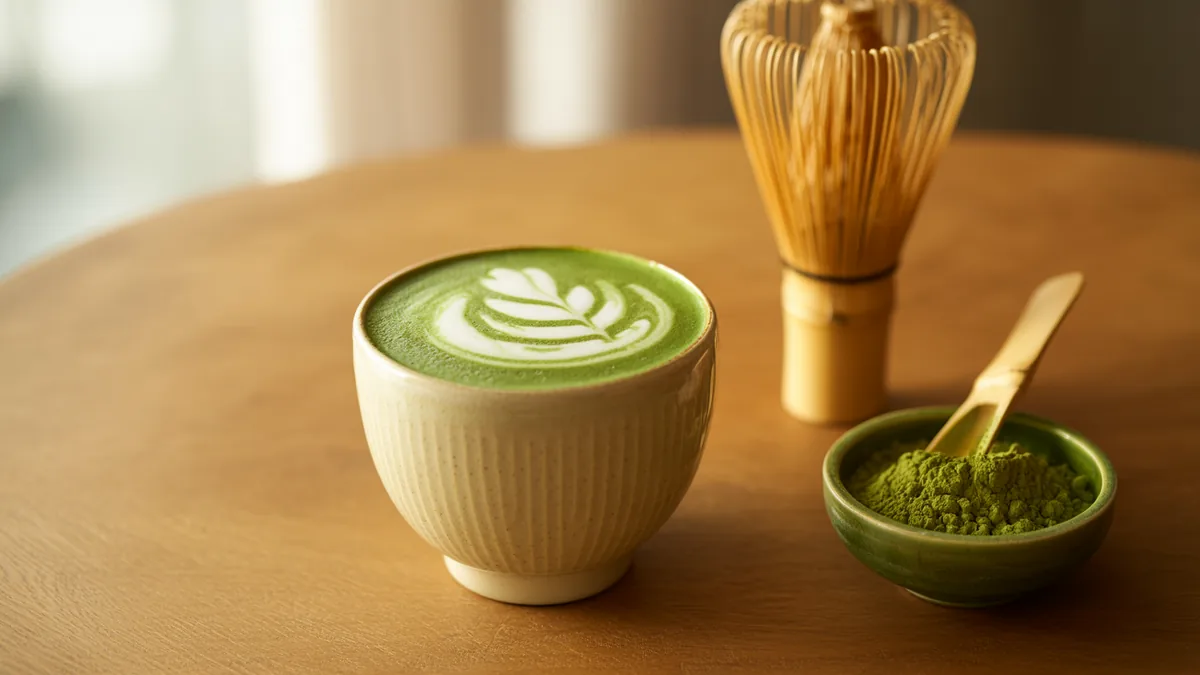
If you came here for matcha latte benefits, here is the short, honest version before anything else: a matcha latte gives you a smoother, calmer kind of energy than a regular coffee, it brings antioxidants along for the ride, and it is genuinely lovely to make. It is whisked green tea powder with milk. That is the whole drink. Everything below is the part I wish someone had told me before my first lumpy, bitter, slightly seaweedy attempt that nearly put me off matcha for good.
I want to be honest with you from the first paragraph, because matcha has been sold as a miracle powder that fixes your metabolism, your skin, your focus, and possibly your love life. It does not do all that. What a matcha latte actually offers is a steady lift without the coffee jitters, a small ritual you can lean on, and a real, modest set of perks backed by the research on green tea. Held that way, it never disappoints.
I drink it most on slow mornings, the kind where I want to ease into the day instead of getting slapped awake by espresso. Over time I landed on a handful of versions I actually use: a hot whisked latte, an iced one for warm months, the matcha-vs-coffee swap, and the grade decision that quietly makes or breaks the cup. I will walk you through all of it, plus the honest benefits and the easy step-by-step recipe.
| Option | What it is | Best for |
|---|---|---|
| Hot matcha latte | Whisked matcha with steamed or warm milk | Slow mornings and cozy, calm energy you sip slowly. |
| Iced matcha latte | Whisked matcha poured over ice and cold milk | Warm months and an afternoon lift without the heat. |
| Matcha vs coffee | Less caffeine, paired with calming L-theanine | People who love coffee's energy but hate its jitters and crash. |
| Ceremonial grade | Finer, sweeter matcha from young first-harvest leaves | Drinking straight or in a latte where flavor matters most. |
| Culinary grade | Stronger, more bitter matcha for mixing | Lattes with sweetener, smoothies, baking, and everyday cups. |
What a matcha latte is
Plain definition: A matcha latte is finely ground green tea powder whisked with a little hot water, then combined with steamed or cold milk and an optional touch of sweetener.
Matcha is green tea in its most concentrated form. Instead of steeping leaves and throwing them away, you grind the whole leaf into a fine bright-green powder and whisk it into water, so you drink the leaf itself. That is why a matcha latte feels different from a cup of brewed green tea. You are getting more of everything the leaf holds, including more caffeine and more of the calming compounds.
The plant is shade-grown for a few weeks before harvest, which is the small farming detail that matters. Shading pushes the leaves to make more chlorophyll, giving matcha that vivid green, and more L-theanine, the amino acid behind matcha's signature calm. Then the leaves are steamed, dried, and stone-ground. By the time it reaches your kitchen, it is a soft powder that clumps easily, which is exactly why we whisk.
A latte is just that whisked matcha loosened with milk. Traditional matcha, called usucha, is whisked with water alone and drunk straight. The latte is the Western, cozier cousin, and the one most people mean when they search for a matcha latte recipe. You can make it hot with steamed milk or iced over a tall glass of cold milk, and either way the green-tea base is the same. If you would rather have a coffee-based latte with a floral twist, my lavender latte recipe is the espresso-forward sibling to this green tea cup.
The pieces, in one breath
Matcha powder brings the color, the grassy flavor, the caffeine, and the antioxidants. Hot, not boiling, water blooms it without scorching it bitter. A whisk beats out the clumps and builds a little froth. Milk softens the green-tea edge into something creamy. A small bit of honey or maple makes it a drink you crave rather than tolerate. For my wider morning tea ritual, see my brew up wellness piece, which goes beyond matcha into the broader cozy-tea habit.
Matcha latte benefits, honestly
The honest summary: Matcha offers calmer caffeine energy thanks to L-theanine, antioxidants from catechins like EGCG, and a focused feeling many people describe, though the strongest claims are still modest.
Let me give you the matcha health benefits without the supplement-aisle hype. The most reliable perk is the one I feel every day: calmer energy. Matcha contains caffeine, but it also contains a generous amount of L-theanine, an amino acid that promotes a relaxed, alert state. Paired together, they tend to smooth out caffeine's sharp edges, so you get the lift without the racing heart. That is the headline benefit, and it is the honest one.
The second real perk is antioxidants. Green tea is rich in catechins, a group of plant compounds, and the most studied is EGCG. Because matcha is the whole leaf rather than a steeped-and-discarded one, a cup delivers more of these than ordinary brewed green tea. The Harvard Nutrition Source on tea describes green tea's catechins and links to antioxidant activity, while keeping the framing measured rather than miraculous.
What about all the bigger claims, the ones about metabolism, heart health, and weight? Here is where I stay careful. Cleveland Clinic's overview of matcha benefits notes the antioxidant and calm-focus story is real, while many splashier effects come from concentrated extracts or small studies, not a daily latte. So I treat metabolism and heart benefits as a maybe, a nice possible bonus, never the reason I make my cup.
The third perk is more personal but widely reported: focus. The L-theanine and caffeine combination is the same one many people chase with fancy supplements, and matcha delivers it in a drink. I notice a clearer, less frantic head for an hour or two. The NIH NCCIH summary of green tea is a good reality check on how much the science actually supports, and it is worth reading before you believe any single bold headline.
So the honest tally: matcha and energy is the standout, antioxidants are a genuine plus, focus is real for many people, and the grander health claims are unproven at latte-sized amounts. Importantly, matcha still has caffeine, so it is not a free pass if you are sensitive. I drink it because the calm energy is real and the cup makes me happy. Anything beyond that, I treat as a bonus I never count on.
Matcha benefits for skin
The honest answer: The antioxidants in green tea may support skin, and topical green tea is studied, but no drink is a skincare routine. Treat matcha for skin as a gentle plus, not a treatment.
People ask about matcha benefits for skin constantly, so let me answer it the way I would want answered. Green tea's catechins, especially EGCG, are antioxidants, and antioxidants help your body deal with the everyday oxidative stress that contributes to aging skin. There is real research interest in green tea applied topically and consumed, and that is the honest, grounded version of the skin story.
But here is the part the glow-promising posts skip. Drinking one matcha latte will not clear breakouts, erase fine lines, or replace sunscreen. Most of the firmer skin evidence involves green tea extracts used on the skin, not a cup of latte, and diet affects skin in slow, whole-pattern ways rather than from a single drink. So I would never tell you matcha is a skincare step. It is a pleasant beverage that happens to bring antioxidants along.
The way matcha actually helps my skin is indirect and, honestly, more reliable. When I swap an afternoon coffee for a matcha latte, I am better hydrated, less jittery, and I sleep better, and sleep and stress show up on my face far more than any single antioxidant. So I count matcha for skin as a quiet, indirect plus, paired with sunscreen, sleep, and water, which do the real work. If you want the skin side properly, the plate and the routine matter more than the mug.
Matcha vs coffee for calm energy
The short version: Matcha has less caffeine than coffee but adds L-theanine for a calmer, longer, jitter-free lift. Coffee hits harder and faster; matcha is gentler and steadier.
This is the question that made me a matcha person, so let me lay out matcha vs coffee plainly. A matcha latte usually has less caffeine than a standard coffee, often roughly half to two-thirds, depending on how much powder you use. So if raw caffeine is what you are after, coffee wins on sheer punch. But raw punch is exactly the thing I stopped wanting in my late twenties.
The real difference is L-theanine. Coffee gives you caffeine alone, which for many of us means a fast spike, a jittery middle, and an early-afternoon crash. Matcha pairs its caffeine with L-theanine, and that amino acid tempers the spike. The result most people describe, and the one I feel, is a calmer, more even energy that comes on gently and fades gently, without the wired feeling or the hard drop.
There is also the stomach side. Coffee is more acidic and can be rough on an empty stomach or an anxious morning. Matcha, especially as a latte with milk, sits more softly for me. It is the same gentle-morning logic behind a caffeine-free option like my cortisol tea, which I reach for on days I want warmth with no caffeine at all. Matcha is my middle gear: real energy, softer landing.
I will not pretend matcha is better for everyone. If you need a hard, fast wake-up and your stomach is fine with coffee, coffee is a perfectly good drink. But if you love the ritual and energy of coffee yet hate the jitters and the crash, matcha is worth a real two-week try. For me the switch was less about health and more about how I wanted to feel at 3 p.m., which was calm and clear rather than frayed.
How to make a matcha latte, hot
Hot latte in short: Sift one to two teaspoons of matcha, whisk it smooth with a little hot, not boiling, water, then pour in a cup of steamed or warm milk and sweeten to taste.

Learning how to make a matcha latte properly is the whole game, because the difference between a sad gritty cup and a lovely one is two small habits: sifting and whisking. This is the version I make most mornings, and it takes about five minutes start to finish for one generous mug. Double everything for two. I almost always use oat milk because it froths beautifully, but any milk works.
Ingredients
- 1 to 2 teaspoons matcha powder, sifted
- 2 tablespoons hot water, about 175F, not boiling
- 1 cup milk of choice, dairy or plant
- 1 teaspoon honey or maple syrup, optional, to taste
Method
- Sift the matcha into a bowl or wide cup through a small fine strainer. This single step kills the clumps that otherwise refuse to dissolve. It feels fussy; it is worth it.
- Add the hot water. Aim for about 175F, which is water that has cooled for a minute after the kettle clicks off. Boiling water scorches matcha and turns it bitter, so let it sit a beat first.
- Whisk in a quick zigzag, not a circle, with a bamboo whisk or a small electric frother until the matcha is smooth, glossy, and lightly frothy on top. This takes maybe fifteen to twenty seconds.
- Steam or warm the milk, pour the whisked matcha in, stir, and add honey or maple to taste. A spoon of the milk froth on top is pure theater, and worth it.
The no-clumps note that matters
Here is the one piece of matcha technique that changes every cup. Matcha will not dissolve like sugar; it suspends in water, and clumps trap dry powder that turns gritty. Sifting first and whisking the powder with just a little hot water before the milk goes in are the two moves that fix it. If you skip them and dump matcha straight into milk, you get lumps every time. Bloom it in water first, always, then add milk. That zigzag whisk is doing real work.
Iced matcha latte
Iced in short: Whisk the matcha smooth with a little hot water as usual, let it cool a moment, then pour it over a tall glass of ice and cold milk and stir or shake.

The hot latte loses its charm the second the weather turns warm, so the iced matcha latte is how I keep matcha in rotation through summer. The mistake people make is dumping matcha powder straight into cold milk and wondering why it tastes raw and grainy. Cold water will not loosen matcha properly. You still bloom it in a splash of hot water first, even though the finished drink is cold.
So the method is almost the same as the hot version. Sift one to two teaspoons of matcha, whisk it smooth with two tablespoons of hot, not boiling, water until frothy, then let it cool for a moment. Fill a tall glass with ice, pour in cold milk, and pour the whisked matcha over the top. You get those pretty green-and-cream layers for a second before you stir. Shake it in a jar if you want it fully blended.
For sweetener, I dissolve a little honey or maple into the hot matcha while it is still warm, because it will not melt into a cold drink. A splash of vanilla makes the iced version taste like a treat. This is my mid-afternoon answer when I want a lift but not a hot drink and not more coffee, and it slots in nicely alongside something like my balanced breakfast bowl on a slow weekend morning.
Choosing matcha: ceremonial vs culinary
Grade in short: Ceremonial grade is finer, sweeter, and best for drinking; culinary grade is stronger and more bitter, made for lattes with sweetener, smoothies, and baking.
The single biggest reason a homemade matcha latte tastes bad is the powder, not the technique. Cheap, dull, yellow-green matcha tastes bitter and fishy no matter how well you whisk. Good matcha is vivid, almost neon green, and smells sweet and grassy. So before you blame yourself, look at the tin. The grade and freshness matter more than any skill you bring.
Ceremonial grade comes from the youngest, first-harvest leaves, stone-ground very fine. It is smoother, naturally a little sweet, and meant to be whisked with water and drunk straight, which is why it shines in a latte too. It costs more, and for a daily latte that is fine to skip, but if you want to taste matcha at its best, this is the one to splurge on now and then.
Culinary grade is made from later-harvest leaves. It is stronger, more astringent, and a touch bitter, which is a feature, not a flaw, when you are mixing it with sweetened milk, blending it into smoothies, or baking it into something. For an everyday matcha latte with a little honey, a good culinary grade is genuinely all you need, and it is kinder to your budget.
Whichever you pick, buy a small amount, store it sealed away from light and heat, and use it within a couple of months. Matcha fades fast once opened; the bright green and the flavor both dull with time and air. I keep mine in the original tin inside a cupboard, not on a sunny counter, and I resist buying the giant bag no matter how good the price looks.
Caffeine and how much to drink
The honest answer: A matcha latte has caffeine, usually less than coffee but more than steeped green tea. One to two cups a day suits most people, and the L-theanine softens the hit.
Let me be clear, because the calm-energy story can make matcha sound caffeine-free, and it is not. Matcha has caffeine, often somewhere between brewed green tea and a coffee, depending on how much powder you whisk in. A latte made with a teaspoon is gentler; one made with two packs more of a punch. So if you are watching your intake, the amount of powder is your dial.
For most healthy adults, one to two matcha lattes a day sit comfortably within typical caffeine guidance, especially if matcha is replacing coffee rather than adding to it. The calming L-theanine is why the same caffeine feels softer than coffee's, but soft is not the same as zero. I notice if I have matcha too late, so I keep my last cup to early afternoon, the same way I would with any caffeinated drink.
If you are caffeine-sensitive, start with a single teaspoon, drink it earlier in the day, and see how you feel before making it a habit. And if you want the cozy ritual with no caffeine at all, that is exactly what an evening cup of my golden milk is for. I think of matcha as a daytime drink and golden milk as its evening counterpart, and that rhythm keeps the caffeine where it belongs.
How I actually drink it
The honest method: One matcha latte most mornings, made slowly as a small ritual, sipped before I touch my phone, with the whisk rinsed right away before the green sets.
My real routine is far less precious than a recipe section might suggest. Most mornings I make one matcha latte and treat the five minutes of sifting and whisking as the gentle start to my day rather than a chore. The slowness is the point. I am not chugging it on the way out the door; I am standing at the counter, whisking, letting the morning begin at a human pace.
I drink it before I open my phone, with the curtains open, usually warm in winter and iced once the weather turns. I keep the sweetener small, just enough to look forward to, because a heavily sweetened matcha stops feeling like the calm drink I want and starts feeling like dessert. On days I want a longer wind-down at night, I bookend the day with my evening reset routine, and matcha is simply the morning half of that rhythm.
The other honest thing: matcha stains, and the bright green sets fast on a whisk, a cloth, or a counter. So I rinse my bamboo whisk and bowl right after I pour, before the green dries into them. A bamboo whisk should never go in the dishwasher; a quick rinse and an air-dry keeps it splaying nicely for months. None of this is a problem once you expect it.
When this won't fit your life
A matcha latte is a drink, not a treatment, and a few people should be thoughtful about it. If you are caffeine-sensitive, remember matcha is not decaf; it has real caffeine, and the calm L-theanine does not cancel that out. Start with a small amount, keep it to early in the day, and skip it entirely if caffeine reliably leaves you wired, anxious, or sleepless. There is no prize for forcing a drink that does not agree with you.
If you are pregnant or breastfeeding, caffeine guidance is lower, and matcha counts toward your daily limit along with any other coffee or tea, so it is worth keeping the total modest and checking with your provider. Green tea can also affect how well your body absorbs iron from plant foods, so if you are managing low iron, it helps to drink matcha between meals rather than alongside an iron-rich plate. None of this should scare you off a lovely cup; it is just the line between a nice drink and overdoing it. This article is one woman sharing what works for her, not medical advice, so when something specific to your health is at stake, ask a clinician rather than a blog.
Helpful sources and next reads
Reliable external sources
- Harvard Nutrition Source: tea and green tea
- Harvard T.H. Chan School: The Nutrition Source
- Cleveland Clinic: matcha tea benefits
- NIH NCCIH: green tea, what the science says
More from Sabrina Saturno
You may also love

FAQ
What are matcha latte benefits?
The honest perks are calmer energy than coffee, thanks to L-theanine paired with caffeine, plus antioxidants from green tea catechins like EGCG. Many people also report better focus. Bigger claims about metabolism or weight are not well supported at latte-sized amounts.
Is matcha better than coffee?
Not better for everyone, but different. Matcha has less caffeine and adds L-theanine, so the energy feels calmer and steadier with fewer jitters and a softer crash. Coffee hits harder and faster. If you love coffee but hate the wired feeling, matcha is worth trying.
How much caffeine is in a matcha latte?
It varies with how much powder you use, but a matcha latte usually has less caffeine than a standard coffee and more than steeped green tea. A one-teaspoon latte is gentler; a two-teaspoon one packs more. The amount of matcha powder is your dial.
Is matcha good for your skin?
It may help a little. Green tea's antioxidants can support the skin against everyday oxidative stress, but no drink replaces sunscreen, sleep, and water. Most firmer skin evidence involves topical green tea extracts, not a latte. Treat matcha for skin as a gentle, indirect plus.
How do you make a matcha latte?
Sift one to two teaspoons of matcha, whisk it smooth with two tablespoons of hot, not boiling, water in a zigzag until frothy, then pour in a cup of steamed or warm milk and add a little honey or maple if you like. Sifting and blooming in water prevent clumps.
How do you make an iced matcha latte?
Whisk the matcha smooth with a splash of hot water first, even for an iced drink, then let it cool a moment. Fill a tall glass with ice and cold milk and pour the whisked matcha over the top. Stir or shake. Sweeten the hot matcha before icing so it dissolves.
What is the difference between ceremonial and culinary matcha?
Ceremonial grade comes from young first-harvest leaves, ground very fine, and is smoother and naturally sweeter, best for drinking. Culinary grade is stronger and more bitter, made for lattes with sweetener, smoothies, and baking. For an everyday sweetened latte, good culinary grade is plenty.
Is it okay to drink matcha every day?
For most healthy adults, one to two matcha lattes a day are fine, especially if matcha is replacing coffee rather than adding to it. Keep an eye on total caffeine, drink it earlier in the day, and check with your doctor if you are pregnant, sensitive, or managing a health condition.
Does matcha stain?
Yes, the bright green stains whisks, cloths, counters, and clothes, and it sets fast. Rinse your bamboo whisk and bowl right after you pour, before the matcha dries into them. Never put a bamboo whisk in the dishwasher; a quick rinse and air-dry keeps it in good shape.
Can you make matcha without a whisk?
Yes. A small electric milk frother works beautifully and is what I use most. In a pinch, shake the matcha and hot water hard in a sealed jar until smooth, then add milk. The key is still to dissolve the matcha in a little liquid first so it does not clump.
Is matcha good for energy?
Yes, in a calmer way than coffee. Matcha contains caffeine for a lift, plus L-theanine, which smooths the spike into a steadier, less jittery energy that comes on and fades gently. Many people find it gives a clearer focus without the crash, though it is still caffeinated.
Does matcha help focus?
Many people, including me, find it does. The combination of caffeine and L-theanine is the same pairing some focus supplements chase, and matcha delivers it in a drink. The effect is usually a clearer, less frantic head for an hour or two rather than a dramatic boost.
The version that lasts
Here is where I have landed after a lot of bright-green whisks. The matcha latte at the top of this page is real, simple, and worth making tomorrow morning if calm energy sounds like what you need. The hot and iced versions exist so one of them fits whatever your day looks like, whether that is a slow winter cup or a tall iced glass in July.
What lasts for me was never the health halo. It was the five quiet minutes of sifting and whisking, the steady energy that does not leave me frayed by mid-afternoon, the soft green color of the thing. I drink it because it makes my mornings feel cared for, and the antioxidants riding along are a quiet bonus I do not lean on or oversell.
So buy a small tin of good matcha, sift it, bloom it in a little hot water before the milk, and sweeten it just enough to look forward to. If the whisking ever feels like a chore, a frother and a jar will carry you. If it becomes a ritual you crave, let it stay. The version that lasts is the one that feels like a calm start, not a wellness task, and that version is allowed to be enough.