
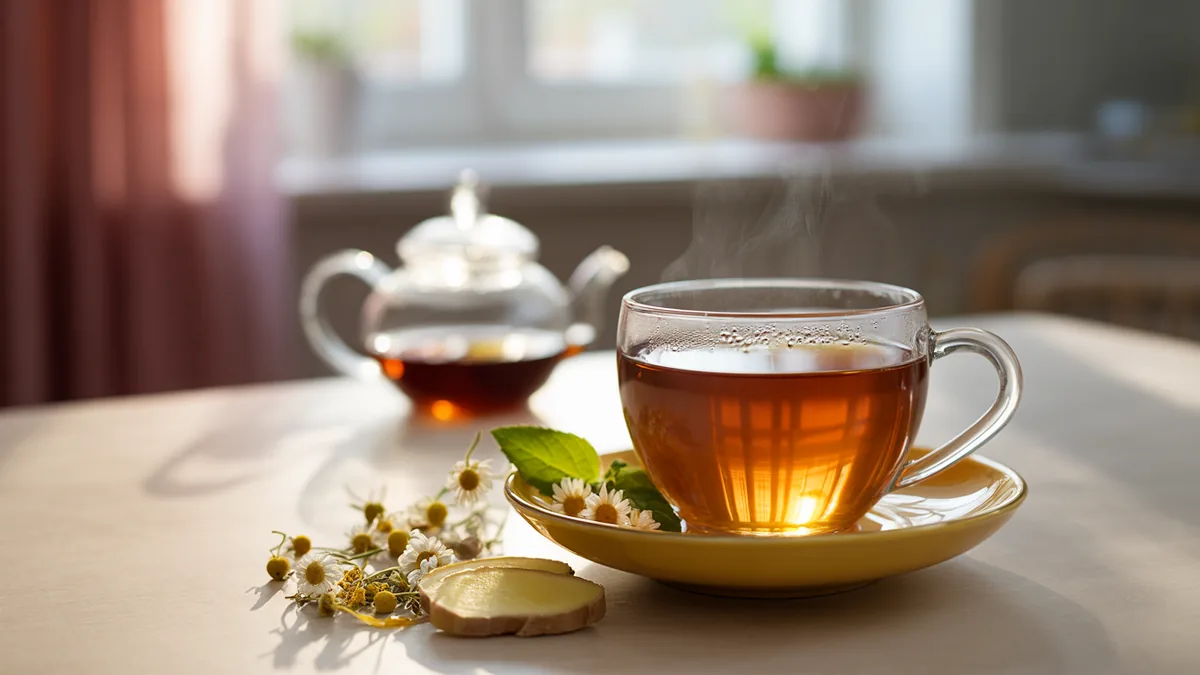
If you searched for a cortisol tea recipe, you probably had a rough week. Mine was the kind where my shoulders lived somewhere near my ears and I refreshed my inbox like it owed me money. So here is the actual recipe, right at the top, and you can screenshot it and go: chamomile, tulsi, and lemon balm, a thin slice of ginger if you like, steeped seven minutes in water that just stopped boiling. That is my base calming blend. Everything below is the part the viral charts skip.
Before we steep anything, I need to be honest about who is talking. I am not a doctor, a dietitian, or a herbalist. I am a woman who drinks a lot of tea and reads a lot of labels. Nothing here treats, diagnoses, or "balances" anything in your body, and I give no dosages. If you have real symptoms, the kind that wake you up or wear you down, please talk to a clinician rather than a blogger with a kettle. This is warm food talk and gentle lifestyle, not medical advice.
I also want to gently lower the temperature on the word cortisol, because the wellness internet has turned it into a villain. Cortisol is not poison. It is a hormone your body needs, and you cannot drink it away. What a warm cup can genuinely do is give you a reason to sit down, breathe, and stop doing the thing that was winding you up. That, honestly, is most of the magic, and I think it is enough.
| Tea blend | Key herbs | Best time of day | Why I reach for it |
|---|---|---|---|
| The base calm cup | Chamomile, tulsi (holy basil), lemon balm | Late afternoon or early evening | My all-purpose soothing cup for a tense, wired day. |
| Bedtime wind-down | Chamomile, lemon balm, a little lavender | An hour before bed | Soft, sleepy, and a signal to my brain that the day is closing. |
| The calmer coffee swap | Rooibos, a pinch of cocoa, cinnamon | The 3 p.m. slump | A warm, rich, caffeine-free stand-in for a second coffee. |
| Ginger digestive | Fresh ginger, peppermint, lemon | After a heavy or hurried meal | Settles my stomach when stress has me eating at my desk. |
| Iced summer calm | Tulsi, peppermint, lemon | Hot afternoons | The same soothing herbs, cold-brewed and poured over ice. |
What cortisol actually is
Plain definition: Cortisol is a hormone your adrenal glands release in a daily rhythm and during stress. It helps you wake up, manage energy, and respond to challenges.
Let me describe cortisol in the calmest possible terms. It is a hormone made by your adrenal glands, and it follows a daily rhythm: higher in the morning to help you get up and going, tapering down through the day so you can wind toward sleep. It also rises when you face something demanding, whether that is a deadline, a hard conversation, or a near miss in traffic. None of that is a malfunction. That is the system working.
The reason it gets a bad reputation is that modern life keeps poking the stress response when there is no real danger to run from. The body cannot always tell the difference between a tiger and a calendar full of meetings. So the rhythm can feel stuck on, and we feel tired-but-wired, the classic complaint that sends people searching for a cortisol tea recipe at eleven at night.
Here is the part I want you to hold onto: a cup of tea does not enter your bloodstream and turn a hormone dial. What it can do is interrupt the loop. Warmth, scent, a few minutes of stillness, and a held mug all nudge your nervous system toward the rest-and-digest side. That is real and worth having. It just is not the same as "lowering cortisol," and I will keep that distinction honest all the way down.
What does cortisol belly look like
People search this constantly, so let me address it plainly and without the scare tactics. "Cortisol belly" is internet shorthand, not a medical term, usually describing weight that settles around the midsection. Bodies store fat in the middle for many ordinary reasons: genetics, age, sleep, activity, diet, and general stress among them. There is no tea that targets one body part, and any product promising to melt a "cortisol belly" is selling a story. If a sudden, unexplained body change worries you, that is a clinician conversation, not a Pinterest one.
The honest truth about the cortisol detox trend
The honest summary: A "21 day cortisol detox" is a marketing frame, not a medical protocol. Your body detoxes itself. What helps is ordinary, consistent stress care.
Let me be the friend who tells you the unglamorous truth. The "21 day cortisol detox" and the endless lists of "cortisol detox recipes" are mostly clever packaging wrapped around perfectly ordinary advice. Sleep more, move your body, eat real food, get some sunlight, scroll less. That is genuinely good guidance. It just is not a detox, and your body does not have cortisol stored up that you can flush out in three weeks.
The word detox is doing emotional work, not biological work. It implies your body is dirty and a program will clean it, which is a tidy story that sells courses and powders. Your liver and kidneys handle the actual clearing of substances, quietly, every day, without a 21-day plan. When a brand attaches "cortisol coffee recipe" or "detox" to a list of habits you already half know, it is borrowing science vocabulary to make a routine feel like a breakthrough.
So I am reframing it, and I hope you will too. There is no detox here. There is just stress care: small, repeatable habits that help your nervous system settle. A calming tea is one of those habits. So is a walk, a real bedtime, and putting your phone in another room. None of it is a 21 day cure, and the freedom is that none of it has to be. You can start any of it today and stop on a hard day without "ruining" a protocol.
If you came for a structured three-week reset, I will gently redirect you. Pick one or two of the habits further down this page, attach them to something you already do, and let them be ordinary. Ordinary is what lasts. A dramatic detox you abandon by day five does far less than a quiet cup of tea you actually keep drinking.
The base calming tea recipe
The base recipe: Steep one teaspoon each of chamomile, tulsi, and lemon balm in twelve ounces of just-boiled water for five to seven minutes, then strain and sip slowly.

Here is the full base recipe, the one I make most. You need one teaspoon of dried chamomile flowers, one teaspoon of dried tulsi, also called holy basil, and one teaspoon of dried lemon balm. Add a thin slice of fresh ginger if you want a little warmth. Boil twelve ounces of fresh water, let it rest about thirty seconds, then pour it over the herbs in a teapot or a roomy infuser.
Cover the cup with a small saucer while it steeps. This is the one tip I would tattoo on the kettle: covering keeps the aromatic oils from floating off as steam, and those oils are half of why the cup feels soothing. Steep five to seven minutes, longer if you want it stronger and more bitter, then strain. A little honey or a squeeze of lemon is lovely and entirely optional.
Why these three herbs. Chamomile is the classic gentle, slightly apple-sweet flower that most people associate with winding down. Tulsi is an aromatic, faintly peppery herb long used in Indian kitchens and traditions for a feeling of calm steadiness. Lemon balm is a bright, citrusy mint-family leaf that smells like a sunny windowsill. Together they make a cup that tastes calm, which matters more than any label claim.
I want to be clear about what I am not saying. I am not telling you these herbs lower a hormone, treat anxiety, or fix your sleep. I am telling you they make a warm, caffeine-free drink that gives you a reason to pause. That is the honest pitch. If you want the everyday, all-purpose version of a morning cup rather than this stress-specific one, my ten-minute morning tea ritual is the gentler companion piece to this article.
A note on ashwagandha
You will see ashwagandha in nearly every "cortisol" blend online, and I have deliberately left it out of my base recipe. It is an herb with more going on than chamomile, and it genuinely interacts with some medications and conditions, including thyroid and pregnancy concerns. I am not comfortable handing out an adaptogen with a casual "add a scoop." If you are curious about it, that is a real conversation to have with a pharmacist or doctor first, not a thing to sprinkle in because a chart said so.
Three variations: bedtime, coffee swap, ginger
The variations: Build on the base by leaning sleepy with lavender, swapping coffee for rich rooibos, or settling your stomach with ginger and peppermint.
The base cup is the workhorse, but I rotate through a few variations depending on the day. None of them is complicated, and all of them use easy, grocery-store ingredients. Think of these as moods rather than prescriptions: pick the one that matches what your body is asking for, and feel free to ignore my exact measurements.
The bedtime wind-down
For evenings, I drop the tulsi and lean fully sleepy. One teaspoon chamomile, one teaspoon lemon balm, and a small pinch of culinary lavender, no more, because lavender turns soapy fast if you overdo it. Steep seven minutes, cover the cup, and drink it about an hour before bed. The point is less the herbs and more the signal: this cup means the day is closing. It slots neatly into my evening reset routine, right after the screens go off. On colder nights when I want something more filling than tea, I make a warm golden milk instead, which plays the same closing-the-day role with turmeric and a little fat.
The calmer coffee swap
This is my answer to the trendy "cortisol coffee recipe," and it is gloriously simple. Instead of engineering a fancy coffee, I skip coffee entirely in the afternoon and brew rooibos: a naturally caffeine-free red bush tea with a rich, almost malty body. I add a tiny pinch of cocoa powder and a shake of cinnamon, steep five minutes, and add a splash of milk. It scratches the warm, comforting, second-cup itch without the jittery afternoon spike that a real coffee gives me when I am already wired.
The ginger digestive
Stress sends a lot of us to eat fast at our desks, and my stomach complains. For that, I steep a few thin slices of fresh ginger with a teaspoon of dried peppermint and a squeeze of lemon for about eight minutes. It is warming and settling after a heavy or hurried meal. Ginger and peppermint are kitchen staples, which is the whole point: a soothing cup should be made from things you already own, not a forty-dollar apothecary order.
The iced summer calm
When it is too hot for a steaming mug, I cold-brew. A tablespoon of tulsi, a teaspoon of peppermint, and a few lemon slices go into a jar of cold water in the fridge overnight. By morning it is a pale, herbal iced tea that I pour over ice. Same calming herbs, no heat, no caffeine. It is the cup I carry to the porch on the kind of evening that deserves to be slow.
How I build the tea ritual
The honest method: The tea matters less than the pause around it. Attach the cup to a real break, away from your screen, and let it become a small daily off-switch.

I will let you in on the thing no recipe card says: the tea is the excuse, the pause is the point. You could get most of this benefit from a mug of warm water and three slow minutes by a window. The herbs make it more pleasant and give your hands something lovely to hold, but the nervous-system settling comes from stopping, not from the chamomile specifically.
So I build the ritual around the break. I make the cup, and then I leave my desk with it. No phone, no laptop, no "I'll just answer this one email." I stand at the window or sit on the back step and I drink it while it is hot. Five minutes. That deliberate disconnection is what actually calms a wired afternoon, and the tea simply makes me willing to take the five minutes I would otherwise skip.
The cup also pairs beautifully with one slow breath pattern. While it steeps, I breathe in for a count of four and out for a count of six, just a handful of rounds. A longer exhale than inhale is a gentle, well-known way to feel calmer, and you do not need an app or a course for it. By the time the tea is ready, my shoulders have usually come down an inch from my ears, which is all I was asking for.
Make it visible and make it easy. I keep my base blend pre-mixed in a single jar by the kettle so there is no measuring three things on a frazzled day. Tired-me will not assemble a recipe, but tired-me will absolutely scoop from one jar. The same lazy-kindness logic runs through my whole Sunday reset checklist: make the calming choice the obvious, visible, low-effort one and let the worn-out version of yourself take the win.
Lifestyle habits that genuinely help
What honestly helps: Steady sleep, daily walking, a little daylight, gentle breathwork, and less doom-scrolling do far more for stress than any single drink.
Here is where I have to be the honest friend again. If you want to support a healthy stress rhythm, the tea is the smallest lever. The big ones are unglamorous and free, and no one can sell them to you in a tin, which is probably why they get so little airtime. Let me walk through the ones that actually moved the needle for me, framed as ordinary stress care rather than a detox.
Sleep, first and loudest
Nothing else on this list works if sleep is wrecked, and stress and sleep feed each other in a loop. A consistent bed and wake time, a dark cool room, and a screen cutoff did more for my frayed-rope feeling than any herb. I am not perfect at it. But protecting sleep is the highest-leverage stress habit I know, and I treat my bedtime as a real appointment rather than whatever happens after the last episode.
Walking for the kind of clarity caffeine fakes
A daily walk, even ten minutes, is my most reliable reset. It is movement, daylight, and a change of scene in one cheap package, and it untangles my head better than another coffee ever does. I wrote a whole love letter to this in walking for mental clarity, because it is genuinely the habit I would keep if I had to drop every other one on this page.
Sunlight and less doom-scrolling
Morning daylight on your face, even through a window or on a quick step outside, helps anchor that daily rhythm I keep mentioning. And on the other end, the single most stress-inducing thing I do is scroll the news in bed. Cutting that, or at least moving the phone across the room at night, did more for my mornings than any supplement. The doom-scroll is the anti-ritual, and naming it as such helped me quit it.
Gentle breathwork and somatic basics, described safely
People search for "somatic exercises to lower cortisol," and I want to keep this grounded and safe. Somatic just means body-based: simple movements and breathing that help you feel settled in your body. The gentle, low-risk versions are things like that slow extended exhale, rolling your shoulders, unclenching your jaw, a long stretch, or a slow walk. They are calming and they feel good. They are not a medical treatment, and if breath exercises ever make you dizzy or anxious, stop and just breathe normally.
None of these habits is a 21 day program with a finish line. They are a way of living a little more kindly inside a stressful world, one ordinary day at a time. The tea fits among them as a small, pleasant anchor, not the engine. If you only take one thing from this whole article, let it be a real bedtime, not a fancier cup.
What the science honestly says
The honest summary: Calming herbs have modest, mixed research behind them. The strongest, clearest evidence is for sleep, movement, and managing stress itself.
This is the section the prettier "cortisol detox" pages quietly skip, and the one I refuse to. If you go looking for proof that a cup of chamomile tea lowers your cortisol, you will find a small, mixed pile of studies, much of it preliminary, in animals or in tiny human groups. Calming herbs are popular and have long traditions, but the hard evidence that any single tea meaningfully changes a stress hormone in everyday people is thin. Anyone telling you a tea is proven to do it is decorating.
What does have solid backing is the boring stuff: the link between chronic stress and health, and the value of sleep, exercise, and stress management. Harvard Health has a clear, calm explainer on understanding the stress response that I send people to constantly, because it explains cortisol without the fear. The Cleveland Clinic similarly covers what cortisol is and does in plain language, including when high cortisol is an actual medical issue worth seeing a doctor about.
So why do so many people, me included, feel calmer with a cup in hand. A few honest reasons. The ritual creates a real pause, and pauses help. Warmth and pleasant scent genuinely soothe the senses. Swapping an afternoon coffee for a caffeine-free cup removes a stimulant that may have been keeping you wired. And placebo, the feeling of doing something kind for yourself, is real and underrated. None of those mechanisms is the one on the marketing label, but all of them are working.
My own experience after years of this sits exactly in that humble territory. My stressful days are still stressful. But the cup, the walk, the earlier bedtime, and the phone-in-another-room habit have made those days feel more manageable. I refuse to call that "lowering my cortisol," because I cannot measure it and would not believe anyone who claimed they could from a blog. I just call it taking better care, and that is plenty.
When this won't fit your life
I need to repeat it clearly: I am not a doctor, and a tea is not a treatment. If you live with an anxiety disorder, depression, panic attacks, burnout that is flattening you, or symptoms that genuinely interfere with your life, you deserve real care from a clinician, not a recipe from a wellness site. Persistent exhaustion, unexplained weight changes, or feeling unable to cope are conversations for a professional. Please do not let a soothing cup delay help you actually need.
The herbs themselves are not universally safe, either, which the cheerful blends online rarely mention. If you are pregnant or breastfeeding, several of these herbs, chamomile and lemon balm among them, are worth clearing with your doctor or midwife first. Ashwagandha and licorice root, both common in "cortisol" blends I left out on purpose, can interact with thyroid conditions, blood pressure, and various medications, so they are not casual add-ins. If you take any prescription, especially sedatives, blood thinners, or thyroid medication, run new herbs past your pharmacist. Allergies matter too: chamomile can be a problem for people sensitive to ragweed.
And if rest itself feels loaded right now, if slowing down brings up more anxiety than calm, you have my full permission to close this tab and do the gentlest possible thing instead. A stress ritual should never become one more task to grade yourself on. The goal was always less pressure, not a new one.
Helpful sources and next reads
Reliable external sources
- Harvard Health: understanding the stress response
- Cleveland Clinic: cortisol, what it is and does
- NIH NCCIH: stress and complementary health approaches
- NIH NCCIH: relaxation techniques for stress
- NIH Office of Dietary Supplements: fact sheets
More from Sabrina Saturno
You may also love



FAQ
What is a cortisol tea recipe?
It is a marketing name for a calming, usually caffeine-free herbal tea built from soothing herbs like chamomile, tulsi, and lemon balm. My base recipe steeps one teaspoon of each for five to seven minutes. It is a comforting ritual and a warm drink, not a treatment that changes any hormone in your body.
Does cortisol tea actually work to lower cortisol?
There is no strong evidence that any tea meaningfully lowers your cortisol. The herbs have modest, mixed research behind them. What genuinely helps is the pause the cup creates, swapping out an afternoon coffee, and the warmth and scent that soothe your senses. Treat it as a pleasant stress-care ritual, not a medical fix.
What does cortisol belly look like?
"Cortisol belly" is internet shorthand, not a medical term, usually describing weight around the midsection. Bodies store fat in the middle for many ordinary reasons including genetics, age, sleep, and activity. No tea targets one body part. If a sudden, unexplained body change concerns you, see a clinician rather than relying on a recipe.
Is the 21 day cortisol detox real?
Not as a medical protocol. A 21 day cortisol detox is a marketing frame wrapped around ordinary advice like sleeping more, moving, and scrolling less. Your body does not store cortisol to flush out, and your liver and kidneys handle real detoxification daily. Skip the program and just keep one or two simple stress habits.
What are some somatic exercises to lower cortisol?
Somatic just means body-based. Gentle, low-risk options include a slow extended exhale, rolling your shoulders, unclenching your jaw, a long stretch, or a slow walk. They feel calming and grounding. They are not a medical treatment, and if any breathing exercise ever makes you dizzy or anxious, stop and breathe normally.
How can I lower cortisol naturally?
The honest answer is unglamorous: protect your sleep, walk daily, get morning daylight, breathe slowly, and scroll less, especially at night. These ordinary habits support a healthy stress rhythm far more than any drink. A calming tea is a small, pleasant anchor among them, not the main lever.
Which herbs are in your base calming tea?
Chamomile, tulsi (holy basil), and lemon balm, with an optional thin slice of ginger. They make a soft, slightly citrusy, caffeine-free cup. I deliberately leave out ashwagandha because it interacts with more conditions and medications and deserves a real conversation with a pharmacist or doctor first.
What is a good calmer coffee alternative?
My favorite is rooibos, a naturally caffeine-free red bush tea with a rich, malty body. I add a pinch of cocoa and a shake of cinnamon for an afternoon cup that feels like a treat without the jittery spike of a second coffee. It is my honest answer to the trendy cortisol coffee recipe.
When should I drink calming tea?
Whenever you most need a pause. I reach for the base blend in the tense late afternoon, the bedtime version about an hour before sleep, and the rooibos swap during the 3 p.m. slump instead of more coffee. Drink it away from your screen, because the break matters as much as the herbs.
Can I drink cortisol tea every day?
A daily cup of a gentle, caffeine-free herbal tea is fine for most healthy adults as an ordinary drink, much like any tea. That said, more is not stronger, and herbs are not all interchangeable. If you take medication, are pregnant, or have a health condition, check your specific herbs with a pharmacist or doctor first.
Are there side effects to calming herbal teas?
For most people the main one is simply needing the bathroom more. But chamomile can be a problem for people allergic to ragweed, and herbs like ashwagandha and licorice, which I leave out, interact with several conditions and medications. Start with one cup, notice how you feel, and clear new herbs with a professional if you are unsure.
Will tea help if I am dealing with real anxiety?
A warm cup can be a comforting part of your day, but it is not treatment for an anxiety disorder, panic, or burnout. Those deserve real care from a clinician. Please use the tea as a small comfort alongside professional support, never as a substitute for it.
The version that lasts
Here is where I have landed after years of stressful weeks and a lot of tea. The cortisol tea recipe at the top of this page is real, simple, and genuinely lovely to drink. The promises stacked around the word cortisol on social media are mostly decoration. Both things are true at once, and you are allowed to hold both rather than picking a side.
What lasted for me was never a detox or a protocol. It was the pause. A held mug, five minutes by a window, a slower exhale, and a phone left in the other room. The tea was simply the thing kind enough to get me to take the break I would otherwise have skipped. If it does quiet things for my stress chemistry too, lovely. I stopped needing it to.
So make the base blend, try the bedtime cup, swap an afternoon coffee for rooibos, and hold all of it loosely. Then go to bed at a real hour and take the walk, because those are the parts that actually carry the weight. The version that lasts is the one that feels like a small kindness, not a strict program, and that version is allowed to be enough.