
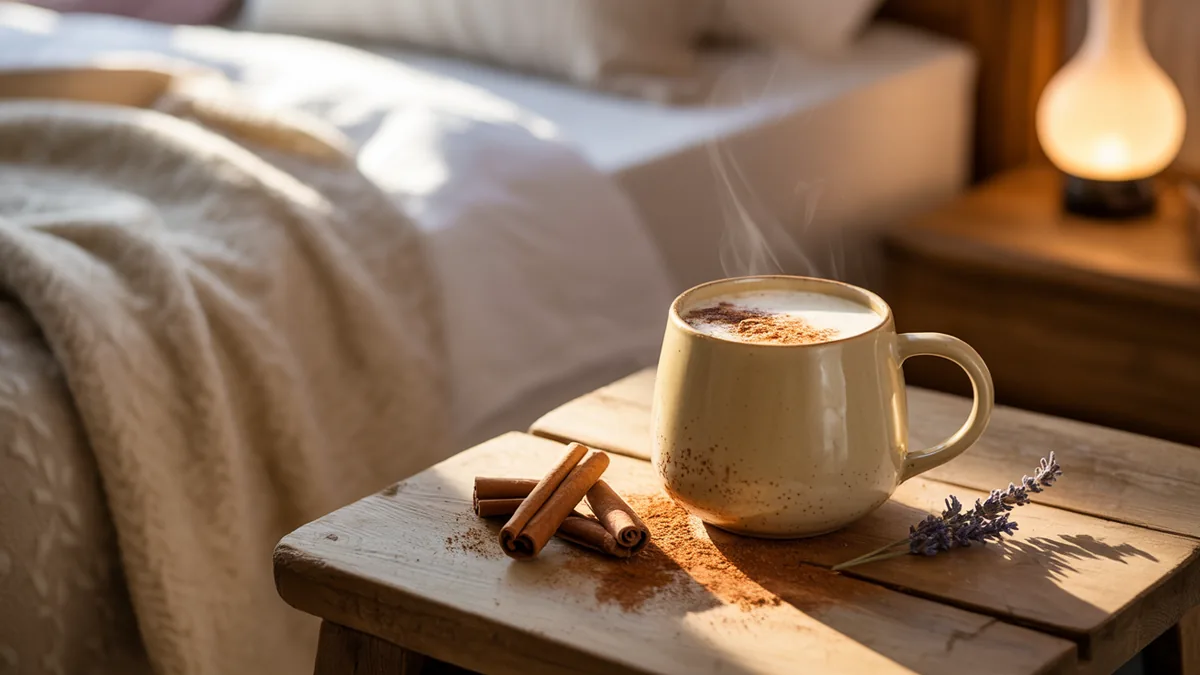
If you came here for a moon milk recipe, here is mine in a single line before anything else: warm a cup of milk, whisk in cinnamon, a little nutmeg, an optional quarter teaspoon of ashwagandha, simmer it gently, then sweeten with honey and sip it about an hour before bed. That is the whole drink. Everything below is the part I wish someone had told me before my first grainy, slightly bitter cup that I almost poured down the sink.
Let me set expectations honestly right at the top, because the internet has turned this pretty bedtime drink into a sleep cure. Moon milk is a warm, soothing, caffeine-free evening sip. It is not a sleeping pill. It will not knock you out, fix insomnia, or reset your hormones. What it will do is give your hands something warm to hold, mark the end of the day with a small ritual, and fold a few calming spices into your wind-down in a genuinely lovely way.
I started making it during a stretch of restless, wired nights when I wanted something in my hands that was not my phone or a second glass of wine. Over time I settled on four versions I actually use: a classic one with ashwagandha, a golden moon milk with turmeric, a lavender one, and a gentle no-ashwagandha cup for nights or people that should skip the herb. I will walk you through all four, plus the honest part about sleep and a careful note on ashwagandha.
| Version | Milk or base | Key add-ins | Best for |
|---|---|---|---|
| Classic ashwagandha | Dairy or any milk, simmered | Cinnamon, nutmeg, ashwagandha, cardamom, honey | The default bedtime cup when ashwagandha is right for you. |
| Golden moon milk | Coconut or oat milk | Turmeric, black pepper, cinnamon, a little fat | An earthy, warming evening cup with a golden color. |
| Lavender moon milk | Oat or dairy milk | Culinary lavender, vanilla, honey | A floral, calming cup on tense, overstimulated nights. |
| No-ashwagandha | Any warm milk | Cinnamon, nutmeg, vanilla, honey only | Pregnancy, breastfeeding, medications, or simply preferring the herb out. |
| Make-ahead spice blend | Any warm milk, on demand | A jarred dry spice mix, one spoon per mug | Tired nights when you want a cup in two minutes. |
What moon milk actually is
Plain definition: Moon milk is an Ayurveda-inspired warm drink of milk simmered with calming spices, often ashwagandha, sipped at night to ease the body into rest.
People ask what is moon milk as if it were brand new, but the idea is old. Ayurveda, the traditional system of medicine from India, has long used warm spiced milk at night as a way to settle the body before sleep. The modern moon milk you see on Pinterest, sometimes a soft lavender or a dusty rose color, is a prettier descendant of that bedtime tradition. The name nods to the moon because this is a drink for the end of the day, not the start of it.
I want to be clear about the lineage, because the Western wellness world has a habit of borrowing these rituals and forgetting where they came from. Ayurvedic moon milk leans on the same gentle logic as a lot of grandmother wisdom: something warm, something soothing, something done at the same hour each night. When I make it, I try to hold a little respect for that root even while I tinker with oat milk and a dusting of lavender in ways a traditional cook might find a touch fussy.
The base is simple. Warm milk does the heavy lifting, because warmth itself is calming and a hot drink is a classic wind-down cue. Cinnamon and nutmeg bring cozy flavor, and nutmeg in particular has an old reputation as a sleepy spice. Ashwagandha, an adaptogenic herb, is the optional star, the thing that turns a nice warm milk into the trendy version. A little honey makes it a drink you look forward to rather than one you tolerate for your health.
How it differs from golden milk
People mix this up constantly, so here is the clean line. Golden milk is built around turmeric, it is earthy and gold, and its whole reason for being is the anti-inflammatory reputation of turmeric, which means you can happily drink it during the day. Moon milk is built around sleep and calm, it leans on cinnamon, nutmeg, and ashwagandha, and it is specifically an evening drink. If you want a warming anti-inflammatory cup for the daytime instead, I have a whole separate golden milk recipe with four versions, and I will not repeat it here. Tonight we are after rest, not turmeric.
The classic moon milk recipe
Classic in short: Simmer one cup of milk with cinnamon, a pinch of nutmeg, a quarter teaspoon of ashwagandha, and a little cardamom for five to six minutes, then sweeten with honey.
This is the version I make most, on the stove, in a small saucepan, while I am already winding down for the night. It takes about eight minutes start to finish and makes one generous mug. Double everything for two. I usually reach for dairy or a creamy oat milk here, because the bit of natural fat makes it silky and helps the spices feel rounded rather than thin.
Ingredients
- 1 cup milk of any kind, dairy or unsweetened plant milk
- 1/4 teaspoon ground cinnamon
- 1 small pinch of ground nutmeg, about 1/8 teaspoon
- 1/4 teaspoon ashwagandha powder, optional, see the safety note below
- 1 pinch of ground cardamom, optional
- 1 teaspoon honey or maple syrup, to taste
- 1/2 teaspoon coconut oil or ghee, optional, for a richer cup
Method
- Pour the milk into a small saucepan over medium-low heat until it just begins to steam. You want warm, not boiling, because a hard boil scalds the milk and dulls the spices.
- Whisk in the cinnamon, nutmeg, ashwagandha, and cardamom. A small whisk or even a fork beats out the clumps that otherwise settle at the bottom of the mug.
- Let it simmer gently for five to six minutes so the spices bloom and the ashwagandha loses its raw, slightly bitter edge. Stir now and then.
- Take it off the heat, stir in honey or maple to taste, and pour into your favorite mug about an hour before bed. A final dusting of cinnamon on top is pure theater, and worth it.
The nutmeg note that matters
One small thing makes a real difference here: go light on the nutmeg. A pinch is cozy and traditional, and nutmeg has a long folk reputation as a sleepy spice. In large amounts, though, it is genuinely not good for you and can make you feel unwell, so this is not a place to be generous. A small pinch per mug is plenty. Honestly, the cinnamon and the warmth do most of the comforting work, and the nutmeg is just a soft, nostalgic background note.
Golden moon milk
Golden in short: Add a little turmeric and a pinch of black pepper to the warm milk for an earthy, golden evening cup, with the cinnamon and a touch of fat still in play.
Golden moon milk is the bridge version, the one that borrows a little turmeric for color and earthiness while keeping the sleepy, evening spirit. The search term golden moon milk trips people up because it sounds like golden milk, but the intent is different. Here turmeric is a small supporting player for warmth and that lovely gold tone, not the headline act it is in a turmeric latte. I keep the amount modest so the cup still tastes like a bedtime drink rather than a daytime tonic.
To make it, follow the classic method but whisk in a quarter teaspoon of turmeric and a tiny pinch of black pepper along with the cinnamon, and add a half teaspoon of coconut oil or ghee. The pepper and fat are there because turmeric's compound is fat-soluble and better absorbed with a little pepper, the same reasoning behind a proper golden milk. Coconut or oat milk suits this one beautifully. If you want the full anti-inflammatory daytime version with all the science, that lives in my separate golden milk guide, not here.

Lavender moon milk
Lavender in short: Steep a little culinary lavender in the warm milk, then strain, add vanilla and honey, for a soft, floral, calming cup on overstimulated nights.
Lavender moon milk is my pick for the nights when my head is still loud, the kind where calm feels just out of reach. Lavender has a gentle, floral scent that many people find soothing, and a warm cup of it is honestly lovely. The one thing that matters is using culinary lavender, specifically the kind sold for cooking, which is usually Lavandula angustifolia. Skip decorative lavender or anything that might have been sprayed, since it is not meant to be eaten.
To make it, warm your milk with a teaspoon of dried culinary lavender buds and let it steep over low heat for about five minutes, then strain the buds out. Whisk in a quarter teaspoon of cinnamon if you like, a small splash of vanilla, and honey to taste. Go easy on the lavender, because too much tips the drink from floral into soapy fast. A scant teaspoon per cup is the sweet spot. If you love this floral, slow-evening mood, you will probably also enjoy my lavender latte recipe, which is the bright morning, espresso-forward cousin of this calm bedtime cup.
Moon milk without ashwagandha
Without it in short: Make the classic recipe and simply leave out the ashwagandha, leaning on cinnamon, nutmeg, vanilla, and honey for a cozy, herb-free cup.
Plenty of people should not be taking ashwagandha, and plenty more just do not want to, and both are completely valid reasons to make moon milk without it. The good news is the drink barely misses it. The comfort of moon milk comes far more from the warmth, the ritual, and the cozy spices than from the herb, so a no-ashwagandha cup is still a genuinely soothing bedtime drink, not a sad compromise.
Make the classic recipe and simply leave the ashwagandha out. To give it a little more depth, I add a small splash of vanilla extract and sometimes a pinch of cardamom, which makes the cup feel a touch more special. This is the version I hand to friends who are pregnant or breastfeeding, anyone on medication who has not cleared the herb with a professional, and anyone who tried ashwagandha and disliked the earthy, slightly bitter taste. It is the safest default, and it is the one I reach for more often than I expected.
A make-ahead spice blend
Blend in short: Mix the dry spices in a jar ahead of time, then stir one spoon into warm milk whenever you want moon milk in about two minutes.
Here is the trick that turned moon milk from a once-in-a-while project into an actual habit for me. The barrier to a nightly cup is the measuring of several spices when you are already tired and halfway to bed. A make-ahead dry blend solves it. You do the work once, keep it in a small jar, and a single spoonful turns any mug of warm milk into moon milk in the time it takes to heat the milk.
In a jar, stir together two tablespoons of ground cinnamon, two teaspoons of ground ginger if you like a little warmth, one teaspoon of ground cardamom, and a half teaspoon of nutmeg. Keep the ashwagandha separate and add it per cup only when appropriate, since not every cup or every person should include it. To use the blend, warm a cup of milk, whisk in a heaping half teaspoon, simmer a minute, and sweeten. This batch-it-once kindness is the same logic behind my whole brew up wellness approach to cozy drinks: make the good choice the easy one and let tired-you take the win.
Is moon milk good for sleep?
The honest answer: No single drink reliably makes you sleep, but a warm, caffeine-free bedtime ritual is a well-supported way to help your body wind down.

People search moon milk for sleep constantly, so let me answer it the way I would want answered. There is no strong evidence that a mug of moon milk acts like a sedative or cures a sleep problem. Milk contains a little tryptophan, but nowhere near enough to make you drowsy, and the spices are comforting rather than clinically proven sleep aids. If a site promises this drink will fix your insomnia, it is reaching well past the science.
And yet there are honest reasons it can help. A warm, caffeine-free drink is a classic wind-down cue, and the simple act of making and slowly sipping something tells your body the day is ending. The Sleep Foundation describes a consistent, relaxing pre-sleep routine as one of the genuinely effective levers for better sleep, and a nightly cup fits neatly into that. The drink is not the magic; the repeated calming signal around it is.
That is exactly how I use it. Moon milk for sleep, in my house, means the same mug at roughly the same hour, with my phone already across the room and the lights low. The drink is the anchor for the habit, and the habit is what actually helps me settle. If you build it into a calm evening rather than expecting the milk to sedate you, you will not be let down. It pairs naturally with my evening reset routine when I want the whole hour to feel soft.
A careful note on ashwagandha
The careful version: Ashwagandha is an adaptogen that genuinely interacts with some conditions and medications, so treat it as optional and clear it with a professional first.
I include ashwagandha as optional on purpose, because it is not a casual kitchen spice. It is an adaptogenic herb with real activity, and that means real cautions. The National Center for Complementary and Integrative Health notes that ashwagandha has been linked to rare cases of liver injury and that its safety has not been established for pregnancy, so it is one to approach thoughtfully rather than sprinkle in because a recipe said so. You can read their balanced overview of ashwagandha for the careful version.
A few specifics worth knowing. If you are pregnant or breastfeeding, ashwagandha is generally advised against, so make the no-ashwagandha cup. If you have a thyroid condition, take medication for blood pressure, blood sugar, or anxiety, or are on sedatives, ashwagandha may interact, so talk to your doctor or pharmacist first. People with autoimmune conditions are often told to be cautious too. This is the same reason I deliberately leave the herb out of my cortisol tea recipe: an adaptogen deserves a real conversation, not a chart that says add a scoop.
None of this is meant to scare you off. For many healthy adults, a small culinary amount in an occasional cup is generally considered fine, and the drink is lovely with or without it. I just would rather you treat ashwagandha as an active ingredient than as decoration. When in doubt, leave it out and enjoy the cozy cup anyway, or ask a clinician before you make it a nightly thing.
How I actually drink it
The honest method: Keep the dry blend in a jar, make a cup most nights about an hour before bed, and treat it as a ritual rather than a remedy.
My real routine is far less precious than four recipes might suggest. Most nights I use the dry blend, because the version you actually make beats the perfect version you never get around to. I warm a mug of whatever milk is open, whisk in a spoon of blend, add ashwagandha only when it suits me, sweeten lightly, and carry it to the couch. The whole thing takes about as long as washing my face.
I drink it roughly an hour before bed, not right at lights out, because a full mug right before lying down can mean a bathroom trip later. I keep the honey small so it does not become a dessert that perks me up. And I save the lavender and golden versions for nights when the slower ritual is part of the appeal, when I want the making of the drink to be the first step of winding down rather than a chore.
The other honest thing: this is a habit, not a hero. On its own a warm cup will not fix a wired nervous system or a chaotic schedule. What it does is give me a repeatable cue, and cues are powerful. Slotting it into a calm wind-down, often alongside my Sunday reset checklist on weekend nights, is what turns a nice drink into something my body actually associates with rest.
When this won't fit your life
Moon milk is food and ritual, not medicine, and a few people should be cautious or skip parts of it. The biggest one is ashwagandha. If you are pregnant or breastfeeding, on thyroid, blood pressure, blood sugar, anxiety, or sedative medications, or living with an autoimmune condition, leave the ashwagandha out and clear it with a professional before adding it. The no-ashwagandha version exists exactly for this and is still a genuinely cozy cup.
A few smaller fits. If you are lactose intolerant or dairy-free, simply use oat, coconut, or another plant milk. Keep nutmeg to a small pinch, since large amounts are not safe. For the lavender version, use only culinary lavender, never decorative or sprayed buds. And if a persistent sleep problem is what brought you here, please know a bedtime drink is a comfort, not a treatment; ongoing insomnia is worth raising with a doctor rather than a blog. When in doubt, ask a clinician, not a recipe.
Helpful sources and next reads
Reliable external sources
- NIH NCCIH: ashwagandha, what the science says
- Sleep Foundation: sleep hygiene and bedtime routines
- Cleveland Clinic: ashwagandha benefits and cautions
- NIH NCCIH: sleep, what the science says
- Harvard T.H. Chan School: The Nutrition Source
More from Sabrina Saturno
You may also love


FAQ
What is moon milk?
Moon milk is an Ayurveda-inspired warm drink of milk simmered with calming spices such as cinnamon and nutmeg, often with ashwagandha, sipped before bed. The name nods to the moon because it is an evening, wind-down drink rather than a morning one.
How do I make moon milk?
Warm a cup of milk until steaming, whisk in cinnamon, a pinch of nutmeg, and an optional quarter teaspoon of ashwagandha, simmer gently for five to six minutes, then stir in honey to taste. Drink it about an hour before bed.
Is moon milk good for sleep?
There is no strong evidence that the drink itself sedates you. But a warm, caffeine-free cup and a consistent bedtime ritual genuinely help many people wind down, so moon milk supports sleep as a calming habit rather than as a sleep aid.
What is the difference between moon milk and golden milk?
Golden milk is built around turmeric for its anti-inflammatory reputation and can be enjoyed any time of day. Moon milk is built around calm and sleep, leaning on cinnamon, nutmeg, and ashwagandha, and is specifically an evening drink.
Do I have to use ashwagandha in moon milk?
No. Ashwagandha is optional. Many people make moon milk with just cinnamon, nutmeg, vanilla, and honey. Leave the herb out if you are pregnant, breastfeeding, on certain medications, or simply prefer a cup without it.
Is ashwagandha safe?
For many healthy adults a small amount is generally considered fine, but it can interact with thyroid, blood pressure, blood sugar, anxiety, and sedative medications, is advised against in pregnancy, and has rare links to liver injury. Clear it with a doctor first.
Can I make vegan or dairy-free moon milk?
Yes. Use oat, coconut, or almond milk in place of dairy and sweeten with maple syrup instead of honey. Oat and coconut milk give the creamiest cup, while almond milk is lighter, so add a little coconut oil if you want more body.
What is golden moon milk?
Golden moon milk is a moon milk variation with a little turmeric and black pepper added for an earthy flavor and golden color, while keeping the cozy, sleepy spices. It is a lighter, evening take, not the full daytime turmeric latte.
What kind of lavender can I use?
Use only culinary lavender, usually Lavandula angustifolia sold for cooking. Avoid decorative or potentially sprayed lavender, which is not meant to be eaten. Steep a scant teaspoon in the warm milk, then strain, since too much turns the drink soapy.
When should I drink moon milk?
Most people enjoy it in the evening, about an hour before bed, as a wind-down ritual. Drinking it slightly earlier rather than right at lights out helps you avoid a late bathroom trip while still getting the calming effect of the routine.
Can I drink moon milk every night?
The cozy base of warm milk and gentle spices is fine nightly for most people. The one thing to watch is ashwagandha, which is best discussed with a professional before daily use, so consider making the no-ashwagandha version your everyday cup.
Why does my moon milk taste bitter or grainy?
Usually it is the ashwagandha, which has an earthy, slightly bitter taste, or spices that did not dissolve. Whisk well, simmer for the full five to six minutes to soften the raw edge, use less ashwagandha, and add a touch more honey.
Can children have moon milk?
A plain warm milk with cinnamon and a little honey is fine for children over one year old, but skip the ashwagandha entirely, since it is not appropriate for kids. As always, check with your pediatrician if you are unsure.
The version that lasts
Here is where I have landed after a lot of quiet evenings with a warm mug. The moon milk recipe at the top of this page is real, simple, and worth making tonight if a cozy bedtime sip sounds like comfort to you. The four versions exist so one of them fits whatever your night looks like, whether that is a slow ritual with lavender or a two-minute spoon of dry blend in warm milk on a tired Tuesday.
What lasts for me was never the promise of better sleep on a label. It was the warmth in my hands, the small pause before bed, the way the same mug at the same hour quietly tells my body the day is done. I make it because it makes my evenings feel softer, and any calm the spices add is a gentle bonus I do not lean on. Holding it that way means the drink never has to be more than it is.
So pick a version, mix the dry blend if you want this to actually stick, keep the ashwagandha thoughtful and optional, and sweeten it just enough to look forward to. If it becomes a chore, shrink it to a spoon of blend in warm milk. If it becomes a joy, let it stay. The version that lasts is the one that feels like the end of the day in a cup, not a wellness task, and that version is allowed to be enough.