
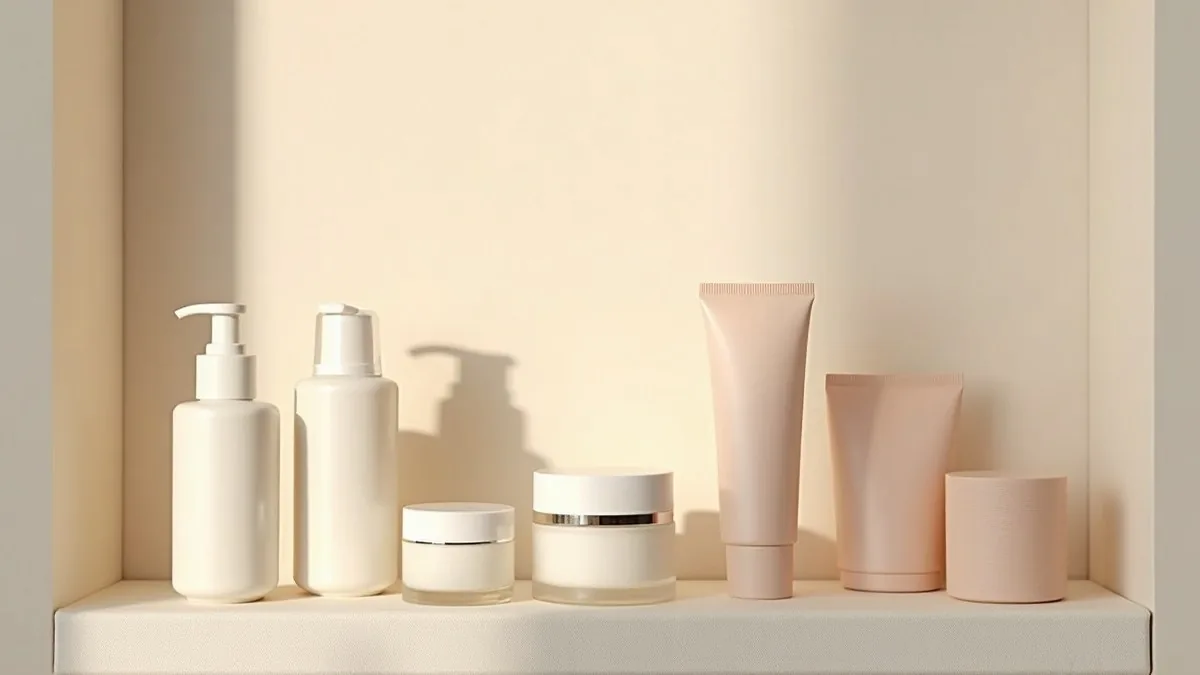
For years I blamed my pink, stinging cheeks on weather, on stress, on hard water, on anything except the lovely-smelling cream I reached for every night. The truth was simpler and a little annoying: my favorite products were perfumed, and my reactive skin hated perfume. If your face flushes, tingles, or breaks into tiny rough patches for no obvious reason, added fragrance is one of the first things worth removing, and it costs you nothing but the habit of sniffing your moisturizer.
This guide is for women whose skin runs sensitive, who flush easily, who have eczema-prone or rosacea-prone faces, or who simply feel that most products are doing a little too much. I will walk you through why fragrance bothers reactive skin, how to actually decode an ingredient label so the marketing cannot fool you, and a plain fragrance-free routine you can build without throwing out everything you already own.
I am not a dermatologist, and nothing here replaces one if your skin stays angry. What I can offer is the slow, unglamorous method that finally calmed my face: read the back of the bottle, patch test before you commit, and let the gentlest formulas do the quiet work. The products that healed my skin were never the ones I wanted to show off. They were the ones my face barely noticed.
| Question | Short answer |
|---|---|
| Does "unscented" mean fragrance-free? | No. "Unscented" often means a masking fragrance was added to hide raw ingredient smells. Look for the words "fragrance-free" instead. |
| What words signal fragrance on a label? | Parfum, fragrance, aroma, and any named essential oil such as lavender or bergamot. They can sit low on the list and still trigger skin. |
| Are essential oils gentler than synthetic scent? | Not for reactive skin. Natural plant oils like citrus and lavender are common irritants and still count as fragrance. |
| How long should I patch test? | Apply to your inner arm or behind the ear for 48 hours, twice daily, before putting a new product on your face. |
| What if my skin stays irritated? | Removing fragrance solves a common trigger, not every one. Persistent redness or itching deserves a dermatologist's eye. |
Why fragrance sets reactive skin off
The core idea: Added fragrance does nothing for your skin's health. It exists to make a product smell pleasant, and for sensitive faces that pleasantness can come at the cost of redness, stinging, and tiny rough patches.
Fragrance is not a single ingredient. The word "parfum" on a label can stand in for dozens, sometimes hundreds, of separate aroma compounds, and a brand is allowed to hide that whole mixture behind one tidy word. That is why two products can both list "fragrance" and trigger completely different reactions. You cannot tell from the bottle which specific molecule your skin objects to, only that the category as a whole is a frequent troublemaker.
For reactive skin, the problem is usually a low-grade irritation rather than a dramatic allergy. Your barrier, the outer layer that holds moisture in and keeps irritants out, is already a little fragile. Fragrance compounds can nudge it further off balance, so the flush you see is often your skin protesting a daily, repeated nudge rather than one big event. That is also why the reaction can lag a day behind the product, which makes it so hard to trace.
The reason I single fragrance out, rather than chasing every possible irritant, is simple math. It serves no functional purpose in skincare, it appears in an enormous share of products, and it is one of the most documented contact triggers there is. Remove it and you have subtracted a common provocation without losing a single benefit. That is a rare thing in beauty, where most changes ask you to add a step, spend money, or wait months. This one asks you to read a label and put one bottle back on the shelf.
It is worth saying plainly that fragrance-free is not anti-scent moralizing. A perfumed candle, a scented bar of soap you rinse off in seconds, a spritz on your sweater, none of those live on your face for sixteen hours. The trouble is concentrated in leave-on products, the creams and serums that sit on reactive skin all day. That is where I focus, and where the payoff is biggest.

Reading the back of the bottle without getting fooled
Quick skill: Flip the product over and read the full ingredient list, not the front. The marketing claim lives on the front. The truth lives on the back, usually in tiny print near the end.
Once I started reading ingredient lists, I felt a little betrayed by how often fragrance hides in products that look gentle. The front of the jar can say "calming," "sensitive," or "dermatologist tested," and the back can still list parfum. The claim on the front is not regulated the way the ingredient list is, so the list is where you put your trust.
Here are the words that mean fragrance, even when the front of the package suggests otherwise. Learn these five and you will catch the vast majority of it.
- Fragrance / Parfum: the catch-all. Either word means a scent blend was added, contents undisclosed.
- Aroma: the flavoring-side cousin, common in lip products, still a fragrance blend.
- Essential oils by name: lavender oil, bergamot, peppermint, citrus peel oils, ylang ylang. Plant-derived, but very much fragrance to reactive skin.
- Linalool, limonene, citronellol, geraniol, eugenol: these are fragrance components that have to be named individually in some regions. If you see a cluster of them at the end of a list, that product is scented.
- "Natural fragrance": a softer-sounding label that still means an undisclosed scent mixture.
A couple of habits make this faster. Read from the bottom up when you are hunting for fragrance, because scent ingredients are used in small amounts and tend to sit near the end of the list. And do not let the position fool you into thinking "it is only a little." For an irritated barrier, a small dose applied twice a day, every day, is still a daily dose. Quantity helps, but consistency of exposure is what keeps skin inflamed.
One more trap worth naming: a product can be free of synthetic fragrance and loaded with essential oils, then marketed as "clean" or "naturally scented." For most skin that is lovely. For reactive skin it is the same problem wearing a nicer outfit. Citrus and lavender oils in particular are common irritants, so "no synthetic fragrance" is not the green light it sounds like.
Unscented versus fragrance-free, the gap that matters
This is the single distinction that changed how I shop, so I want to slow down on it. "Unscented" and "fragrance-free" sound like synonyms. They are not, and the difference is the whole game.
Fragrance-free means no fragrance materials were added to make the product smell a particular way. This is what you want. The product may still have a faint, raw smell from its actual ingredients, because oils and actives have their own scent, but nothing was put in to perfume it.
Unscented often means the opposite of what you would guess. To make a product smell like nothing, manufacturers sometimes add a masking fragrance, a scent specifically designed to neutralize the smell of the base ingredients. So an "unscented" lotion can contain fragrance chemicals whose only job is to cancel out other smells. To your nose it reads as neutral. To your reactive skin it can read as another exposure.
So my rule is short: trust "fragrance-free," verify it on the ingredient list, and treat "unscented" as a question rather than an answer. When a product says unscented, I flip it over and look for parfum, fragrance, or a masking agent before I believe it. Most of the time the label and the list agree. When they do not, the list wins.
If you only remember one sentence from this entire guide, make it this one. Fragrance-free is a formulation promise. Unscented is a smell description. You care about the formulation, not the smell.
A plain fragrance-free routine, morning and night
The shape of it: Keep it to a few categories done well. A gentle cleanser, a simple moisturizer, sunscreen in the morning, and any treatments at night. You do not need ten products. You need a few that your skin ignores.
I want to take the mystery out of building this, because the routine itself is genuinely boring, and boring is the point. The fewer moving parts, the easier it is to tell what is helping and what is hurting. Here is how I structure my own days.
Morning, cleanser. On most days I rinse with lukewarm water or use a soft, fragrance-free gel or cream cleanser. Reactive skin rarely needs a strong morning wash. The goal is to wake the skin, not strip it. If your cleanser smells like a spa, that is a flag worth checking on the back of the bottle.
Morning, moisturizer. A simple fragrance-free moisturizer with ingredients like glycerin, ceramides, or hyaluronic acid does the quiet work of holding water in the barrier. I look for short ingredient lists here, because the moisturizer sits on my face all day and is the product most worth getting right.
Morning, SPF. This is the one I will not skip. Sunscreen protects the barrier you are trying to calm, and a fragrance-free formula keeps it from undoing your other gentle choices. Mineral sunscreens with zinc oxide tend to suit reactive skin, though plenty of fragrance-free chemical options work too. Test before you commit, because sunscreen is the product people most often react to.
Night, cleanser. Evening is when I actually wash, to take off the day, sunscreen, and any makeup. A gentle fragrance-free cleanser is plenty. If I have worn heavier sunscreen, I will use a soft first cleanse with a fragrance-free balm or oil, then my regular wash.
Night, treatment. If you use anything active, a retinoid, an acid, a vitamin C, the evening is usually where it lives, and it is the step most worth introducing slowly. Actives and a compromised barrier are a tense pairing, so I add one at a time, a few nights a week, and I keep it fragrance-free so I am only testing one variable. When my skin is unhappy, I pause actives entirely and go back to cleanser and moisturizer until it settles.
Night, moisturizer. I finish with the same simple fragrance-free cream, a little heavier if my skin feels tight. That is the whole routine. Cleanser, moisturizer, sunscreen, and an optional treatment, all chosen so my skin has nothing to argue with.

Switching over without wasting half your shelf
The first time I decided to go fragrance-free, I almost threw every scented product into the bin in a fit of motivation. I am glad I did not, because that is wasteful and it also teaches you nothing. A smarter switch is slower and tells you exactly which products mattered.
Start with leave-on products, because they cause the most trouble. Your moisturizer, serum, and any treatment sit on your face for hours, so swapping those to fragrance-free versions first gives you the biggest, fastest improvement. Rinse-off products like cleansers matter less, since they are on your skin for seconds, so they can wait until the current bottle runs out.
Change one product at a time, not all at once. I know it is tempting to overhaul everything in a weekend, but if you swap five products together and your skin calms down, you will never know which one was the culprit, and you will not know which to avoid next time you shop. One change, a week or two of observation, then the next. It is slower, and it is the only way to actually learn your skin.
For the scented products you already own and like, give them a second life off your face. A fragrance-rich body lotion is usually fine on arms and legs, where skin is tougher and less reactive than the face. A scented cream you loved can move to your hands. You are not declaring war on every pleasant smell in your home, you are just keeping fragrance away from the part of you that reacts. My serum was the first thing I swapped, and I wrote the gentle method I use in my guide to how to apply face serum.
One honest note about cost. Fragrance-free does not have to be expensive, and some of the gentlest, most boring formulas are drugstore staples. Do not assume a higher price means a calmer product. Plenty of luxury creams are heavily perfumed, and plenty of basic ones are beautifully plain. Read the list, not the price tag.
How I patch test before anything touches my face
Why it is worth the wait: A patch test costs you 48 hours and saves you from spreading a reaction across your whole face. For reactive skin it is the single most protective habit there is.
Even after you have chosen a fragrance-free product, your skin can still object to something else in it, so I never put a new product straight onto my face. The patch test is unglamorous and a little tedious, and it has saved me from more than one miserable week.
Here is the method I use. Pick a discreet, sensitive spot, the inner forearm, the side of the neck, or just behind the ear. Apply a small amount of the new product and leave it. Repeat twice a day for two full days, ideally without washing the area in between more than normal. Watch for redness, itching, bumps, stinging, or any tightness. If nothing happens after 48 hours, I move the test to a small patch beside my jaw for another day or two, because facial skin is more delicate than the arm. Only then does it join my routine.
Patch testing is also how you find a hidden trigger when fragrance was not the whole story. If you have already gone fragrance-free and your skin is still reacting, reintroduce your products one at a time with the same patch method. Sooner or later one of them will flare and you will have your answer. It is detective work, and it only functions if you change one thing at a time.
A few practical notes. Give actives extra patience, since retinoids and acids can sting a little at first even when they are not truly irritating, so I judge them over a week rather than a day. Sunscreen deserves its own careful test, because it is a product many reactive faces struggle with and you wear it daily. And if a product passes the patch test but your face still turns unhappy over a few weeks, trust your face. The patch test is a strong filter, not a guarantee.
Finally, the honest limit of all this. Going fragrance-free and patch testing will calm a great many reactive skin stories, mine included, but it will not fix everything. If your skin stays red, itchy, or painful despite a gentle fragrance-free routine, please see a dermatologist. Persistent irritation can point to a condition that needs a real diagnosis, and that is not a failure on your part. It is just the next sensible step.

Why this matters more than it seems
The heart of it: The products that helped my skin most were never the loudest ones. They were the ones my skin barely had to think about.
Added fragrance is one of the most common triggers for sensitive, reactive skin, which makes going fragrance-free one of the highest-return, lowest-effort changes available. You are not adding a step or buying anything special. You are quietly subtracting a common irritant, and for many people the reduction in redness and reactivity is dramatic and fast.
It matters beyond comfort because fragrance hides in places you would not expect and behind words you would trust. Unscented can mean masking fragrance was added, and natural essential oils are still fragrance to reactive skin. Learning to spot it on a label is a small literacy that protects you across every product you will ever buy, not just the one in your hand today.
There is a strong, practical reason fragrance is worth singling out among all possible irritants. It is one of the most common triggers for sensitive skin, it serves no functional purpose in a skincare product beyond pleasantness, and it hides behind reassuring words and even inside natural ingredients. Removing it is therefore a rare high-impact, zero-cost, zero-effort change, the kind of easy win that is unusual in skincare and well worth taking.
What I learned the hard way
I resisted going fragrance-free for a long time because I loved how my products smelled, and giving that up felt like losing a small daily pleasure. So I kept using beautifully scented creams and kept being mysteriously pink and itchy, never quite connecting the two because the reaction lagged a day behind the application.
When I finally ran a careful, boring experiment and switched my leave-on products to fragrance-free, the difference in my skin was undeniable within a couple of weeks. My serum was the first thing I swapped, and if you want the gentle method I use for it, I wrote it all down in my guide to how to apply face serum. The lesson was a small grief and a big relief at once: the thing I most enjoyed about my products was the thing irritating my skin, and my face was simply calmer once the perfume was gone.
I also learned how widely fragrance hides once I started looking, which made label literacy feel less like fussiness and more like genuine self-defense. Unscented can mean masking fragrance was added, essential oils are still fragrance to a reactive face, and parfum can appear far down an otherwise gentle-looking list. Learning to spot it became a small skill that quietly protects me across every product I will ever consider buying.
How to know it's working
Going fragrance-free tends to show results quickly for reactive skin, and the signals are clear.
- Random redness and itchiness become less frequent, often within a week or two.
- Your skin stops reacting a day after using a product you used to blame on something else.
- New products feel less risky, because you have removed one of the biggest common triggers.
- Your skin simply feels calmer and less reactive to daily life in general.
- You start reading ingredient lists with ease, spotting fragrance and parfum without effort.
If irritation continues after going fragrance-free, another ingredient or an underlying condition may be the cause. Patch testing one product at a time helps you find the real culprit.
When this won't fit your life
Fragrance-free is a powerful lever, but it is not a cure-all, and persistent or severe irritation still warrants a dermatologist who can identify other triggers or conditions. Removing fragrance solves a common problem, not every problem, and knowing the difference saves you from blaming yourself when something deeper is at play.
And you do not have to banish scent from your whole life to protect your skin. I still enjoy perfume on my clothes rather than my face, keeping the pleasure while sparing the barrier. Fragrance-aware is the realistic goal, not joyless purity, and a little scent in the right place harms nothing.
Hold the approach as fragrance-aware rather than rigidly fragrance-phobic, because the goal is comfortable skin, not joyless deprivation. I still enjoy scent where it does no harm, on my clothes or in the air, while keeping it off my reactive face. That balance is sustainable in a way that absolutism never is, and it lets me protect my skin without surrendering a small pleasure I genuinely love.
Helpful sources and next reads
Reliable external sources
More from Sabrina Saturno
You may also love



FAQ
Is "unscented" the same as "fragrance-free"?
No, and this is the most important distinction to learn. "Fragrance-free" means no scent was added. "Unscented" often means a masking fragrance was added to neutralize the smell of the base ingredients, so the product can still contain fragrance chemicals. Always check the ingredient list.
Are essential oils a safe alternative to synthetic fragrance?
Not for reactive skin. Essential oils are natural, but they are still fragrance, and several of the most popular ones, like citrus, lavender, and peppermint, are common irritants. A product can be free of synthetic fragrance and still bother sensitive skin because of its essential oils.
Where does fragrance hide on an ingredient label?
Look for "fragrance," "parfum," "aroma," "natural fragrance," any named essential oil, and components like linalool, limonene, citronellol, and geraniol. These usually sit near the end of the list because they are used in small amounts, so read from the bottom up when you are hunting for them.
How do I patch test a new product?
Apply a small amount to your inner forearm, neck, or behind the ear twice a day for 48 hours and watch for redness, itching, or stinging. If it stays calm, test it on a small patch near your jaw for another day or two before using it all over your face.
Which products should I switch to fragrance-free first?
Start with leave-on products: moisturizer, serum, and any treatment. They sit on your skin for hours and cause the most irritation, so swapping them gives the biggest improvement. Rinse-off cleansers matter less and can wait until your current bottle runs out.
Do I have to throw out all my scented products?
No. Move them off your face instead of into the bin. A scented body lotion is usually fine on arms and legs, where skin is tougher, and a favorite cream can become a hand cream. You only need fragrance away from the reactive parts of your skin.
How long until I see a difference?
For reactive skin, going fragrance-free often shows results quickly. Random redness and itchiness usually become less frequent within a week or two, especially once you have removed it from your leave-on products.
Is fragrance-free skincare expensive?
It does not have to be. Some of the gentlest, plainest formulas are inexpensive drugstore staples, while plenty of luxury creams are heavily perfumed. Read the ingredient list rather than the price tag, because cost is a poor predictor of how gentle a product is.
Can I still wear perfume if my skin is reactive?
Yes, just keep it off your face. I spritz perfume on my clothes or in the air rather than on my skin, which keeps the pleasure while sparing my barrier. The goal is being fragrance-aware, not living a joyless, scent-free life.
My skin is still irritated after going fragrance-free. What now?
Removing fragrance solves a common trigger, not every one. Reintroduce your products one at a time using the patch test method to find another culprit. If irritation persists despite a gentle routine, see a dermatologist, since it may point to a condition that needs a diagnosis.
Is fragrance-free sunscreen worth the trouble?
Yes. Sunscreen protects the barrier you are trying to calm, so a fragrance-free formula keeps it from undoing your gentle choices. Mineral sunscreens with zinc oxide often suit reactive skin well, but test any sunscreen carefully, as it is a product many sensitive faces struggle with.
Does "dermatologist tested" mean a product is fragrance-free?
No. Front-of-package claims like "dermatologist tested," "calming," or "for sensitive skin" are marketing language and are not regulated like the ingredient list. A product can carry all of those phrases and still list parfum on the back. Trust the list, not the claim.
Can fragrance-free products still have a smell?
Yes, a faint one. Fragrance-free means nothing was added to perfume the product, but the actual ingredients, like oils and actives, have their own natural scent. A slight raw smell is normal and is not the same as added fragrance.
Conclusion
Going fragrance-free turned out to be the rare beauty change that asked almost nothing of me and gave back a calmer face. I did not buy a miracle product or add a single step. I learned to read the back of the bottle, I stopped trusting the word "unscented," and I patch tested before I committed. My skin quieted down, and the small grief of giving up my prettiest-smelling cream was over in a week.
If you take three things from all of this, make them these: choose "fragrance-free" over "unscented," remember that essential oils are still fragrance to reactive skin, and change one product at a time so your face can actually teach you something. The reward is not a glossier shelfie. It is a face that stops arguing with you. That, to me, is worth far more than a beautiful smell.