

My answer for an anti-inflammatory grocery list is shorter than the headlines pretend. Build your cart around colorful produce, beans, whole grains, nuts, seeds, olive oil, herbs, and fatty fish when it fits your budget and life. Water and sleep are also on this list, even though they do not have a barcode. That is the whole picture. The rest of this guide is just how I actually do it. For the food-by-food reasoning behind the cart, I keep a companion anti-inflammatory foods list that explains why each one earns a spot.
I wrote this for women in the United States who keep reading about inflammation and feel slightly worse afterward. I am not a registered dietitian. I am a woman in her thirties who slowly rebuilt her grocery cart after years of joint pain, sluggish afternoons, and skin that flared with every stressful week. The food list below earned my trust the slow way.
My grocery cart changed before my recipes did. Color made dinner feel less like a chore. Crunchy leafy things in the front of the fridge changed what I reached for at 3 p.m. The kitchen quieted down once the cart stopped working against me. That shift is the heart of this article, and I want to share it without turning food into a moral test.
Why it matters
An anti-inflammatory grocery list matters because chronic low-grade inflammation drives fatigue, brain fog, irritated skin, joint stiffness, slow recovery, and mood that feels heavier than expected. The cart shapes which foods are easy to grab when tired, which is upstream of every recipe in the week.
Chronic low-grade inflammation is not the same as a sore knee after a workout. It is a quieter, more diffuse pattern that often shows up as fatigue, brain fog, irritated skin, joint stiffness, slow recovery, or mood that feels heavier than it should. The food we eat across a week can either feed that pattern or calm it.
A grocery cart is a small lever with a large reach. It decides what is easy to grab when you are tired, what the kitchen smells like, what the fridge offers at lunch, and which meals get repeated. The cart is the upstream decision. Recipes are downstream. I lost years trying to fix the recipes before I touched the cart.
For searchers who want a direct line, the move is simple. Choose more plants, more color, more fiber, more healthy fat, fewer ultra-processed packets. Repeat the cart for a few weeks. Notice what changes. Adjust without making it a religion. The body keeps better records than any app.
How I approach it
I plan my cart around three questions. What will I crave at 3 p.m. when willpower is low? What will I cook on a Tuesday with no energy left? What will I serve when someone comes over and I want to be proud without performing? The cart that answers those three honestly is the one that actually reduces inflammation in my life.
I also build for repetition, not novelty. The same six produce items rotate week after week. Spinach, blueberries, lemons, sweet potatoes, leafy salad mix, a seasonal squash or cucumber. They are boring to write down. They are calming to actually have at home. Boring is a feature, not a bug, when the goal is steady inflammation control.
My third filter is realism. If a food only fits a perfect week, it leaves the cart. Olive oil stays because I use it every day. Sardines stay because they live in the pantry without judgment. A grain I have to soak for eight hours rarely earns shelf space. The cart has to survive a real Tuesday, not just a beautiful Sunday.
Step-by-step guide
Building an anti-inflammatory grocery cart takes five steps: (1) name the real goal, (2) audit three current receipts before changing anything, (3) add before you subtract, (4) give the new cart four weeks of repetition, and (5) track the body in plain words across the month.
First, name the real goal. Are you trying to calm joint pain, support skin, improve recovery from workouts, balance a hormonal pattern, or generally feel less inflamed across the week? Each goal nudges the cart in a slightly different direction. Mine started with skin and ended with energy I had forgotten was possible.
Second, audit what you already buy without changing anything yet. Take a photo of three actual receipts or pantry shelves. The honest baseline matters more than the aspirational one. Most of us imagine a healthier cart than the one we actually load. Closing that gap is where the real change happens.
Third, add before you subtract. Anti-inflammatory eating works best by addition, not deprivation. The mind defends itself against what is taken away, but it adapts more easily to what is added. Add berries. Add leafy greens. Add olive oil and herbs. The less helpful items usually fade on their own once the better ones show up first.
Fourth, give the new cart at least four weeks. Inflammation does not turn off in a weekend. Skin, energy, digestion, joint comfort, sleep quality all respond on a slower timeline. Four weeks of repetition is the minimum honest test. Many of my best results showed up between weeks six and ten.
Fifth, track the body in plain words. Heavier. Lighter. Less puffy. More energy at 4 p.m. Less afternoon crash. Skin smoother. Stomach calmer. That short vocabulary is more useful than any tracking app, and it teaches you which foods deserve a permanent spot.
- Add before you subtract.
- Build the cart around six rotating produce items.
- Repeat for at least four weeks before judging.
- Track the body in plain words, weekly.
- Plan for the tired week, not the perfect one.
My weekly cart, broken down by store section
A weekly anti-inflammatory cart for one person typically costs $75 to $95 and includes six rotating produce items, extra-virgin olive oil, canned sardines and chickpeas, lentils, oats, brown rice or farro, frozen wild salmon, plain Greek yogurt, mixed nuts and seeds, and fresh herbs like parsley or cilantro.

My anti-inflammatory cart for one person costs roughly $75 to $95 a week, depending on the season and whether I add fresh fish. I shop once on Saturday morning, top up small produce midweek if needed, and try to avoid evening grocery runs because they tend to load my cart with packaged shortcuts.
In the produce section I always grab a bag of dark leafy salad mix, a clamshell of spinach, two pints of berries (strawberries and blueberries on rotation), two lemons, one bunch of fresh herbs (parsley or cilantro), a cucumber, two avocados, sweet potatoes, and one seasonal hero vegetable. That section alone is roughly $35 and it carries most of the inflammation work.
In the pantry aisles I refill extra-virgin olive oil monthly, canned wild-caught sardines and chickpeas weekly, lentils, oats, brown rice or farro, and unsweetened nut butter. I keep a jar of mixed nuts and a jar of seeds (chia, flax, pumpkin) on the counter so I see them when I am pouring coffee. Those counter jars are also what keep my seed cycling chart alive, because a seed rotation only survives when the seeds sit where tired hands can reach them.
At the freezer I add frozen wild salmon portions, frozen mixed berries for smoothies, frozen edamame, and one bag of frozen riced cauliflower for slow weeks. The freezer is where my future self thanks me on the Tuesday when I have nothing planned. It rarely fails me.
At the fish counter I buy whatever wild-caught fish looks freshest in season. Some weeks it is salmon, some weeks it is rainbow trout, some weeks I skip it entirely and lean on canned sardines. The cart still works without fresh fish. It just tastes less like a treat.
In dairy I pick plain whole-milk Greek yogurt, a small wedge of real Parmigiano-Reggiano, and sometimes kefir. I prefer dairy that lists two or three ingredients on the back. Anything with a paragraph of additives quietly fights the rest of the cart.
For herbs and spices I keep ginger root, turmeric root or powder, garlic, cinnamon, black pepper, and dried oregano on rotation. They are the cheapest line on the entire grocery bill and they earn the most flavor per dollar. They also do quiet anti-inflammatory work without asking for attention. The turmeric earns extra rotation because I whisk it into a warm mug of golden milk most evenings, which is the easiest way I have found to actually use the jar.
Smart swaps at the store I keep making
| Swap | Before | After | Why it matters |
|---|---|---|---|
| Yogurt | Flavored low-fat yogurt | Plain whole-milk Greek yogurt with own berries or honey | Protein roughly doubles, added sugar drops dramatically, satiety lasts hours longer (verify with USDA FoodData Central) |
| Oil | Blended seed-oil mixes | One trusted extra-virgin olive oil with visible harvest date | EVOO is the inflammation workhorse; cheap blends with seed oils do not behave the same in the body |
| Fish | Fresh wild salmon dependency | Canned sardines, mackerel, or pink salmon as pantry backup | Omega-3 content holds up well; always ready on no-cook nights. Check FDA and EPA fish advice for mercury limits |
| Berries | Fresh blueberries most of the year | Frozen wild blueberries | Picked riper so nutritionally stronger, cheaper, last for months, melt into oatmeal in 90 seconds |
| Grains | White pasta and white rice | Farro, brown rice, whole wheat pasta | Fiber holds steadier energy through the afternoon and reduces low-blood-sugar snacking at 5 p.m. |
| Snacks | Individual cracker and granola bar packs | Bowl of mixed nuts, seeds, fruit, square of dark chocolate | Cost per snack drops, satiety goes up, fewer wrappers in the bag, same convenience without the regret |
If you want the same kind of list built around fermented foods and fiber instead, it is here: Gut Health Foods List: What I Restock.
Three real weeks: how my cart actually looks
Three weeks is enough to show how the cart adapts to a real life. None of these weeks are perfect, and that is the point. The cart is meant to survive your actual schedule, not a magazine version of it.
Week 1: When I have time and energy
This is the week the cart includes herbs I will actually use, fresh fish from the counter, a fancy whole grain like farro, and ingredients for one new recipe I have been wanting to try. The bill lands closer to $95, the cooking is slower in a good way, and most meals are cooked from scratch with extra portions saved for the next day.
I batch a pot of lentil soup on Sunday afternoon, roast two sheet pans of mixed vegetables, prep dressing in a jar, and bake the salmon on Monday. The fridge feels full and useful for three or four days. By Thursday I am running on those leftovers plus eggs, and that is exactly when the cart starts earning its weight.
Week 2: When I am exhausted
This is the week I cancel the second store run, lean entirely on the freezer, and accept that meals will be simpler than I planned. Frozen salmon goes in the oven with olive oil and lemon, riced cauliflower microwaves in 4 minutes, and a tin of sardines becomes lunch over toast with avocado and a soft-boiled egg.
I keep two emergency dinners in mind for these weeks. The first is a smoothie with frozen berries, plain yogurt, ground flax, and spinach blended into invisibility. The second is rice and lentils with olive oil, lemon, and any greens I find in the fridge. Both feel like real food. Neither requires a thought.
Week 3: When I am hosting
When friends come over, the cart shifts slightly to include sharing food without breaking the inflammation rhythm. I plan a Mediterranean-style spread: hummus from scratch with chickpeas I cooked the day before, olives, pita, a big salad with herbs and feta, grilled fish, roasted vegetables, and one dessert that includes berries rather than refined flour.
The lesson I keep relearning is that anti-inflammatory eating does not have to be apologetic or rigid in social moments. The same cart that fuels my Tuesday lunch can also become a generous Sunday table. The aesthetic shifts. The ingredients do not have to.
Common mistakes
The four biggest mistakes with anti-inflammatory eating are treating it as a trend instead of a daily practice, eliminating entire food groups based on viral posts, loading on supplements while neglecting produce, and ignoring portion calm. Each mistake delays the real changes that come from steady weekly repetition.
My first mistake was treating "anti-inflammatory" as a trend rather than a quiet daily practice. I bought celery juicers and trendy adaptogens before I bought a decent bottle of olive oil. The cart eventually outgrew the trends, but I wasted money and attention I did not have to spare.
My second mistake was eliminating entire food groups based on viral posts. Nightshades, gluten, dairy. Some bodies do react to these, but most of mine did not, and removing them blindly made my cart smaller without making my body calmer. Restrictions earn their place by personal evidence, not by influencer mood.
My third mistake was loading up on supplements while neglecting the produce drawer. Capsules feel like progress because they happen quickly. Vegetables feel slow. The truth is that whole foods feed inflammation pathways in ways most isolated supplements never quite reach. Supplements are sometimes useful. They are rarely the leading edge.
My fourth mistake was ignoring portion calm. Even anti-inflammatory foods can feel heavy if I eat them in a stressed rush over the sink. The cart matters. The way I sit down to eat matters too. A bowl eaten slowly often does more for inflammation than a perfect plate eaten anxiously.
What the research consistently shows
The most consistent finding across decades of nutrition research is that Mediterranean-style eating, built on plants, whole grains, olive oil, fish, and limited processed foods, is repeatedly linked to lower markers of chronic inflammation. The pattern is more important than any single hero ingredient, and that pattern is what the cart above is designed to support.
Omega-3 fatty acids from fatty fish, walnuts, flax, and chia are consistently associated with reduced inflammatory signaling. The NIH Office of Dietary Supplements omega-3 fact sheet summarizes the relevant evidence in a clear, regularly updated reference page. I revisit it any time I question whether sardines really earn their pantry shelf. They do.
Polyphenols from colorful produce, herbs, spices, olive oil, tea, and dark chocolate appear repeatedly in the research as compounds that interact with inflammation pathways in helpful ways. The exact mechanisms vary by compound, but the pattern is robust. Color in the cart correlates with calm in the body.
Fiber from beans, whole grains, vegetables, fruits, nuts, and seeds is one of the most under-celebrated anti-inflammatory levers in the literature. It feeds the gut microbiome, supports steadier blood sugar, and reduces inflammatory load from the inside out. The Harvard T.H. Chan School of Public Health Nutrition Source keeps a thorough plain-English overview.
What the research does not show is that any single food is a cure, that any influencer protocol is universally correct, or that a strict diet outperforms a sustainable one. Adherence is the variable that wins in the long run. The Academy of Nutrition and Dietetics regularly points readers back to that principle when reviewing inflammation-related diet trends.
Anti-inflammatory snacks I keep at home

Snacks are where the cart either rescues me or sabotages me. A bowl of nuts and dried fruit on the counter is more anti-inflammatory than ten green smoothies a month, because the bowl is what I actually reach for at 3 p.m. when my brain is tired. The visible snack wins.
My boring snack list looks like this: a small bowl of mixed nuts and seeds, plain Greek yogurt with frozen berries and a drizzle of honey, sliced apple with almond butter, hummus with sliced cucumber and carrot, hard-boiled eggs, olives with cherry tomatoes, dark chocolate squares with walnuts, and a piece of fruit eaten without ceremony.
I add three rotating warm snacks for cold months: roasted chickpeas with sea salt and turmeric, edamame with chili flakes, and a small bowl of leftover lentil soup. Warm snacks satisfy in a way cold ones cannot in winter, and they keep me from raiding the pantry for crackers at 4 p.m.
I keep a single rule. Snacks that take more than 3 minutes to prepare do not exist in real life. Everything on this list is either grab-and-eat or 90-second warm-up. Anti-inflammatory snacking has to be lazy or it does not happen on the days when it would matter most.
This snack rotation is also where I pull when I write my list of high-protein snack ideas, because the overlap is large. Protein and anti-inflammatory eating ask similar questions: what holds you steady through an afternoon without leaving residue in the body? The answers are almost always the same.
When this list won't fit your life
The cart above assumes a few things that do not match every reality. A grocery store with fresh produce. A kitchen with basic equipment. A budget that allows for olive oil and fish on most weeks. If any of those is missing, the list still has value, but it needs adaptation rather than copy-paste.
For tight budgets, the cheapest anti-inflammatory foods are often the most powerful. Dried beans and lentils, frozen mixed berries, canned sardines, oats, brown rice, eggs, and cabbage do most of the work for a fraction of the price. The trendy items are usually optional. The fundamentals are not.
For food deserts or areas with limited fresh produce, frozen and canned versions of the same foods retain most of the nutrition. Frozen spinach behaves better than wilted fresh spinach. Canned tomatoes without added sugar hold a surprising amount of lycopene. Shelf-stable nuts and seeds keep for months. The cart adapts.
For GI conditions like IBS, FODMAP sensitivities, or food allergies, some items on this list will trigger flares regardless of how anti-inflammatory they are in general. Garlic, onions, beans, and certain fruits can be problematic. A registered dietitian is the right partner for this kind of personalization. Self-care content cannot replace that conversation.
For chronic inflammatory conditions, the broader treatment plan matters more than the grocery list. The cart can support medical care. It cannot replace it. Please talk to a clinician you trust before letting any single article rewrite a diagnosed condition. The best dietary plan is the one your specific body actually responds to.
My personal experience
My personal experience with anti-inflammatory eating started by accident. I was tracking food for a different reason, and I noticed that the weeks I crashed hardest in the afternoon were the weeks I had loaded up on packaged snacks, soda, and white bread. The pattern was so obvious in writing that I stopped being able to ignore it once I saw it.
The shift took longer than I expected. The first month I added vegetables without removing anything. The second month I noticed I was reaching for produce on my own. The third month, my skin calmed enough that I noticed in the mirror, not because anyone said anything. That mirror moment is what made the cart permanent.
I also learned that this kind of eating works best when it stops being about inflammation and starts being about flavor. Olive oil, lemons, garlic, fresh herbs, good salt. Those four ingredients turn the basic anti-inflammatory cart into something that tastes like a meal I would actually want to make twice. Pleasure is what made the habit stick.
That sense of pleasure carried into the rest of my week. I still pull from this same cart when I assemble my Sunday meal prep and when I build a 4-part breakfast that holds me. The same six produce items keep showing up because they keep working.
Practical checklist
Use this checklist when you want the shortest version. Print it, tape it inside a cabinet, or save it as a note on your phone. The goal is to make the cart fast on a tired Saturday morning when your brain does not want to plan.
Pick six rotating produce items. Keep extra-virgin olive oil at all times. Stock canned sardines, beans, lentils, oats, brown rice. Add frozen berries and frozen fish to the freezer. Keep nuts and seeds on the counter, not hidden. Buy fresh herbs every shop. Plan one no-cook night per week.
If you have any chronic medical condition, are on prescription medications, pregnant, breastfeeding, or have a history of disordered eating, please work with a registered dietitian or your physician before making large dietary shifts. Self-care content is meant to support your decisions, not to replace personalized medical guidance.
For weeks involving travel, conferences, or food courts, lean into the hydration habit and keep nuts and dried fruit in your bag. Most airport meals are dry on the inflammation front. A pre-packed snack is often the difference between a steady day and an afternoon crash.
A softer way to keep going
The part nobody talks about with an anti-inflammatory grocery list is maintenance. The first month is exciting because the cart looks beautiful and the body usually rewards you with small wins. Months four through twelve are quieter. The cart still works. It just stops feeling like a project.
I make room for low-energy versions. On a chaotic week, the cart compresses to spinach, eggs, oats, frozen berries, lentils, olive oil, and one piece of seasonal fruit. That is the entire list. It still does the job. The full version is the upgrade. The compressed version is the survival mode.
I also believe in seasonal editing. Summer cart leans toward cucumbers, peaches, tomatoes, and fresh herbs. Winter cart leans toward roasted root vegetables, citrus, hearty soups, and warming spices. The skeleton stays the same. The skin of the cart changes with the weather. That seasonal honesty makes the habit sustainable across years, not just months.
If a tighter food plan ever interests me, I check whether it actually fits my life or just my mood. Sometimes a gentle 10-day reset list is the right move. More often, the steady version of this anti-inflammatory cart, repeated for many weeks, does more than any short reset ever did for my actual energy.
The goal is not to turn the cart into a moral test. The goal is to keep a small, reliable supply line of food that supports the body, day after day. When something stops helping, swap it. When something works, leave it alone. When a season changes, let the cart change with it.

Helpful sources and next reads
Reliable external sources
- Harvard T.H. Chan School of Public Health, The Nutrition Source
- NIH Office of Dietary Supplements, omega-3 fatty acids fact sheet
- USDA FoodData Central, nutrient database
- FDA and EPA, advice about eating fish
- Academy of Nutrition and Dietetics
More from Sabrina Saturno
You may also love


Why this matters more than it seems
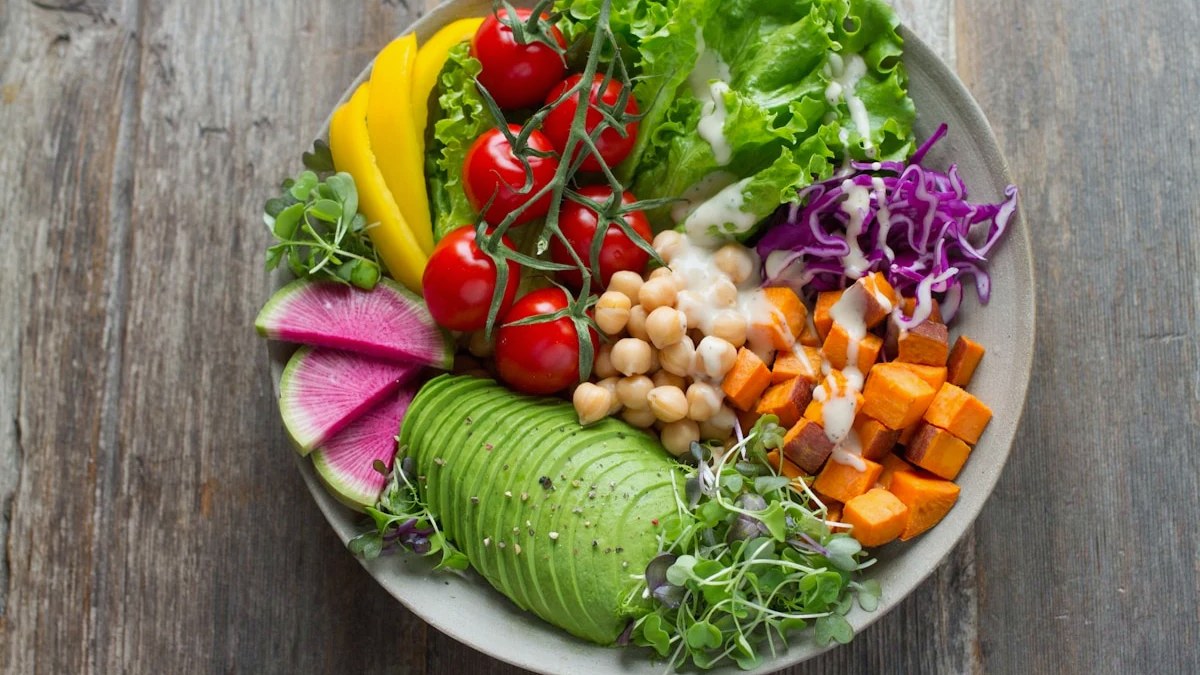
The heart of it: My grocery cart changed before my recipes did. Color made dinner feel less like a chore and more like something I looked forward to.
What comes home from the store quietly determines how you eat all week, which makes the grocery list one of the most powerful and overlooked tools in nutrition. A kitchen full of color and whole foods makes eating well the path of least resistance, while a kitchen full of beige convenience food defeats even the best intentions. The cart decides more than any willpower later does.
It matters because building the list well removes the daily struggle entirely. When the right ingredients are simply there, the balanced meals happen almost by default, without the negotiation and decision fatigue that derail healthy eating. An anti-inflammatory grocery list is not about restriction, it is about stacking your own environment in favor of how you want to feel, before hunger and tiredness get a vote.
What I learned the hard way
For years I shopped without a plan, drifting the aisles hungry and bringing home a random assortment that never quite added up to meals, plus plenty of convenience food that crowded out the rest. Then I blamed my cooking when the real failure happened at the store, days before I ever stood at the stove.
Building a simple, repeatable list around produce, beans, whole grains, good fats, and a few proteins changed my eating more than any recipe ever did. The lesson was that eating well is decided in the cart, not the kitchen. Once color and whole foods were reliably in the house, dinner stopped being a daily problem to solve and started assembling itself.
How to know it's working
A good grocery list proves itself all week long, in how easily and how well you end up eating.
- Balanced meals come together easily, because the right ingredients are simply on hand.
- You reach for takeout and convenience food less, since the better option is right there.
- Your cart, and your plates, have more color and variety without much extra effort.
- You waste less, because you bought things you genuinely use rather than aspirational extras.
- Eating well stops feeling like daily willpower and starts feeling like the default.
If good groceries still go unused, your list may be too aspirational. Buy the foods you actually eat, lean on frozen and canned staples, and let reliability beat the perfect cart.
When this won't fit your life
If you have food allergies, dietary restrictions, or a medical condition, shape your list around your specific needs and any professional guidance, because the general principles still have to bend to your individual body. A grocery template is a starting point, not a rule that overrides your requirements.
And on a tight budget or in a food desert, the ideal colorful cart may not be fully realistic, and that is a real constraint, not a personal failing. Frozen vegetables, canned beans, eggs, and oats are inexpensive, lasting, and genuinely nourishing. Anti-inflammatory eating scales down honestly, and doing what you can with what you have is enough.
FAQ
This FAQ covers the ten most-asked questions about an anti-inflammatory grocery list: how to start, how often to revisit, the biggest mistake, coffee and nightshades, freezing strategies, supplements, signs of progress, expense, and how vegetarians and vegans adapt the cart while keeping omega-3 coverage.
What is the simplest way to start an anti-inflammatory grocery list?
Pick six produce items you actually like, add extra-virgin olive oil, oats, beans, and one source of omega-3 like canned sardines or frozen wild salmon. Use that cart for four weeks before adding anything fancy. Boring repetition is what carries the inflammation work.
How often should I revisit my anti-inflammatory grocery list?
Review it monthly for the first quarter, then seasonally. The skeleton tends to stay the same, but the produce, fish, and grains often shift with the season. A cart that fits Miami summer rarely fits New England winter, and that is fine.
What is the biggest mistake people make with anti-inflammatory eating?
Treating it as a strict diet rather than a pattern. People remove foods aggressively, get discouraged, and quit. The pattern works best when built by addition, repeated for weeks, and adjusted gently. Restriction is rarely the active ingredient. Consistency is.
Is coffee anti-inflammatory?
Most research suggests moderate coffee intake, around one to three cups a day, is associated with lower inflammation markers in many populations. The benefit drops with high sugar, flavored syrups, or excessive caffeine sensitivity. Plain coffee or coffee with milk usually fits an anti-inflammatory pattern. Iced caramel desserts probably do not.
What about nightshades like tomatoes, peppers, and eggplants?
For most people, nightshades are not inflammatory. They are rich in polyphenols and antioxidants that often help. A minority with autoimmune conditions report sensitivity, and an honest elimination and reintroduction is the only reliable way to know. If nothing has flared, there is no reason to avoid them.
Can I freeze most of this list?
Yes. Frozen berries, frozen wild fish, frozen spinach, frozen edamame, and frozen leftover soup all keep beautifully and lose very little of their anti-inflammatory value. The freezer is the busy person's best ally on this kind of cart.
Are supplements needed alongside this food list?
Usually not. Most people get their inflammation work from whole foods first. Some specific situations, such as low vitamin D, pregnancy, recent surgery, or diagnosed deficiencies, warrant supplementation under medical supervision. Self-prescribing supplements rarely outperforms simply eating the cart consistently.
How do I know if the diet is working?
Look for steadier afternoons, better sleep, calmer skin, less joint stiffness on cold mornings, easier digestion, and a quieter relationship with food. Patterns become obvious in four to eight weeks. Most people notice mood and energy before they notice anything on the scale.
Is an anti-inflammatory grocery list expensive?
It does not have to be. Dried beans, lentils, oats, canned sardines, frozen berries, frozen vegetables, eggs, cabbage, and seasonal produce keep the cost honest. The expensive items are usually optional. The fundamentals are budget-friendly and have been used in low-cost diets across the world for generations.
Can vegetarians and vegans follow an anti-inflammatory grocery list?
Easily. Most of the cart is already plant-based. The main adaptation is replacing fish-based omega-3 with walnuts, flax, chia, and algae-based supplements when needed. The other inflammation-fighting pieces, produce, whole grains, beans, olive oil, herbs, are central to most thoughtful plant-based diets.
The version that lasts
An anti-inflammatory grocery list asks for repetition more than perfection. Six rotating produce items, a few pantry staples, frozen backups, herbs that earn their cost, fish when it fits, and the discipline to ignore most trends. The cart becomes boring. The body gets quieter. That is the trade I have learned to love.
The version that lasts is the one your tired self can shop on a Saturday morning without thinking. Repeat it for four weeks. Notice what changes. Adjust without judgment. Add new color, retire what no longer fits. The cart is not the goal. The cart is the supply line that lets the rest of your life run on calmer fuel.