
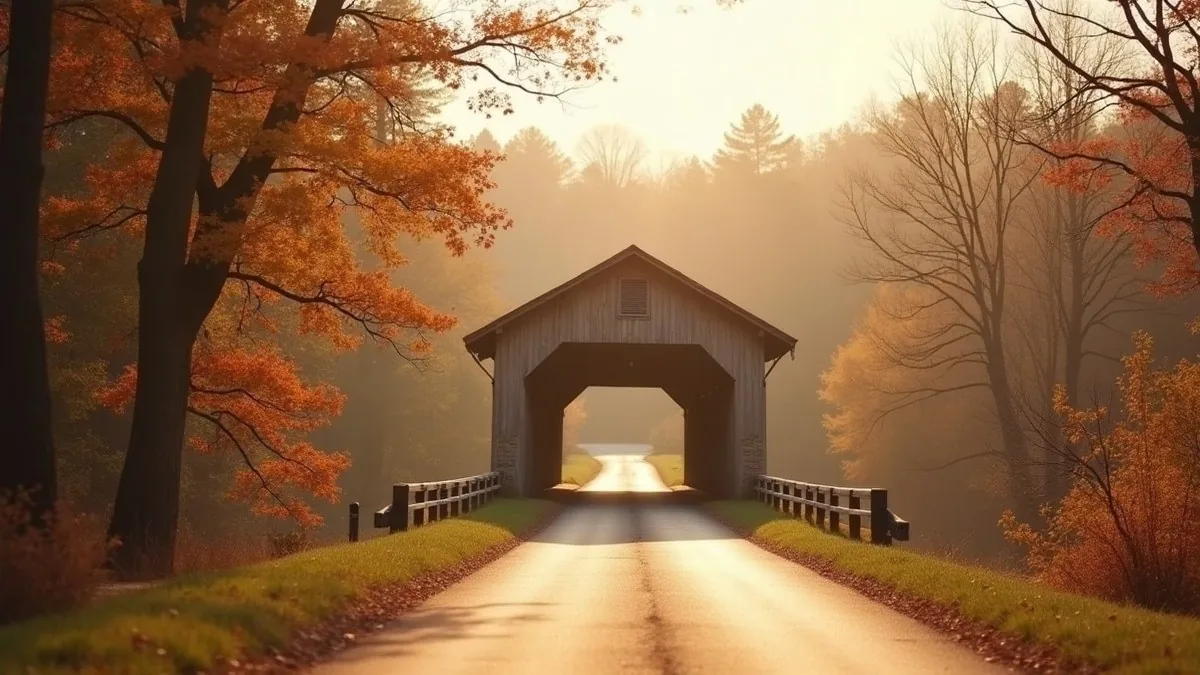
The first time I drove north into Vermont in late September, I had the radio off and the windows cracked, and the maples along Route 100 had just started to turn at their tips, like someone had dipped the whole hillside in apricot. I pulled over at a farm stand for a paper cup of cold cider and stood there longer than I meant to. That stop, not the famous overlook I was racing toward, is the one I still think about. A New England fall road trip is built from moments like that, so I plan it to leave room for them.
I wrote this for the woman who has seen the photos of red barns and golden hills and wants to go, but does not want to spend her one autumn week stuck in leaf-peeper traffic or sprinting between Instagram pull-offs. I will walk you through when the color actually peaks, a loop that threads Vermont, New Hampshire, the Berkshires, and coastal Maine, where to stop for cider and warm doughnuts, and how to pace the driving so the drive itself feels like the point.
Timing is everything with foliage, and it shifts a little every year. Before you commit to dates, check a current foliage forecast and book lodging early, because the good inns fill months ahead. What follows is the route and the rhythm I keep coming back to, plus the small mistakes I made so you do not have to.
| Question | Short answer |
|---|---|
| When does foliage peak? | Northern Vermont and the White Mountains peak late September to early October; the Berkshires and coastal Maine usually peak mid-to-late October. |
| How many days do I need? | Five to seven days lets you drive the loop without rushing. A weekend works if you pick one region, like Vermont, and stay put. |
| Roughly what does it cost? | Plan on $200 to $350 a night for fall inns, plus gas, meals, and cider stops. Midweek and smaller towns run noticeably cheaper. |
| How do I get around? | You need a car. Scenic byways like Route 100 and the Kancamagus are the whole experience, so factor in slow, winding two-lane driving. |
| Who is this trip best for? | Anyone who loves crisp air, small towns, and a flexible pace over a packed itinerary. Great solo, as a couple, or with easygoing friends. |
Chasing the color: when leaves actually peak
Key takeaway: Color moves from north to south and from high ground down. Northern Vermont and the White Mountains turn first, often late September; the Berkshires and the Maine coast follow in mid-to-late October.
Foliage is not a single weekend you can circle on a calendar months ahead. It is a wave that rolls downhill and southward over about three weeks. The sugar maples on a Vermont ridgeline at 2,000 feet will be flaming orange while the oaks down by the Massachusetts border are still stubbornly green. Once I understood that, planning got easier. You are not trying to hit one perfect date. You are trying to position yourself so that wherever you are, something nearby is at or near its peak.
The general rhythm runs like this. The Northeast Kingdom of Vermont and the higher elevations of New Hampshire usually peak in the last week of September into the first days of October. Central and southern Vermont, the Whites, and the Berkshires tend to peak the second and third weeks of October. Coastal Maine, warmed by the ocean, often holds its color latest, into late October. So a trip that starts north and drifts south can ride the wave instead of missing it.
Two things shift this every year: summer rainfall and the first cold nights. A dry, warm autumn dulls and delays the reds; a few crisp nights without a hard frost is what makes the maples truly glow. This is exactly why I never trust last year's dates. I check a current foliage forecast, the kind that maps weekly conditions by region, in the two or three weeks before I leave, and I stay willing to adjust which leg of the loop I drive first.
If you can only go one week, aim for the second week of October as a hedge. It is the closest thing to a sweet spot where some part of New England is almost always lit up. And if you are flexible on lodging dates, weekday arrivals beat weekends for both traffic and price.
The loop I drive: Vermont to the Maine coast
The route: A rough counterclockwise loop. Start in central Vermont, drift through the White Mountains of New Hampshire, drop into the Berkshires, then swing east to coastal Maine before heading home. Five to seven days, no day over four hours of driving.
I think of the trip as four chapters, each with its own texture. You can do all four in a full week, or pick two if you have a long weekend. The order can flip depending on where the color is best when you go, but here is the version I love.
Chapter one is the Green Mountains of Vermont. I base myself near Woodstock or Stowe and use Route 100 as a spine, drifting between covered bridges, dairy farms, and hillsides that look hand-painted. Woodstock itself is almost absurdly pretty, with its green and its brick storefronts, and the drive up to Sugarbush or over the gaps between valleys is the kind of road you take slowly with the heater on and the window down at the same time.

Chapter two crosses into New Hampshire and the White Mountains. This is where the landscape turns dramatic, with granite peaks rising over rivers and the foliage stacked up the slopes in bands. The Kancamagus Highway, which I will come back to, is the headline drive here. I usually spend a night near North Conway or Lincoln so I can take the mountain roads in good morning light rather than rushing them at dusk.
Chapter three drops southwest into the Berkshires of western Massachusetts. The mood softens here. The hills are gentler, the towns more literary and a little arty, with bookshops, farm tables, and old mill buildings turned into galleries. Stockbridge, Lenox, and the back roads around them are made for an unhurried afternoon, and because the Berkshires peak a bit later, this leg often catches color when the north has already dropped its leaves.
Chapter four swings east to the coast of Maine. After a week of mountains, the salt air and the lobster shacks feel like a reward. Around Camden and the mid-coast, you get red maples against blue harbor water and that particular New England trick of foliage meeting the sea. It is a long-ish drive to get there, so I treat it as its own destination and give it at least a full night, ideally two.
Scenic byways and the slow drive
The drives to plan around: Route 100 in Vermont, the Kancamagus Highway in New Hampshire, and the Mohawk Trail in the Berkshires. Each is a two-lane road where the driving itself is the attraction.
On this trip the roads are not the gaps between the good parts. They are the good parts. Three byways do most of the heavy lifting, and learning to drive them well, slowly and with margin, is what separates a frantic week from a glorious one.
Route 100 runs almost the length of Vermont through the middle of the Green Mountains. It is the road postcards are made of: farm stands, swimming holes gone quiet for the season, white church steeples, and maples crowding right up to the shoulder. There is no need to drive all of it. Pick a 30 or 40 mile stretch, and let yourself pull over whenever a barn and a hillside line up just right.
The Kancamagus Highway, locals call it the Kanc, cuts about 35 miles through the White Mountain National Forest with no gas stations and no billboards, just overlooks, river bends, and a steep climb to a pass with long views. There are pull-offs and short waterfall walks at Sabbaday Falls and Rocky Gorge. Go early. By late morning on an October weekend the parking areas fill and the road slows to a crawl, which is its own kind of leaf-peeper traffic.
The Mohawk Trail follows Route 2 across northern Massachusetts into the Berkshires, with a famous hairpin turn that drops you toward North Adams and big westward views. It is the oldest scenic auto route in the region, and it threads old trading-post towns that lean into the season hard, with mums on every porch and cider for sale at the trailhead. Drive it in the afternoon so the light is behind you on the descent.
My one firm rule on all of these: build in slack. I assume every scenic mile takes twice as long as the map says, because I will stop, and stopping is the point. A drive that looks like 90 minutes becomes a relaxed half day, and that is a feature, not a delay.
Cider, orchards, and sweater-season stops
The eating and drinking on a fall road trip is half the reason to go, and autumn in New England has a flavor that is hard to fake. Cider is the through line. Most farm stands and orchards sell fresh-pressed cider by the cup or the jug, and many press their own apple cider doughnuts, warm, sugared, and best eaten standing in a parking lot with cold hands. I plan at least one real orchard stop per region. Pick-your-own is open through October at many farms, and even if you do not pick, the cider, the pumpkins, and the smell of the place are worth the detour.
In Vermont I look for a creamery or a cheese maker to pair with the cider, plus a maple stand for syrup to take home. In the White Mountains the move is a hearty lunch in a mountain town, a bowl of chowder or chili before or after the Kanc. In the Berkshires the food turns a little more refined, with farm-to-table dinners and good bakeries, so I save a nicer reservation for that leg. On the Maine coast, lobster rolls and a working harbor are the obvious and correct choice, even when it is cold enough to want gloves.

The small towns are their own pleasure, and they reward wandering on foot. I try to give each base town one slow morning with no driving at all: a coffee, a poke through a bookshop or a general store, a walk past the white-clapboard houses with their porches dressed in gourds and corn stalks. This is sweater season at its best, the kind of crisp where you want a wool layer at breakfast and shed it by noon. Towns like Woodstock, North Conway, Stockbridge, and Camden all do this beautifully, and they are walkable enough that you can leave the car parked and just be in the place for a few hours.
A practical note on lodging, because it shapes everything. Fall is the busiest tourist season in much of New England, and the charming inns book out far in advance, sometimes by midsummer for prime October weekends. I reserve my base-town stays early and stay flexible on the in-between nights. Many inns also set minimum-night stays during peak foliage, so check that before you fall in love with a place you can only get for one night.
Packing for crisp mornings and shifting light
Pack for range: A New England fall day can swing 30 degrees from a frosty dawn to a warm afternoon. Layers, a waterproof shell, and real walking shoes matter more than anything stylish you bring.
The weather is the thing first-timers underpack for. A clear October morning in the mountains can start near freezing and climb to short-sleeve warmth by mid-afternoon, then drop fast once the sun goes behind a ridge. The answer is layers you can add and remove all day without thinking: a base layer, a warm mid layer like a fleece or wool sweater, and a packable waterproof shell for the wind on the overlooks and the inevitable gray drizzle.
Shoes are the other thing. The best views often sit a short walk from the pull-off, over wet leaves and uneven granite, so I bring real walking shoes with grip rather than anything delicate. A hat and a light pair of gloves live in my day bag the whole trip, because standing still at an overlook in the wind is colder than the temperature suggests.
For the car, I keep a soft cooler for cider and cheese, a refillable water bottle, a paper map as backup since cell service drops on the Kanc and in the Northeast Kingdom, and a small towel for damp benches and foggy windshields. Sunrise and sunset come earlier than in summer, so I also pack a headlamp or rely on my phone light for the end of an afternoon trail. None of it is special gear. It is simply what stands between staying out long enough to enjoy a view and rushing back to a warm car.
Pacing the days so the drive stays the point
The mistake I made on my first foliage trip was treating it like a scavenger hunt, a list of towns and overlooks to collect before dark. I drove too far each day, watched the clock, and came home tired instead of restored. The fix was simple and a little humbling: do less. Now I cap my driving at about three to four hours a day, and I let the rest of the time fill itself with stops I did not plan.
My loose daily shape looks like this. I get an early start to catch the best light and the empty roads, drive a scenic stretch with full permission to pull over whenever, settle into a town or trail by early afternoon, and keep the evening soft, with a good dinner and an early enough night to do it again. I leave at least one slot every day completely unplanned, because the unplanned stop, the farm stand, the overlook I did not know about, the town that looked too pretty to pass, is almost always the part I remember.

I also keep the route held loosely. The plan is a starting point, not a contract. If a foliage forecast tells me the north has already dropped its leaves and the Berkshires are blazing, I flip the order without guilt. If a town wants another morning, it gets one, and I drop something downstream. The trip works because it bends.
One more thing on the practical side, since fall is high season. Weekends bring crowds to the famous drives and the popular towns, so I aim my marquee byways for weekday mornings and save the lazy walkable towns for the weekend. Gas up before the Kanc and other remote stretches, watch for deer at dawn and dusk on the back roads, and check current conditions, weather, road status, and foliage reports, the night before each leg. A little of that quiet logistics work is exactly what buys the spontaneity that makes the trip feel like yours.
Why this matters more than it seems
The heart of it: Fall in New England made me understand why people chase a season on purpose. The trick is to linger in small towns, not race the route.
A cozy, unhurried fall road trip matters because the season itself is the destination, and racing through it defeats the entire point. New England in autumn rewards lingering, in small towns, at scenic overlooks, over cider and quiet drives, far more than it rewards covering miles. Planning for slowness here is not a preference, it is how you actually receive what the season is offering.
It matters too because a road trip is slow travel in its purest, most flexible form, and fall New England is the ideal place to practice it. The freedom to stop on a whim, change the route for a pretty back road, and let the days unfold gently is the whole magic. Treating the drive as the experience rather than the transit transforms a checklist of towns into a genuinely restorative journey.
There is real wisdom in treating the season itself as the destination on a fall road trip. New England in autumn rewards lingering, in small towns, at overlooks, over cider and quiet drives, far more than it rewards racking up miles. Planning for slowness here is not a mere preference, it is the only way to actually receive what the season is offering, which a frantic, efficient route reliably speeds straight past.
What I learned the hard way
My instinct on the first such trip was to maximize, plotting an efficient route to hit as many famous spots as possible, treating the drive as transit between photo opportunities. I spent more time watching the clock and the GPS than the actual foliage, which was absurd given that the foliage was the entire reason I came.
When I let go of the efficient route and started lingering, taking the scenic detour, stopping in the town that looked charming, the trip became what I had hoped for. The lesson was that on a road trip the driving is not the boring part between destinations, it is often the best part, and slowing down to enjoy it is what turns miles into memories.
I also learned that a road trip is slow travel in its most flexible, forgiving form, and fall New England is the ideal place to learn it. The freedom to stop on a whim, take the prettier back road, and let the days unfold gently is the entire magic, and it turns the driving itself from dead transit into the best part of the trip. The journey, here, genuinely is the destination.
How to know it's working
A good fall road trip proves itself in presence and ease, not in how many towns you managed to reach.
- You stop on a whim for the charming town or the beautiful overlook, and you are glad you did.
- The driving itself feels like part of the pleasure, not dead time between stops.
- You actually take in the season rather than watching it blur past a window.
- Your days flex with weather and mood instead of marching to a rigid schedule.
- You come home soothed by the trip rather than tired from chasing it.
If a road trip feels like a race, you are probably overscheduled. Cut stops, build in slack, and treat the scenic drive as the experience rather than the commute.
When this won't fit your life
Fall is peak season in New England, so weather, traffic, and booked-up lodging are real considerations, and a little advance planning for the essentials keeps the spontaneity enjoyable rather than stressful. Slow travel still benefits from securing a place to sleep, especially when everyone else is chasing the same leaves.
And if your schedule only allows a quick trip, you can still bring the lingering spirit to a smaller loop rather than cramming a vast route into two days. A short, slow road trip beats a long, frantic one, and choosing a compact region you can savor is wiser than racing across several you will only glimpse.
Hold the route loosely and let weather, mood, and discovery reshape it as you go. A road trip plan should be a starting point, not a contract, and the charm lies in the detours you did not foresee. Even a short loop savored slowly beats a vast route crammed into a weekend, so choose a region you can actually linger in and let the season set the pace.
Helpful sources and next reads
Reliable external sources
More from Sabrina Saturno
You may also love




FAQ
When is the best week to see fall foliage in New England?
It varies by year and elevation, but the second week of October is the safest single bet because some region is almost always near peak. Northern Vermont and the White Mountains can peak in late September; coastal Maine and the Berkshires often hold color into late October. Check a current foliage forecast before you set dates.
How many days do I need for the whole loop?
Five to seven days is comfortable for the full Vermont, New Hampshire, Berkshires, and coastal Maine loop without rushing. If you only have a weekend, skip the loop and pick one region, like Vermont or the White Mountains, and stay put to enjoy it slowly.
Do I really need a car, or can I do this another way?
You need a car. The whole experience is the scenic byways and the freedom to stop on a whim, and public transit does not reach the back roads and orchards. Rent something comfortable for long two-lane drives, and make sure you are at ease driving winding mountain roads.
How much should I budget for a fall road trip?
Lodging is the biggest line. Fall inns commonly run $200 to $350 a night during peak foliage, more on prime weekends. Add gas, meals, and cider stops. You can trim costs sharply by traveling midweek, choosing smaller towns, and mixing in a motel or two between the special inns.
Should I book lodging in advance?
Yes, as early as you can. Fall is the busiest tourist season in much of New England, and the charming inns sell out months ahead for October weekends. Many also require minimum-night stays during peak. Reserve your base-town nights early and stay flexible on the in-between stops.
How do I avoid the worst leaf-peeper traffic?
Travel midweek when you can, and hit the famous drives like the Kancamagus early in the morning before the parking areas fill. Save the lazy walkable towns for busier weekend afternoons. Starting your day at sunrise also gives you the best light and the emptiest roads.
What should I pack for the weather?
Layers for a big daily temperature swing: a base layer, a warm fleece or wool sweater, and a packable waterproof shell. Add real walking shoes with grip, a hat, and light gloves. Mornings can start near freezing in the mountains and warm up a lot by afternoon.
Is a fall road trip good for a solo traveler?
It is one of the easier solo trips I know. The towns are small and safe-feeling, the drives are forgiving, and you can set your own slow pace. Just share your route with someone, fill the tank before remote stretches, and keep a paper map for spots where cell service drops.
What if the leaves have already passed peak when I arrive?
Drift south or to lower elevation, where color usually lingers longer. The Berkshires and the Maine coast peak later than the northern mountains. Even past peak there is beauty in the bare-branch and late-color landscape, plus orchards, cider, and cozy towns that do not depend on the leaves at all.
Can I do this trip with kids or older relatives?
Yes, if you keep the daily driving short and the stops easy. Orchards, cider doughnuts, short waterfall walks, and town strolls suit a wide range of ages. Skip the longest byways or break them into pieces, and build in plenty of rest, snack, and bathroom stops.
Where can I check current foliage conditions?
State tourism sites publish weekly foliage maps and reports through the season, and many have a phone hotline or email update. Check them in the two or three weeks before you leave, and again the night before each leg, so you can adjust which region you drive first.
What is the one mistake first-timers make most?
Trying to see too much. Packing in too many towns turns the trip into a race against the clock and you end up watching the foliage blur past the window. Cap your driving at three to four hours a day, leave unplanned slots, and let the drive itself be the experience.
One last thing before you go
A New England fall road trip is one of those rare trips where the planning and the wandering both matter. Position yourself on the foliage wave, book your base-town inns early, give yourself a loop you can drive at three or four hours a day, and then let the rest stay loose. The orchard you did not plan, the overlook with no name on the map, the town that made you park the car and just walk, those will be the parts you carry home.
Check a current foliage forecast and the weather before you set your dates and again before each leg, because the season shifts every year. Then drive a little slower than feels efficient, stop for the cider, and let the color come to you. That is the whole trip, and it is more than enough.