
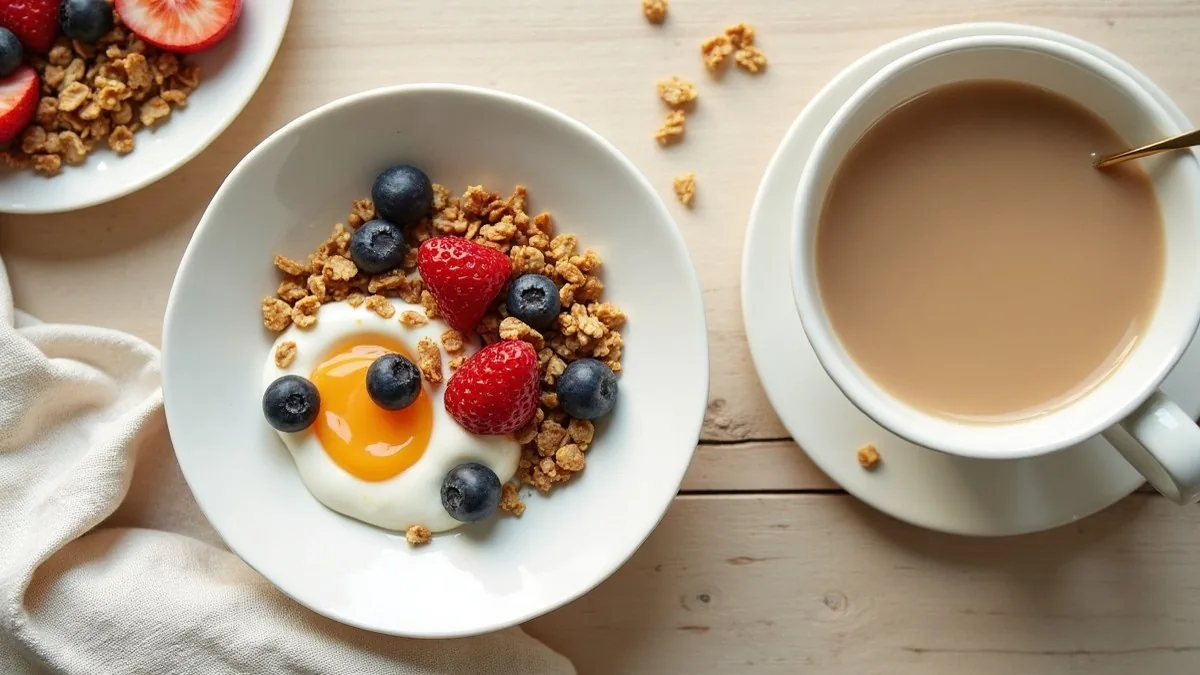
A balanced breakfast bowl is a base grain or starch, a real protein, a healthy fat, and some fruit or vegetables, finished with a topping for crunch or flavor. That is the whole formula, and once it lived in my head I stopped needing recipes at all. I build the same four-part shape every morning and fill it with whatever the kitchen offers. When the protein corner needs inspiration, I borrow from my list of high-protein breakfast ideas.
I came to this the slow way, after years of saving breakfast recipes I made exactly once. The screenshots piled up. The mornings stayed chaotic. I would scroll, sigh, and eat a granola bar standing at the counter, then feel hungry again before my second coffee cooled. The recipes were lovely. They just never matched the actual Tuesday I was standing in.
So this is not a recipe roundup. It is a way of thinking about the bowl in front of you, savory or sweet, warm or cold, fancy or built from sad fridge leftovers. I will walk you through each of the four parts, give you real example bowls I eat on rotation, share the make-ahead tricks that save me, and explain why protein and fiber are the reason a good bowl keeps you full past ten in the morning. None of it requires special ingredients, a perfect kitchen, or a calm morning, which is the only kind of advice I trust anymore.
| Part of the bowl | What it does | Easy examples |
|---|---|---|
| Base (grain or starch) | Steady carbs and most of the fiber | Oats, quinoa, roasted potatoes, whole-grain toast cubes, brown rice |
| Protein | Slows digestion and keeps you full | Eggs, Greek yogurt, cottage cheese, tofu, beans, smoked salmon |
| Healthy fat | Satisfaction and slower energy release | Avocado, nut butter, seeds, olive oil, tahini |
| Fruit or vegetables | Color, fiber, vitamins, freshness | Berries, banana, spinach, roasted tomatoes, cucumber |
| Topping | Crunch, flavor, the part you look forward to | Granola, dukkah, hot sauce, cinnamon, chopped herbs |
The four parts, plus a fifth I never skip
The formula: base, protein, healthy fat, produce, and a topping that makes the bowl worth eating.
Here is the whole thing. Part one is a base, a grain or starch that gives you steady carbohydrate and most of your fiber. Oats, quinoa, brown rice, roasted potatoes, or even cubed whole-grain toast all qualify. Part two is a protein, and it has to be real protein, not a sprinkle. Eggs, Greek yogurt, cottage cheese, tofu, beans, or a little smoked salmon. Part three is a healthy fat, which is where so many breakfasts fall flat. Avocado, a spoon of nut butter, seeds, olive oil, or tahini.
Part four is fruit or vegetables, for color, freshness, and more fiber. Then the fifth part, the topping, is technically optional but I never skip it. A handful of granola, a shake of dukkah, hot sauce, cinnamon, chopped herbs. The topping is the difference between eating a balanced bowl because you should and eating it because you want to. I treat it as non-negotiable joy, not decoration.
Why five parts and not three? Because three usually collapses into base, base, and more base. When I forced myself to name a distinct protein and a distinct fat as separate jobs, my bowls suddenly held me through the morning instead of fading at ten. The fruit or vegetable keeps the bowl from feeling heavy, and the topping keeps me actually wanting it tomorrow. Each part has a job, and once you see the jobs you can never unsee them. A bowl missing one part still tastes fine in the moment. You just notice the gap an hour later when your stomach starts asking questions.
I think of the parts in a rough order of importance too, which helps on the days I can only manage three of them. Protein first, always, because it does the heaviest lifting for fullness. Then a fat, because it is the cheapest way to make any bowl satisfying. The base comes next, and the produce and topping are the flourishes that make it a meal I want rather than a meal I tolerate. On a stripped-back morning I will take protein, fat, and a base and call it good. The shape is generous enough to lose a part and still hold together, which is exactly why it survives in real life.
My savory bowls, the ones that actually keep me full
Savory side: a warm grain or potato base with eggs or beans and something green wins most of my mornings.
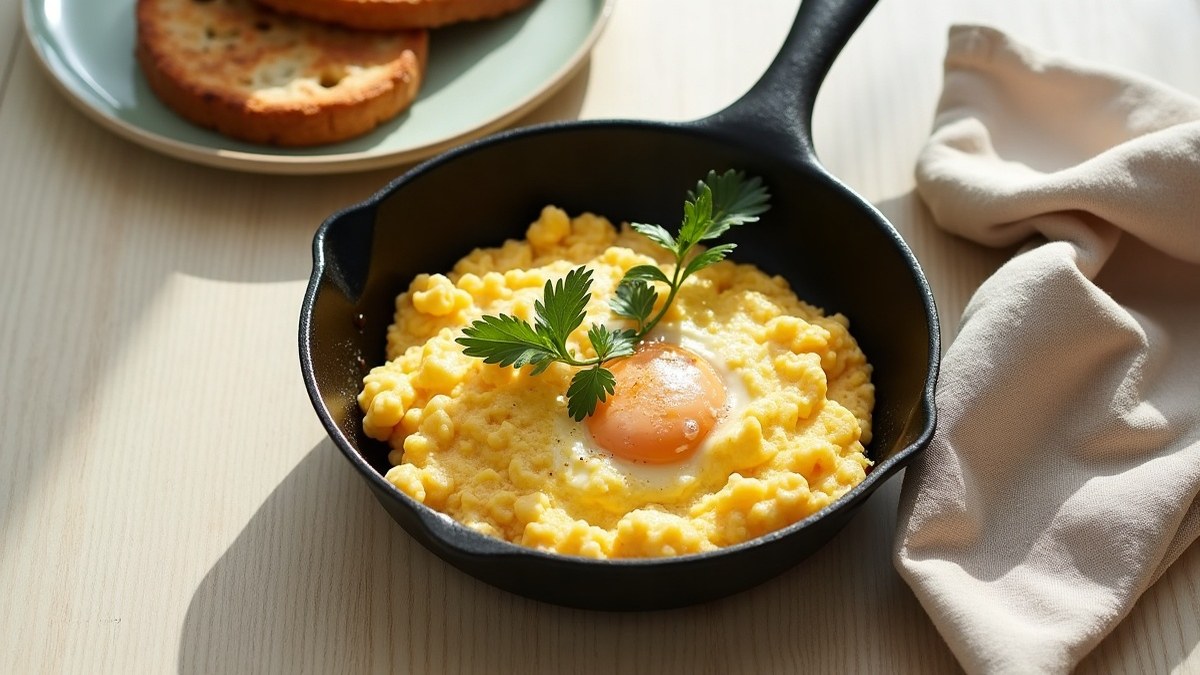
I lean savory more often than sweet, especially on days I need to think clearly. My most repeated bowl is roasted potatoes from the night before, two soft-scrambled eggs, half an avocado, a handful of spinach wilted in the warm pan, and a hard shake of hot sauce. It takes about eight minutes because the potatoes are already done. It carries me past noon without a single hunger pang, which still feels like a small miracle given how I used to eat.
Another favorite is a quick bean bowl. Warmed white beans on a base of quinoa, a drizzle of olive oil, roasted cherry tomatoes, and a fistful of chopped parsley. Beans are my secret weapon because they bring both protein and fiber in the same scoop, which is exactly the combination that makes a bowl satisfying. On rushed days I swap the eggs for cottage cheese, which sounds odd in a savory bowl until you add cracked pepper and a little olive oil and realize it is wonderful.
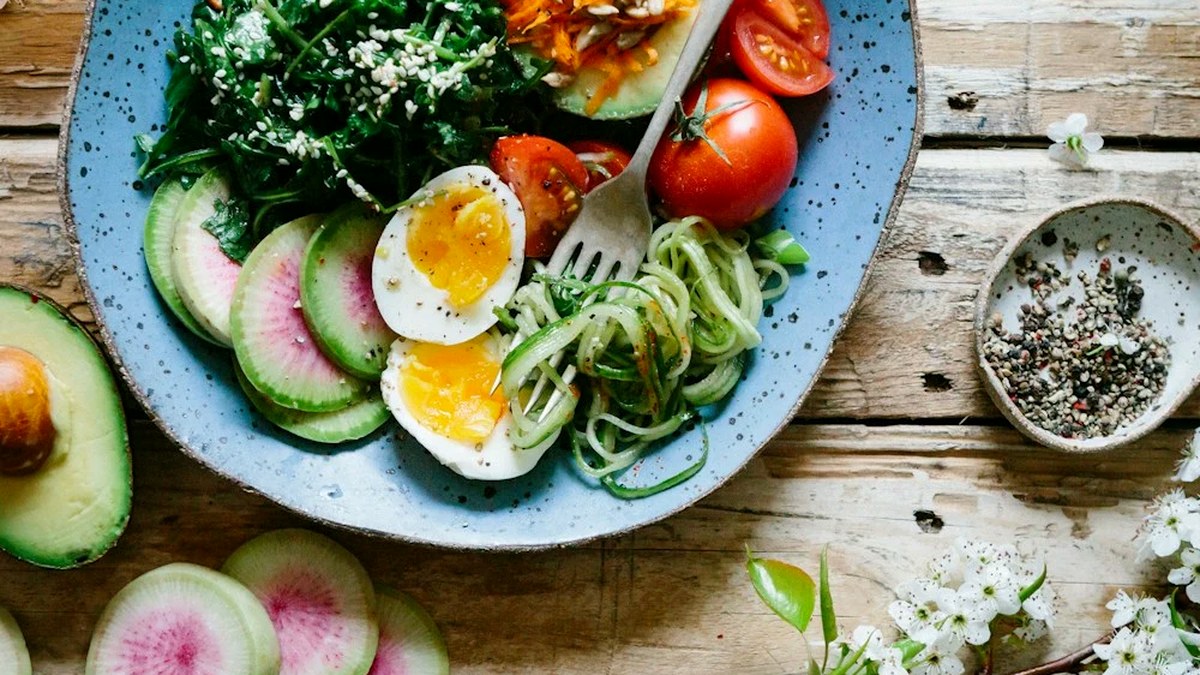
What I love about savory bowls is how forgiving they are with leftovers. Last night's roasted vegetables, a scoop of yesterday's grains, a handful of greens that need using before they wilt, all of it becomes breakfast with an egg cracked on top. I have made a perfectly good bowl from roasted broccoli, brown rice, a fried egg, and a swirl of tahini, and felt like I had planned it for days. The savory version also tends to keep me away from the mid-morning cravings that sweet breakfasts can trigger, which is the real reason I reach for it on demanding days.

My sweet bowls, without the sugar crash
Sweet side: yogurt or oats plus real protein and fat, so it tastes like dessert but eats like a meal.
The trap with sweet breakfasts is that they are usually all base and fruit with no protein or fat, so they spike and then drop you. I fix that by making the protein the anchor. My standard sweet bowl is a generous scoop of Greek yogurt as the protein, a small base of oats or granola, a spoon of almond butter for fat, blueberries and sliced banana for fruit, and a dusting of cinnamon on top. It tastes like a treat and behaves like a meal.
When I want something warmer, I make oatmeal the base and stir in a spoonful of nut butter and a scoop of cottage cheese once it is off the heat. The cottage cheese melts into a creamy richness and quietly doubles the protein. Topped with berries and a few chopped walnuts, it is the kind of bowl I genuinely look forward to. If you like overnight versions, my overnight oats without yogurt guide uses the same balancing logic in a make-ahead jar.
One small thing that changed my sweet bowls forever was learning to keep the sweetener honest. I used to drown yogurt in honey and wonder why I crashed. Now the fruit does almost all the sweetening, and if I want more, a tiny drizzle goes on top where I taste it first rather than stirred through where it disappears. The banana and berries bring natural sweetness plus fiber, so the bowl tastes indulgent without behaving like a dessert. A sweet bowl built this way feels like a small kindness in the morning, not a sugar bomb I have to recover from by lunch.
Why protein and fiber are the whole point
Satiety math: protein and fiber are what slow digestion and keep hunger away, not the trendy topping.
Here is the part most pretty breakfast bowls ignore. Fullness does not come from how the bowl looks. It comes mostly from protein and fiber, which slow how fast your stomach empties and keep your energy from spiking and crashing. A bowl of granola and fruit looks healthy and leaves you raiding the cupboard by ten. Add a real protein and a fat, and the same bowl carries you for hours. The difference is structural, not aesthetic.
I aim for a meaningful amount of protein at breakfast, roughly the size of two eggs or a solid scoop of Greek yogurt, because that is the lever that changes my whole morning. The fiber comes naturally from the base grain, the produce, and especially beans, seeds, and whole oats. For a plain-language look at what actually fills a balanced plate, the Harvard Nutrition Source Healthy Eating Plate is the resource I trust most, and it maps neatly onto this bowl. None of this is medical advice. If you manage a condition like diabetes, talk specifics through with your own doctor or dietitian.
There is a simple test I run when I am unsure a bowl is balanced enough. I ask whether I would still feel full if I skipped my mid-morning snack. If the honest answer is no, the bowl is short on protein or fat, almost every time. The base and fruit are easy to overdo because they are quick and tasty, but they empty from your stomach fast. Protein and fat are the slow part, the ballast. When I get the ratio right, the snack I used to crave at half past ten simply never calls, and that quiet absence is how I know the formula did its job.
Make-ahead tricks that make this survive real mornings
Prep ahead: cook the base in batches and prep one protein, and the bowl assembles in minutes.
The formula only works if the morning cooperates, and mornings rarely do. So I do almost no cooking at breakfast time. On Sunday I roast a tray of potatoes and a tray of vegetables, cook a pot of quinoa, and hard-boil a half dozen eggs. None of it is breakfast yet. It is just parts, sitting in the fridge, ready to become a bowl in the time it takes the kettle to boil.
For sweet bowls I portion Greek yogurt into jars and keep washed berries front and center so they are the easy choice. I also keep a small jar of mixed seeds and a good granola on the counter, because a topping within arm's reach is a topping you will actually use. The whole trick is to move the effort to a calmer moment so the rushed moment only asks you to assemble. When I batch a base ahead, the same habit feeds into my wellful nutrition approach of eating kind rather than strict.
I will be honest about how little prep this really takes, because make-ahead can sound like a Sunday spent meal-prepping in matching containers. It is not that. It is twenty minutes while I am already in the kitchen for something else, roasting one tray and boiling one pot. The eggs cook while the potatoes roast. By the time I have cleaned up dinner, breakfast for four mornings is quietly done. Frozen fruit needs no prep at all, which is why I always keep a bag. The point is not to be impressive on Sunday. The point is to be lazy on Wednesday and still eat well.

Smart swaps when the fridge is nearly empty
Stay flexible: every part has a pantry stand-in, so a bare fridge still makes a balanced bowl.
The reason a formula beats a recipe is that it bends. No fresh fruit? Frozen berries thaw in two minutes or canned peaches work fine. No avocado for your fat? A spoon of peanut butter or a drizzle of olive oil does the same job. Out of eggs? Canned beans, a can of tuna, or a scoop of cottage cheese all cover the protein. The shape stays intact even when the specific fillings change completely.
I keep a mental shortlist of shelf-stable backups for each part, so a nearly empty fridge never means a skipped or junk breakfast. Canned beans and tuna, frozen fruit and spinach, oats, nut butter, and seeds will between them build a balanced bowl on the worst-stocked morning of the month. Knowing this removes the low-grade panic I used to feel staring into a bare fridge, deciding whether to bother at all.
Swaps are also how I make this work across budgets and seasons. In summer my produce part is fresh peaches and tomatoes from the market. In February it is frozen berries and a handful of frozen spinach stirred into warm grains. Neither is better, both fit the same slot. The same goes for protein. Eggs are cheap, beans are cheaper, and a tin of fish stretches a long way. Treating each part as a category rather than a fixed ingredient means the bowl flexes with whatever the week and the wallet allow, and it never asks me to buy something special just to eat breakfast.
The mistakes that quietly sabotage a good bowl
Watch for: too much base, no real protein, and a fat you forgot are the usual culprits.
The most common mistake I made for years was a bowl that was almost all base. A giant pile of oats or granola with a little fruit on top feels generous and leaves you hungry, because there is no protein or fat to slow it down. The fix is not less food, it is better balance. Shrink the grain a little and let the protein and fat take up real space.
The second mistake is treating protein as a garnish. A few nuts on yogurt is not a protein serving. The third is forgetting the fat entirely, which is what makes a bowl feel thin and unsatisfying even when the math looks fine. And the fourth, the sneakiest one, is a so-called healthy bowl drowning in honey, syrup, or sweetened granola, so it spikes you like a dessert. Keep the sweetness coming mostly from the fruit, and you keep the steadiness too.
A fifth mistake worth naming is portion guilt, building a bowl so small it does not actually feed you because a tiny breakfast feels virtuous. It is not virtuous, it is a setup for snacking your way through the morning. A balanced bowl is allowed to be a real meal. The opposite mistake is just as common, a giant bowl with no balance that leaves you stuffed yet weirdly hungry an hour later. Both come from watching volume instead of composition. Once I started caring about what was in the bowl rather than how big it looked, the right size sorted itself out almost automatically.

How to build your own bowl in under five minutes
Quick build: pick one from each part, layer warm under cold, and add the topping last.
When I teach a friend this, I have them physically pick one thing from each category, out loud. One base. One protein. One fat. One fruit or vegetable. One topping. Saying it that way turns a vague want a healthy breakfast into a concrete bowl in about ten seconds. The decision fatigue that used to derail me before I even started just disappears.
For assembly, I layer warm things on the bottom and cool things on top, so the avocado or yogurt does not turn into a sad warm puddle. Base first, protein beside it, fat tucked in, produce piled on, topping scattered last so it stays crisp. Once you have built the shape a dozen times your hands know it, and you will catch yourself making a balanced bowl half-asleep without consulting anything. That is the whole goal, a habit so simple it survives your worst mornings.
If you want a starting rotation so you are not deciding from scratch, here is mine. Monday, yogurt with granola, almond butter, and berries. Tuesday, roasted potatoes with eggs, avocado, and spinach. Wednesday, oatmeal with cottage cheese, banana, and walnuts. Thursday, a bean and quinoa bowl with tomatoes and parsley. Friday, whatever leftovers exist with an egg on top. That is five bowls, each a fill-in of the same four-part shape, and none takes real thought. Steal the rotation, change every ingredient to suit your taste, and the structure underneath will keep doing the quiet work of keeping you full and steady.
The five-minute promise is real because the slow steps already happened. Assembly is just layering, and layering is fast. Even building from scratch, soft-scrambling two eggs takes three minutes while bread toasts or oats microwave. The mental speed matters as much as the literal speed. When you are not standing there deciding what to make, the whole thing feels effortless, and effortless is what survives a stressful week. I have built this bowl on mornings I barely had my eyes open, and it still came out balanced, because the thinking was already done long before I walked into the kitchen.
When this won't fit your life
Honest fit: if mornings make you queasy or you eat by different rules, bend the formula or move it later.
If you are simply not hungry first thing, please do not force a full bowl to obey a rule. Some people genuinely feel better eating later, and this exact formula keeps perfectly until ten or noon. The goal was never breakfast at a prescribed hour. It was a balanced first meal whenever it suits your body, even if that meal lands closer to lunch.
And if you have food allergies, a restricted diet, or a condition that shapes how you eat, the specifics belong to you and your dietitian, not to me. The four-part shape is flexible by design, but what fills it should match your real needs. If meal timing or blood sugar is something you actively manage, treat this as a friendly starting point to discuss, not a prescription. Hold the formula loosely, let it bend to your culture and your hunger clock, and keep only the version that genuinely feels like support.
There are also seasons when even a simple bowl is too much, and that is allowed. New parenthood, illness, grief, or a brutal work stretch can shrink what you can manage down to a piece of toast and a boiled egg, and honestly that is still two of the four parts. The formula is a goal to drift back toward, not a rule to fail against. On my hardest weeks I aim for protein plus anything and let the rest go. The shape will be waiting when life loosens up again, and it never holds a grudge for the mornings you could not meet it fully.
Helpful sources and next reads
Reliable external sources
More from Sabrina Saturno
You may also love


FAQ
What makes a breakfast bowl balanced?
A balanced bowl has four parts: a base grain or starch, a real protein, a healthy fat, and fruit or vegetables, plus an optional topping for texture.
What protein is best in a breakfast bowl?
Whatever you will actually eat: eggs, Greek yogurt, cottage cheese, beans, tofu, or smoked salmon. The amount matters more than the source.
How much protein should a breakfast bowl have?
Aim for a real serving, roughly two eggs or a solid scoop of Greek yogurt. That is the lever that keeps you full through the morning.
Can a sweet breakfast bowl be balanced?
Yes. Anchor it with a protein like Greek yogurt and add a fat like nut butter, so it tastes like a treat but does not spike and crash.
Why is my breakfast bowl not keeping me full?
Usually it is too much base with not enough protein and fat. Shrink the grain a little and add a real protein and a healthy fat.
What is a good base for a breakfast bowl?
Oats, quinoa, brown rice, roasted potatoes, or cubed whole-grain toast. Whole grains add fiber, which helps with steadiness and fullness.
Can I make breakfast bowls ahead of time?
Yes, but prep the parts, not the whole bowl. Batch-cook a base, prep one protein, and keep fruit and toppings handy, then assemble in minutes.
What fats work in a breakfast bowl?
Avocado, nut butter, seeds, olive oil, or tahini. A small amount adds real satisfaction and slows how fast your energy fades.
What if I have no fresh produce?
Frozen berries, frozen spinach, or canned fruit all work. The formula bends, so a bare fridge is no excuse to skip the produce part.
Are breakfast bowls expensive?
They do not have to be. Eggs, oats, beans, frozen fruit, and seeds are cheap, and the whole point is building from what you already own.
Can I eat a breakfast bowl if I am not a morning eater?
Absolutely. The same four-part bowl keeps until mid-morning or noon. Eat it whenever your appetite shows up rather than forcing it early.
What is the easiest balanced bowl for a rushed morning?
Greek yogurt, a handful of granola, a spoon of nut butter, and berries. Four parts, no cooking, and it assembles in under two minutes.
How do I keep a breakfast bowl from getting boring?
Change one part at a time and vary the topping. The same shape with a new fruit, fat, or sauce feels like a different meal entirely.
The version that lasts
The version of this that lasts is not a single perfect bowl. It is the four-part shape living quietly in your head, ready to be filled with whatever the morning and the fridge allow. Some days mine is roasted potatoes and eggs and hot sauce. Some days it is yogurt and berries eaten standing up. Both are balanced, because both follow the same simple structure underneath.
What changed for me was trading the search for the right recipe for trust in a reliable shape. I stopped saving screenshots and started building bowls without thinking, and breakfast went from a small daily failure to a small daily comfort. That shift was almost entirely about lowering the effort and raising the flexibility, not about discipline.
So take the formula, not the specific bowls. Build it your way, with your cuisine, your budget, and your hunger clock. Let it bend on hard mornings and shine on easy ones. A breakfast you can make half-asleep on a Tuesday will feed you far more faithfully than a beautiful one you only manage on a good day.
If you take one thing from all of this, let it be permission to stop searching. You already know enough to build a good bowl. Pick a base you like, a protein you will actually eat, a fat, and something fresh, then add the topping that makes you smile. Do it tomorrow, and the day after, and watch how quickly your hands learn the shape. The recipes can stay in their folder. What you need each morning is not another idea, just the same reliable four-part bowl, made your way, again and again until it feels like home.