
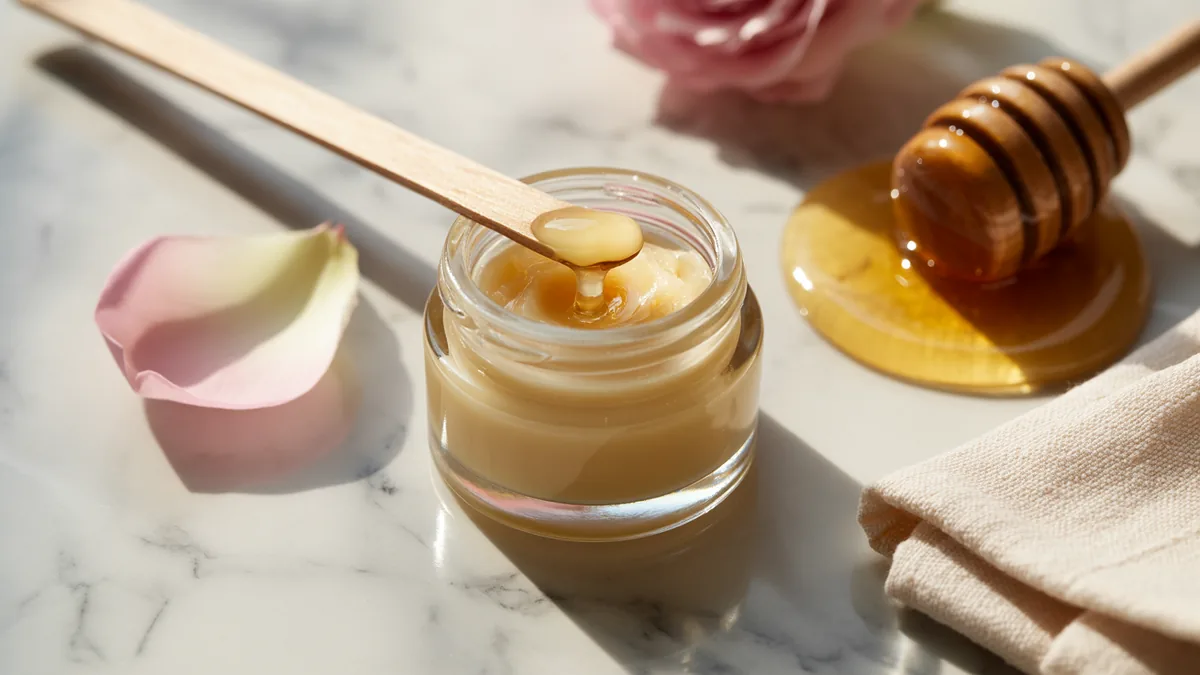
If you have ever stood in a beauty aisle holding a little pot that says lip mask and wondered how it is any different from the lip balm in your coat pocket, this guide is for you. The short version: a lip mask is a thick, leave-on treatment for your lips. You put it on and let it sit, often all night, and it works while you do nothing. I came to lip masks the unglamorous way, through one cruel January when my lips cracked every single morning no matter how much balm I swiped on.
I want to be honest with you the way I wish a friend had been honest with me. A lip mask is not magic, and you do not strictly need a fancy one. But it is one of the small, low-effort things that genuinely changed a part of my body I had given up on. My lips stopped peeling. They stopped stinging when I smiled in the cold. That is a real result from a five-second nightly habit, and I think more people would do it if someone just explained what the thing actually is.
So that is what this is. A plain, thorough explainer covering what a lip mask is, what it does, how to use one, how long to leave it on, how it differs from balm, and a homemade honey version you can make from things already in your kitchen. No hype, no miracle claims, just the version that has lasted in my own bathroom for a few years now.
| Type | What it is | Best for |
|---|---|---|
| Overnight lip mask | A rich balm or gel you wear to bed and leave on until morning | Deep repair while you sleep, and waking up to soft, non-flaky lips. |
| Daytime quick lip mask | A thick treatment worn ten to twenty minutes, then blotted off | A fast pick-me-up before lipstick or a night out. |
| Exfoliating lip mask | A gentle sugar or enzyme scrub that buffs away flakes | Smoothing chapped, peeling lips before you moisturize. |
| Homemade honey lip mask | Raw honey, a little oil, and optional sugar, mixed at home | A natural lip mask on a budget with simple, edible ingredients. |
| Lip mask vs lip balm | A mask is thicker and longer-wearing; balm is a quick daytime swipe | Knowing which to reach for, and when to use both together. |
What a lip mask actually is
Plain definition: A lip mask is a thick, leave-on lip treatment you apply and let sit, often overnight, so it can soften and repair lips more deeply than a quick swipe of balm.
A lip mask is, at its heart, a concentrated lip treatment that you leave on rather than reapply all day. Think of the difference between rubbing lotion into your hands and putting on cotton gloves over a thick cream while you sleep. The mask is the gloves-and-cream version for your mouth. It sits on the surface, holds moisture in, and feeds the thin skin of your lips while you are not paying attention to it.
Most lip masks come in one of two textures. There are the buttery balm-style pots, which are the ones I reach for, thick and a little glossy. Then there are the gel or jelly types, which feel cooler and more slip on. A few brands sell sheet-style or hydrogel patches shaped like a pout that you press on for fifteen minutes, but those are the minority. The everyday lip mask is simply a generous, occlusive balm in a jar.
The word mask trips people up because we associate masks with rinse-off clay or sheet masks for the face. A lip mask is different. You are not usually washing it off. The whole point is leaving it on long enough to work, which is why so many of them are sold as overnight lip masks. The name borrows the spa-treatment feeling, but the action is closer to a heavy-duty moisturizer that earns its keep by staying put.
What is usually inside one
Good lip masks lean on a few familiar ingredients. Occlusives like shea butter, lanolin, or petrolatum form a seal that stops water from escaping your lips. Emollients such as jojoba, coconut, or squalane soften and smooth. Humectants like glycerin or honey pull in moisture. Some add a little vitamin E or a fruit oil. The fancy ones cost more, but the working parts are humble. That is good news if you would rather make your own, which we will get to.
What do lip masks do
In short: Lip masks seal in moisture, soften dry and flaky skin, and give chapped lips long, uninterrupted hours to repair, usually while you sleep.
So what do lip masks do, in plain terms? They do three jobs at once. First, they create a barrier that traps water in your lips, because lips lose moisture fast. The skin there is thin, has almost no oil glands, and no real protection from sun or wind. A mask gives lips the seal they cannot make for themselves. That is the single most important thing it does, and it is why your lips feel cushioned the next morning.
Second, a lip mask softens and smooths the flaky, papery skin that chapping leaves behind. When lips are dry, the surface lifts into little peels that catch on everything and tempt you to pick. A rich mask floods that skin with emollients overnight so the flakes soften and slough off gently instead of tearing. Third, it buys time. Repair happens when lips are left alone, and a mask keeps them protected for eight uninterrupted hours.
Here is the honest boundary. A lip mask treats dryness and chapping, which are surface problems. It is wonderful at that. It is not a treatment for medical conditions, persistent cracking at the corners, cold sores, or an allergy. If your lips are raw no matter what you do, that is a doctor conversation, not a balm conversation. Within its lane, though, a good mask does exactly what it promises, and that lane covers most people's dry-lip misery.
Lip mask benefits
The honest summary: The main lip mask benefits are softer, smoother, less flaky lips, a smoother base for lipstick, and a calming little ritual that takes five seconds a night.
Let me lay out the lip mask benefits the way I actually experience them, not the way a label oversells them. The biggest one is waking up with lips that do not hurt. Before I made this a habit, my mornings in winter started with stinging, tight lips and a flake I would inevitably pick until it bled. After a few nights of consistent masking, that just stopped. Soft, intact lips on a cold morning is a small luxury that costs almost nothing.
The second benefit is a smoother canvas. If you wear any lip color, you already know how cruel a matte liquid lipstick is to dry lips, clinging to every peel. A lip mask the night before, or even twenty minutes before, gives you a smooth base so color goes on evenly instead of patchy. I plan my mask the night before anything where I want my lips to look nice, and it has saved more than one photo.
The third benefit is the quietest and maybe my favorite. It is a ritual. Smoothing on a lip mask is one of the last small things I do before bed, part of how I tell my body the day is closing. It fits into the same gentle category as the rest of my evening reset routine, the little signals that wind me down. The lip care is real, but the calm of a five-second nightly act is a benefit I did not expect and would not give up.
How to use a lip mask
How to use a lip mask: Exfoliate gently, smooth a thin even layer over clean lips with a fingertip, leave it ten to twenty minutes or overnight, then blot or leave it on.

Knowing how to use a lip mask is easier than knowing how to use almost any other skincare step, because there is so little to it. Start clean. Take off any lipstick or balm so the mask sits on bare lips rather than on top of something waxy. If your lips are very flaky, a gentle buff first makes a real difference, which I will cover next. Otherwise, clean and dry is all the prep you need.
Now apply. You want a thin to medium layer, not a thick smear that ends up on your pillow. A pea-size amount is plenty for both lips. I dab it on with a clean fingertip, the same one I always use, and spread it in an even layer, going just slightly past my lip line because that border chaps too. If your mask comes with a little spatula or wand, use that to keep the jar clean. Press your lips together to spread it evenly and you are done.
This is the same layering logic as my face serum routine: thin, even, on clean skin, then leave it to do its work. After that, the timing depends on the mask. A daytime treatment comes off after ten to twenty minutes. An overnight lip mask simply stays on while you sleep. The next morning your lips will feel cushioned, and any leftover film wipes away with a soft cloth.
The optional gentle exfoliation step
If your lips are peeling, buff before you mask. Wet a soft washcloth with warm water, hold it against your lips for a few seconds to soften the flakes, then rub in tiny gentle circles. That alone lifts most loose skin. You can also use a pinch of the sugar scrub from the recipe below. The key word is gentle. Lips do not respond well to scrubbing, so soften first and use the lightest pressure. Then pat dry and apply your mask onto smooth lips.
How long to leave a lip mask on
How long: Leave a daytime lip mask on ten to twenty minutes, then blot. An overnight lip mask stays on the whole night while you sleep, which is the easiest way to use one.
The most common question I get is how long to leave a lip mask on, and the answer depends on which kind you have. If it is a thick treatment meant for a quick boost, ten to twenty minutes is the sweet spot. That is long enough for the emollients to soften your lips, and after that you can blot the excess with a tissue and put on color. Leaving a heavy daytime mask on longer does no harm, it just feels gloopy and transfers onto your coffee cup.
If you have an overnight lip mask, the answer is simpler: leave it on all night. This is genuinely my favorite way to use one, because the work happens while I am asleep and I do nothing. Six to eight hours of uninterrupted, sealed-in moisture is exactly the long stretch chapped lips need to recover. You wake up, your lips are soft, and you wipe away whatever film is left. No timer, no fuss, no remembering to reapply.
Can you overdo it? Not really, in terms of time. The only caution is amount and frequency. A huge glob can migrate onto your face or pillow overnight, which is messy rather than harmful, so a thin layer is better. As for how often, two to three nights a week keeps most lips happy, and nightly is fine during dry or cold spells. If your lips ever feel dependent, meaning worse without it, that is usually a sign the underlying chapping needs gentler products, not more mask.
Lip mask vs lip balm
The difference: A lip mask is thicker, richer, and meant to be left on for hours or overnight. Lip balm is lighter and made for quick, frequent daytime swipes. Most people benefit from both.
This is the comparison everyone wants, so let me be clear about lip mask vs lip balm. They overlap, but they have different jobs. Lip balm is your daytime workhorse. It is lighter, it goes on in a second, and it is designed to be reapplied throughout the day as it wears off from talking, eating, and drinking. You keep it in your bag and your car. Its job is to keep lips comfortable in the moment, not to do deep overnight repair.
A lip mask is the heavier, slower partner. It is thicker, more occlusive, and built to sit undisturbed for a long stretch, which is why so many are overnight formulas. You would not reapply a mask every hour, and you would not necessarily wear a thick one to a meeting. Think of balm as maintenance and a mask as treatment. Many nights, I do both: a layer of mask as the last step, with daytime balm handling the hours in between.
If you are choosing only one, pick based on your problem. Lips that get dry by afternoon but never truly crack? A good balm is probably enough. Lips that peel and split overnight no matter what? You want a mask. The same logic shows up with lip oils, which are a third, lighter option, and I compare those two in my lip oil vs lip balm guide if you are weighing all your choices. None of these is a competitor. They are tools for different moments.
Homemade and natural lip mask recipe
Homemade in short: Mix a small spoon of raw honey with a drop of coconut oil for a natural lip mask, or add a pinch of brown sugar to make it a gentle scrub.

You do not need to buy anything to try this. A homemade lip mask made of honey and oil is one of the few kitchen beauty tricks that actually holds up, because honey is a natural humectant that draws in moisture and coconut oil is a soft, sealing emollient. This is the natural lip mask I make when I run out of my store-bought one, and honestly it works nearly as well. Use raw honey if you have it, since it is the gentlest and least processed.
Ingredients
- 1 teaspoon raw honey, the humectant that pulls in moisture
- A few drops of virgin coconut oil, or olive oil, to seal and soften
- Optional: 1/4 teaspoon fine brown sugar, only if you want the scrub version
How to make and use the honey lip mask
- Spoon the honey into a tiny dish. Add the few drops of coconut oil and stir with a clean fingertip or a small spoon until it loosens into a soft, spreadable mix.
- For the plain mask, dab a thin layer onto clean lips and leave it on for fifteen to twenty minutes, then wipe gently with a warm damp cloth.
- For the gentle scrub version, stir in the pinch of brown sugar, soften your lips with warm water first, then massage in feather-light circles for about twenty seconds and rinse.
- Follow with your usual balm or a fresh dab of honey to seal. Mix only what you will use that day, since this is food, and do not store it.
Two honest notes. First, honey is sticky, so this is a sit-still, watch-a-show kind of mask, not a wear-it-overnight one unless you do not mind a sweet pillow. Second, this recipe is not for everyone, and the safety details matter, so please read the next section before you try it. For a calmer, no-scrub approach overall, see my thoughts on a fragrance-free approach to lips and skin, which pairs well with simple homemade care.
How to choose one
How to choose: Pick a lip mask by texture, by ingredient list, and by whether you want overnight or quick wear. Simpler, fragrance-free formulas suit sensitive lips best.
If you decide to buy one, choosing is mostly about matching the mask to your lips and your life. Texture first. If you want a set-it-and-sleep option, look for the words overnight or sleeping mask and a thick, balmy pot. If you want a fast boost before lipstick, a softer gel or jelly mask is easier to blot. There is no wrong texture, only the one you will actually use, so go with the feel you like.
Read the first few ingredients next, since those make up most of the formula. You want to see real moisturizers near the top: shea butter, lanolin, petrolatum, jojoba, squalane, glycerin, or honey. Be a little wary of masks where fragrance, menthol, camphor, or strong flavor oils sit high on the list. Those can feel tingly and pleasant but irritate already-chapped lips. For sensitive lips, the plainest formula usually wins.
That last point matters most for delicate or reactive skin. If your lips sting easily or you react to fragrance, choose a fragrance-free, flavor-free mask, and for the broader picture see my natural skincare guide. Patch test anything new on your inner arm or the corner of your mouth before you commit to a full overnight wear. The right lip mask should feel comfortable and a little boring, not buzzy. Boring, on your lips, is exactly what you want.
When this won't fit your life
A lip mask is lovely, but it is not right for every situation, and a few cautions are worth real attention. If you have a honey allergy, or any allergy to bee products, skip the homemade honey recipe entirely, and patch test even store-bought masks that list honey or beeswax. Always patch test a new product on your inner arm or the corner of your mouth first and wait a day. A tingly, stinging, or itchy reaction means stop, not push through.
A lip mask is also not a substitute for medical lip care. If your lips crack and bleed no matter what you do, if the corners of your mouth split repeatedly, or if you have persistent scaling, swelling, or a sore that will not heal, that is a reason to see a doctor or dermatologist, not to layer on more balm. Those can signal a deficiency, an infection, or a skin condition that a mask cannot fix and might even aggravate.
One more important caution: do not use a lip mask, especially a jar you dip into, when you have a cold sore. Cold sores are contagious, and dipping your finger back into a shared jar can spread the virus or reinfect you. Wait until it has fully healed, and consider a single-use or squeeze-tube product if you get them often. None of this should scare you off a comforting nightly habit. It is just the line between simple lip care and a problem that deserves a professional.
Helpful sources and next reads
Reliable external sources
- American Academy of Dermatology: how to care for dry, chapped lips
- Cleveland Clinic: chapped lips, causes and care
- Harvard Health Publishing
More from Sabrina Saturno
You may also love
FAQ
What is a lip mask?
A lip mask is a thick, leave-on lip treatment you apply and let sit, often overnight, so it can deeply soften and repair your lips. It is richer and longer-wearing than a regular lip balm, and it works while you do nothing, usually while you sleep.
What do lip masks do?
Lip masks seal in moisture, soften flaky and chapped skin, and give dry lips a long, uninterrupted stretch to recover. The thin skin on your lips loses water fast and has almost no oil glands, so a mask provides the protective seal and nourishment your lips cannot make on their own.
How often should I use a lip mask?
Two to three nights a week keeps most lips soft and smooth. During dry, cold, or windy weather you can use one nightly without a problem. If your lips feel worse without it rather than better, the underlying chapping likely needs gentler daily products instead of more masking.
How long should I leave a lip mask on?
Leave a thick daytime lip mask on for ten to twenty minutes, then blot the excess with a tissue. An overnight lip mask stays on the whole night while you sleep. Six to eight hours of sealed-in moisture is exactly what chapped lips need, and it is the easiest way to use one.
Can I wear a lip mask overnight?
Yes, and overnight is my favorite way to use one. Choose a balm-style overnight or sleeping lip mask, apply a thin layer so it does not migrate onto your pillow, and leave it on until morning. You wake up to soft lips and simply wipe away any leftover film with a soft cloth.
Can I make my own lip mask at home?
Yes. A teaspoon of raw honey mixed with a few drops of coconut or olive oil makes a simple, effective homemade lip mask. Honey draws in moisture and the oil seals it. Add a pinch of fine brown sugar for a gentle scrub version. Mix only what you use, and patch test first.
What is the difference between a lip mask and a lip balm?
A lip mask is thicker, richer, and meant to stay on for hours or overnight as a treatment. Lip balm is lighter and made for quick, frequent daytime swipes as maintenance. They are not rivals. Many people use balm during the day and a mask at night for the best of both.
Do lip masks really work?
For ordinary dryness and chapping, yes, they genuinely work. A good mask seals in moisture and gives lips uninterrupted hours to repair, so you wake to softer, less flaky lips. What a mask cannot do is fix medical lip problems, allergies, or cold sores, which need a doctor rather than a balm.
What ingredients should I look for in a lip mask?
Look for real moisturizers near the top of the list: shea butter, lanolin, petrolatum, jojoba, squalane, glycerin, or honey. These seal and soften. Be cautious of masks where fragrance, menthol, camphor, or strong flavor oils rank high, since those can irritate already-chapped or sensitive lips.
Can you use too much lip mask?
You cannot really overdo the time, but you can overdo the amount. A thick glob migrates onto your face or pillow overnight, which is messy rather than harmful. A pea-size amount spread thinly is plenty. If your lips seem dependent on constant masking, switch to gentler daily care instead.
Is a lip mask safe for sensitive lips?
It can be, if you choose carefully. Pick a fragrance-free, flavor-free, simple formula and patch test it on your inner arm or the corner of your mouth before a full overnight wear. Avoid tingly menthol or camphor masks on reactive lips, and skip honey-based products if you have a bee allergy.
Should I exfoliate before using a lip mask?
Only if your lips are flaky, and only gently. Soften them with a warm damp washcloth, rub in light circles to lift loose skin, or use a tiny pinch of soft sugar scrub. Lips do not respond well to hard scrubbing, so soften first and use the lightest pressure, then apply your mask.
The version that lasts
Here is where I have landed after a few years of nightly lip masks and one very chapped January that started it all. A lip mask is a small, almost boring habit, and that is exactly why it works. It asks five seconds of you before bed and gives back soft lips in the morning. You do not need the expensive jar or the trendy one. You need a thick, simple formula and the willingness to actually use it.
What lasts for me was never a fancy product. It was understanding what the thing is, a leave-on treatment, and matching it to my real life. Most nights that means a thin layer of a plain balm-style mask. Some nights it is the honey-and-oil version from my kitchen. Either way, the result is the same, and the cost in effort is almost nothing, which is the whole reason the habit stuck.
So if your lips are dry and you have been reaching for balm all day with no real change, try a mask at night instead. Patch test it, keep it simple, and skip it when you have a cold sore or anything that needs a doctor. The version that lasts is the easy one, the one you will still be doing next winter. For most of us, on our lips, easy and consistent is the whole secret.