
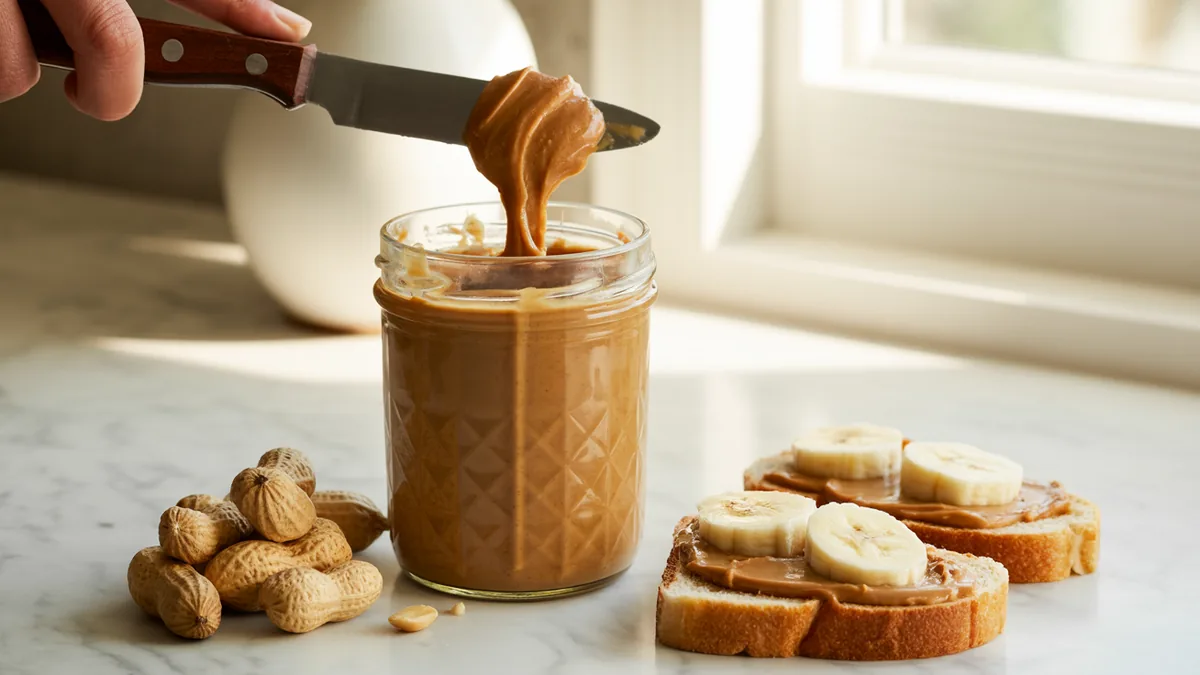
Two tablespoons of smooth peanut butter, which comes to roughly 32 grams, carry about 190 to 200 calories and 7 to 8 grams of protein. Alongside that sits around 16 grams of fat, 6 to 8 grams of carbohydrate, and 2 to 3 grams of fiber. Those four figures are the whole spine of this article. Almost every question people ask about peanut butter, whether it is fattening, whether it counts as protein, whether the expensive jar is better, resolves back to that short line of numbers and to how much you are genuinely spooning out.
There is a jar of it open in my kitchen right now, the kind with an inch of oil floating on top that I have to stir back in with a butter knife while the counter gets sticky. I have gone through phases of being suspicious of peanut butter, buying the powdered version, weighing spoonfuls, then quietly giving all of that up. What I have landed on is less dramatic and more useful: knowing what a real serving contains, and knowing that my real serving is usually bigger than a real serving.
I want to be plain that I have no nutrition credential, and for anything involving allergies or a condition your doctor is managing, their guidance outranks anything on this page. What I can hand you is a specific, checkable account of the numbers, drawn against USDA FoodData Central, along with the ingredient test that tells you in three seconds what kind of jar you are holding. After that, the honest part: where the differences matter and where I decided they do not.
| Nutrient | Per 2 tbsp (32g) | Per 100g | What moves it |
|---|---|---|---|
| Calories | 190 to 200 | 590 to 600 | Barely budges between natural and sweetened |
| Protein | 7 to 8g | 22 to 25g | High for a spread; low in the amino acid lysine |
| Total fat | About 16g | About 50g | The jar is half fat by weight, mostly unsaturated |
| Saturated fat | 2.5 to 3.5g | 8 to 11g | Creeps up in jars with added palm oil |
| Carbohydrate | 6 to 8g | 20 to 24g | Sweetened jars sit at the top of the range |
| Fiber | 2 to 3g | 6 to 8g | Slightly higher in crunchy and stir-the-oil styles |
| Sugar | 1 to 3g natural, 3 to 4g sweetened | 4 to 12g | The single clearest difference between labels |
| Sodium | 0 to 170mg | 0 to 530mg | Unsalted is near zero; salted lands near 140 to 170mg |
What two tablespoons actually give you
Baseline: Two tablespoons of peanut butter (about 32g) hold roughly 190 to 200 calories, 7 to 8g protein, 16g fat, 6 to 8g carbohydrate, and 2 to 3g fiber.
Start with the standard serving, since that is what every label on the shelf is describing. Two level tablespoons weigh close to 32 grams and deliver about 190 to 200 calories. Inside that sit 7 to 8 grams of protein, roughly 16 grams of fat, 6 to 8 grams of carbohydrate, and 2 to 3 grams of fiber. Salted jars add somewhere near 140 to 170 milligrams of sodium. Those figures hold remarkably steady across smooth, crunchy, name brand, and store brand, which surprised me the first time I compared four jars side by side.
One tablespoon, then, runs about 95 to 100 calories with 3.5 to 4 grams of protein and 8 grams of fat. I find the single-spoon math more useful day to day, because a single spoon is what actually goes into a bowl of oats or onto half a bagel. Doubling in your head is easy. Halving while you are already holding a sticky knife is somehow harder, and I have talked myself into a lot of extra calories by rounding in the generous direction without noticing.
The shape of those numbers tells you what kind of food this is. Around 75 percent of the calories come from fat, roughly 15 percent from protein, and only about 10 percent from carbohydrate. Peanut butter is a fat food that happens to carry a genuinely useful amount of protein, not a protein food that happens to be fatty. Reading it in that order changed how I use it. I stopped treating a spoonful as my protein at breakfast and started treating it as the thing that makes a lighter breakfast hold.
The per-100-gram picture, and why it looks alarming
Per 100g: Peanut butter runs about 590 to 600 calories, 22 to 25g protein, and roughly 50g fat, since 100g is more than three servings.
Per 100 grams, peanut butter comes in around 590 to 600 calories, with 22 to 25 grams of protein and close to 50 grams of fat. European labels lead with this figure, and it looks frightening until you register that 100 grams is more than three tablespoons-worth of servings stacked together. Nobody eats 100 grams of peanut butter at a sitting unless something has gone wrong, or gone very right, depending on your week. The number is a comparison tool, not a portion.
What the per-100-gram view is genuinely good for is ranking foods against each other on the same scale. At roughly 23 grams of protein per 100 grams, peanut butter sits near cooked chicken breast on paper, which is the kind of fact that gets screenshotted and passed around without the second half of the sentence. The second half is that chicken carries that protein at about 165 calories per 100 grams while peanut butter needs nearly 600. Per calorie, the two are not close.
So I use the per-100-gram column for label comparisons in the store and the per-serving column for anything to do with what I am actually eating. A jar that shows 8 grams of sugar per 100 grams is meaningfully sweeter than one showing 4, and that difference is easier to spot on the shared scale than in the per-serving column where both round to small numbers. Once the jar is home and open, I go back to thinking in spoons, because that is the unit my hand works in.
The fat breakdown: mono, poly, and saturated
Fat profile: Of about 16g fat per 2 tbsp, roughly 8g is monounsaturated, 4.5g polyunsaturated, and 2.5 to 3.5g saturated.
Sixteen grams of fat in two tablespoons is the number that scares people, so it deserves to be broken open. Of that 16 grams, roughly 8 grams is monounsaturated, the same family of fat that dominates olive oil and avocado. Another 4.5 grams or so is polyunsaturated. Saturated fat accounts for only about 2.5 to 3.5 grams, which is a small share of a daily total that most guidance puts near 20 grams for an average adult. Roughly four fifths of peanut butter's fat is unsaturated.
That mix is why peanuts keep showing up in dietary patterns researchers study rather than in the columns of foods to limit. Harvard's Nutrition Source lays out the observed associations between regular nut eating and cardiovascular outcomes, and peanut butter rides along with that because it is, ingredient-wise, just peanuts. I am describing what research associates, not promising you anything. A spread cannot do a job that a whole way of eating does, and I would rather undersell it than have you treat a jar as medicine.
The one place the fat profile genuinely shifts is when palm oil enters the ingredient list. Palm oil is added to stop the natural oil from separating, and it is more saturated than peanut oil, so a conventional jar can push the saturated fat toward the upper end of that 2.5 to 3.5 gram range or slightly past it. The difference per serving is about a gram. Real, worth knowing, and not remotely worth the anxiety I once brought to the peanut butter shelf.
There is no cholesterol in peanut butter, since it comes from a plant, and no trans fat in any mainstream jar sold today. If you ever see partially hydrogenated oil on a label, put it back, but that formulation has essentially left the American market. The practical version of all this: the fat in peanut butter is mostly the kind nobody is arguing about, and the amount, not the type, is what deserves your attention.
Protein, plus the magnesium, vitamin E, and niacin
Protein and micros: Two tablespoons give 7 to 8g protein along with meaningful magnesium, vitamin E, and niacin, though the protein is low in lysine.
Seven to eight grams of protein in two tablespoons is a real contribution, roughly what you would get from a large egg plus a bit more. For a spread, that is excellent. As a standalone protein source it has a limit worth naming: peanut protein is relatively low in the essential amino acid lysine, so it is not considered a complete protein the way dairy or eggs are. Eaten across a varied day, particularly with grains, dairy, or beans anywhere in the picture, that gap closes without any planning on your part.
The micronutrients are the part most people never look at, and they are the reason I stopped thinking of peanut butter as empty indulgence. Two tablespoons carry roughly 50 milligrams of magnesium, a mineral plenty of women fall short on, and close to 2 to 3 milligrams of vitamin E, which is a meaningful slice of the daily target for a food you are eating a spoonful of. The NIH Office of Dietary Supplements keeps a plain-language sheet on magnesium if you want to see where a serving lands.
Niacin, one of the B vitamins, is the third one worth naming. Peanuts are a notably good source, and two tablespoons supply somewhere around 4 milligrams, which is a solid share of a day. There is also phosphorus, some manganese, and a little folate riding along. None of these arrive in doses that would make peanut butter a substitute for anything, and I am not going to pretend otherwise. They are small real deposits into the account, made by a food you were eating for pleasure anyway.
The way this changes my behavior is modest. When I put peanut butter on toast, I am not counting it as my breakfast protein, but I am also no longer treating it as a purely decorative fat. It is closer to how I think about the seeds and add-ins in my overnight oats protein approach, where several small contributors stack up into a number that actually holds you until lunch. One spoon does not carry a meal. Three or four small sources together do.
Carbs, fiber, sugar, and the salt line
The rest: Two tablespoons hold 6 to 8g carbohydrate, 2 to 3g fiber, 1 to 3g sugar in natural jars or 3 to 4g in sweetened, and 0 to 170mg sodium.
Carbohydrate is the quiet column. Two tablespoons carry 6 to 8 grams total, and 2 to 3 grams of that is fiber, which leaves roughly 4 to 5 grams of net carbohydrate. That is low enough that peanut butter fits comfortably into lower-carbohydrate eating, which is a large part of why it shows up in so many keto-adjacent snack lists. The fiber is a genuine bonus nobody advertises. It is not a fiber food, but 2 to 3 grams for a spread is more than most people would guess.
Sugar is where the labels actually separate. A jar whose ingredients are peanuts and salt contains 1 to 3 grams of naturally occurring sugar per two tablespoons, all of it from the peanuts themselves. A sweetened conventional jar typically lands at 3 to 4 grams, occasionally higher in the honey-roasted and flavored styles. So the sweetened jar adds roughly one to two teaspoons-worth across a whole serving, which is not the sugar bomb the internet sometimes describes but is also not nothing if peanut butter is a daily habit.
Sodium runs from essentially zero in an unsalted jar to about 140 to 170 milligrams per two tablespoons in a salted one. Against a general daily reference near 2,300 milligrams, a serving is a small slice, and I would rather have the salt than eat something I find flat. Unsalted peanut butter has its uses, mostly in sauces where I am adding soy sauce or miso anyway, but on toast it tastes like the idea of peanut butter rather than the thing itself.
Put those three together and the profile is unusually clean for a food with this reputation. Low carbohydrate, real fiber, modest sugar, moderate salt. When I hear peanut butter lumped in with candy spreads, the labels do not support it. The chocolate-hazelnut spread in the next aisle over runs more than 20 grams of sugar per two tablespoons and about 2 grams of protein. That is a different category of food wearing a similar jar.
Natural vs conventional, and the ingredient test
Label test: Turn the jar over; if the list reads peanuts and salt, it is natural. Added palm oil and sugar mark a conventional jar.
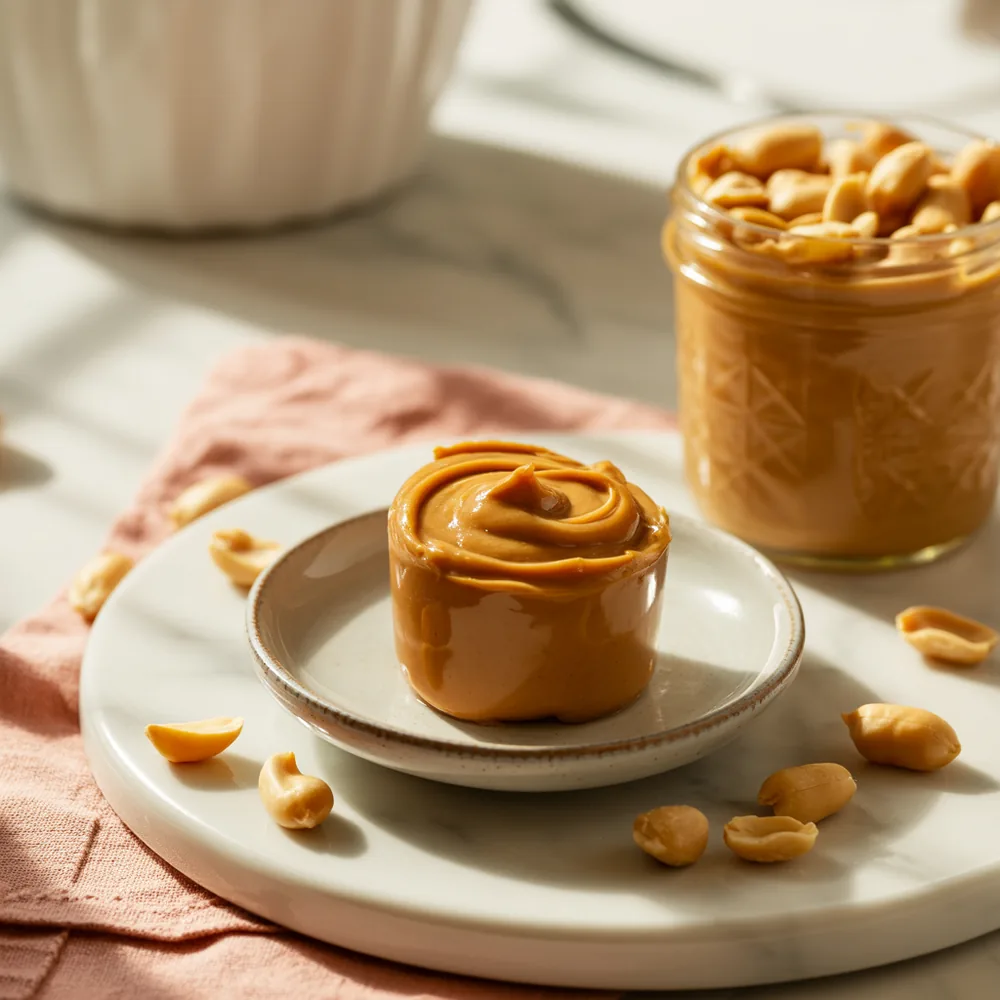
The whole natural versus conventional question collapses into one motion: turn the jar around and read the ingredient list. If it says peanuts, or peanuts and salt, you are holding what gets called natural peanut butter. If you see sugar, palm oil, or hydrogenated vegetable oil listed after the peanuts, you are holding a conventional jar. That is the entire test. It takes three seconds and it is more informative than anything printed on the front, where words like natural are only loosely governed.
Now the honest comparison, which is less dramatic than the marketing on either side. Per two tablespoons, the conventional jar gives you roughly the same calories, the same protein, and the same total fat. It adds about 1 to 2 grams of sugar and perhaps a gram of saturated fat from the palm oil. That is the whole difference. It is real, and over a daily habit across a year it adds up to something, but it is not the difference between a health food and a junk food that the packaging fight implies.
What you get for those two grams is a spread that stays mixed, spreads cold without tearing the bread, and lasts in the pantry without the oil layer. I stopped being a purist about this. There is a natural jar in my fridge for the oatmeal and the sauces, and I have bought the conventional kind without guilt when I wanted something that would behave on a sandwich. The strict version of this rule cost me more peace than the palm oil ever cost my body.
Two things I do still hold to. I skip the reduced-fat versions, because they typically replace peanut fat with corn syrup solids and land at similar calories with more sugar and less of the good fat, which is a worse trade in every direction. And I skip the flavored jars, the chocolate and honey-roasted styles, not on principle but because I finish them in four days. That is a self-knowledge rule, not a nutrition rule, and I would not pretend otherwise.
Powdered peanut butter, and what it costs you
Powdered: Two tablespoons of powdered peanut butter run about 45 to 70 calories with 5 to 6g protein, since most of the fat has been pressed out.
Powdered peanut butter is made by pressing most of the oil out of roasted peanuts and grinding what remains. The result is startling on paper. Two tablespoons of the powder come in at roughly 45 to 70 calories depending on brand, with 5 to 6 grams of protein and only 1 to 2 grams of fat. So you keep most of the protein while shedding around three quarters of the calories. For anyone counting closely, that arithmetic is genuinely hard to argue with.
I used it for the better part of a year. Whisked into oats or a smoothie with a splash of water, it does a decent job, and the protein-to-calorie ratio is the best in this whole article. Where it falls down is anywhere the fat was doing structural work. Reconstituted on toast it is thin and slightly grainy, missing the richness that made the toast worth eating. It does not melt, it does not coat, and it does not satisfy in the way the real thing does.
The other cost is the one the label cannot show you. Fat is a large part of why peanut butter keeps you full, so a powdered version at 60 calories can leave you looking for something else forty minutes later, at which point the calorie saving quietly evaporates. Check the ingredient list too, since several brands add sugar and salt to the powder. Peanuts, sugar, salt is common, and the sugar is a larger share of a much smaller product.
Where I still keep a jar of it is smoothies, where the powder disperses beautifully and I want peanut flavor without another 16 grams of fat on top of the banana and milk. For everything else I went back to the real thing and adjusted the spoon instead. If you are building a smoothie or oats around protein specifically, the powder earns its place; my overnight oats without yogurt method takes it well, since there is no dairy thickness competing with it.
Peanut butter vs almond butter, honestly
Comparison: Almond butter carries more fiber, vitamin E, and calcium; peanut butter carries more protein per serving and costs roughly half as much.
These two get set against each other constantly, usually with almond butter cast as the upgrade. The labels tell a more even story. Per two tablespoons, almond butter runs about 190 to 200 calories, essentially identical to peanut butter, with around 6 to 7 grams of protein, which is slightly less. It carries more fiber, near 3 to 4 grams, considerably more vitamin E, and noticeably more calcium and magnesium. Peanut butter wins on protein and on niacin.
So almond butter has a modest edge on micronutrients and peanut butter has a modest edge on protein, and the calories are a wash. Then price enters, and it is not close. Almond butter frequently costs somewhere near double per jar. If a spread is a daily habit for you, that gap over a year is a real household number, and I have never seen a nutritional argument that justifies it for most people.
There is a preference dimension too, and it should count more than it usually does. Almond butter is milder, drier, and less sweet. Peanut butter is louder and, to me, more comforting, which matters when the whole point is a spoonful of something you enjoy. I keep almond butter around occasionally for variety and because it is better with dark chocolate, and I would not tell anyone who prefers it that they are wrong. I just would not tell them it is meaningfully healthier.
The version of this comparison I actually believe: rotating between nut butters gets you a wider spread of minerals than committing to one, and cost should decide the default. Peanut butter is my default because it is cheap, higher in protein, and the jar I will genuinely finish. Almond, cashew, and sunflower seed butter come through as guests. Sunflower seed butter deserves a mention of its own for anyone in a peanut-free household, and its numbers land close to peanut butter's.
What a heaping spoonful really weighs
Portion reality: A heaped spoonful often weighs 20 to 25g rather than 16g, so a casual two-spoon serving can reach 250 to 300 calories.
This is the section I would keep if I had to cut everything else. A level tablespoon of peanut butter weighs about 16 grams. A heaped one, the way anyone actually scoops it, commonly comes in nearer 20 to 25 grams. I put a spoon on a kitchen scale one morning out of curiosity and watched it read 24 grams, which meant my casual two-spoon habit was closer to three servings than two. That is roughly 280 calories instead of 190, on top of whatever the toast contributed.
The knife-straight-into-the-jar method is worse still, and it is how most of us eat peanut butter at least sometimes. There is no measuring involved, only the moment when the amount looks right, and the amount that looks right is generous. This is not a moral failure and I am not going to frame it as one. It is simply the reason people find peanut butter calories confusing. The label is describing a portion that bears little resemblance to how the food leaves the jar.
I fixed this without weighing anything, which was the only version I would keep up. I use a teaspoon rather than a tablespoon, because the smaller bowl of the spoon caps how much can pile on. I spread on one side of the toast rather than two. And when peanut butter is going into a recipe, I level the spoon against the jar rim on the way out, which is one flick of the wrist and takes the guesswork out entirely.
None of that is about restriction. It is about the number on the label matching the number in your mouth, so that when you decide a serving is worth it, you are deciding with real information. On days when I want a genuinely heaped spoon, I take it and think nothing further about it. Knowing the arithmetic just means I am not confused when the week does not add up the way I expected.
Aflatoxin and added sugar, handled calmly
Context: Aflatoxin in peanuts is monitored and limited by the FDA in commercial products; typical exposure from ordinary peanut butter is low.
Aflatoxin comes up in almost every online conversation about peanut butter, so let us handle it plainly. Aflatoxins are compounds produced by certain molds that can grow on peanuts, corn, and tree nuts, particularly under warm, damp storage. They are genuinely a food safety concern, which is precisely why commercial peanut supplies in the United States are tested and why the FDA sets action limits on how much may be present. Large processors sort and monitor because they are required to.
What that means in practice is that ordinary jarred peanut butter from a mainstream brand carries low levels well within those limits. The situations that warrant more thought are grind-your-own machines with unclear turnover and peanuts stored badly at home in heat and humidity. Keeping an opened natural jar in the fridge is a reasonable habit for freshness anyway. I am not going to tell you the risk is zero, because nothing is, but treating a jar of peanut butter as hazardous does not match the regulatory picture.
The added sugar worry deserves the same calm. Three to four grams per serving in a sweetened jar is about a teaspoon, and if peanut butter is your only sweetened food of the day you are in fine shape. The place it becomes worth a second look is a stacked habit, sweetened peanut butter on sweetened bread with a sweetened yogurt on the side, where four small additions become one large one. That is a pattern issue, not a peanut butter issue.
I hold both of these the same way. Neither is a reason to stop eating a food I like, and both are reasons to buy from a brand with real quality control and to read the label once. If you have a specific medical situation, a compromised immune system, or a doctor already talking to you about liver health, that conversation belongs with them rather than with an article, and I would rather say so directly than gesture at it.
How I actually use the jar, and where I stopped bothering
In practice: A spoon in oats, a thin layer on toast under banana, apple slices in the afternoon, and a peanut sauce whisked with soy, lime, and hot water.
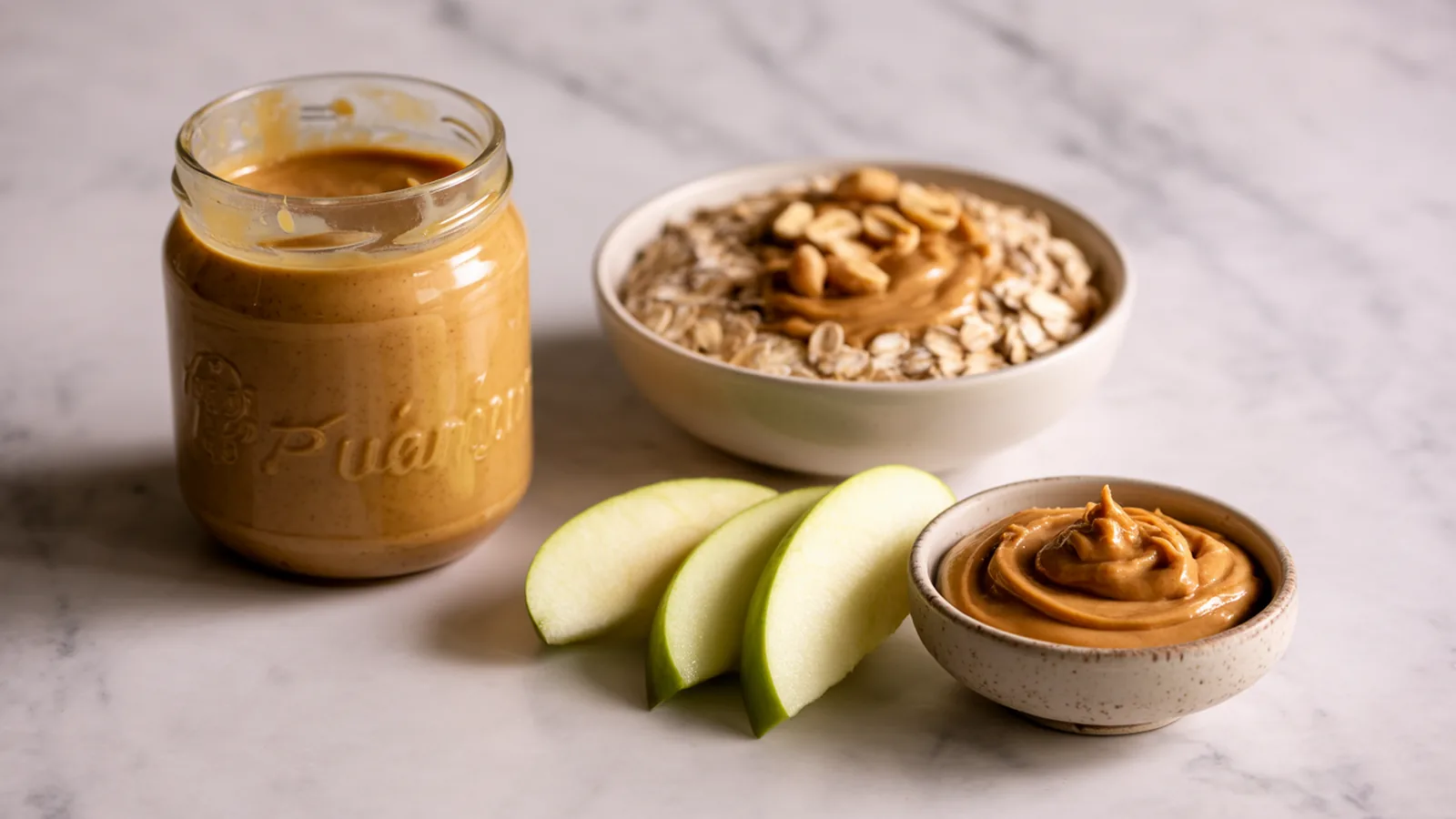
Four uses account for nearly all of the peanut butter that leaves my kitchen. The first is oats, where a spoon stirred in while they are still hot turns the whole bowl glossy and makes it hold me past eleven in a way plain oats never manage. The second is toast, spread thin, with sliced banana and a scrape of flaky salt on top. That combination has been my most repeated breakfast for years and I have never gotten tired of it.
The third is apple slices in the afternoon, which is the snack I reach for when I am hungry at three and about to make a worse decision. A medium apple with a tablespoon of peanut butter is roughly 190 calories with fiber and fat holding hands, and it reliably gets me to dinner. It sits on my mental list beside the other things I keep stocked for that exact hour, most of which I gathered into my high protein snack ideas roundup.
The fourth is sauce, and it is the one that surprised me most. Two tablespoons of peanut butter whisked with a tablespoon of soy sauce, the juice of half a lime, a grated clove of garlic, and enough hot water to loosen it makes a sauce that carries noodles, roasted broccoli, or shredded chicken. It takes ninety seconds. The peanut butter stops being a breakfast item and becomes dinner, and it is the cheapest way I know to make plain vegetables feel like they were planned.
As for what I stopped bothering with: refrigerating the natural jar after the first week, which I gave up on because cold peanut butter tears bread. Stirring the oil in perfectly, which nobody achieves and which matters less than the internet suggests. Weighing spoonfuls, which lasted about eleven days. And buying the reduced-fat version, which was the one thing I abandoned on actual merit rather than fatigue, since the label was worse in every column I cared about.
When peanut butter won't fit your life
Honest fit: Peanut allergy rules it out entirely; sunflower seed butter is the closest swap. Portion trouble and sodium limits are the other real reasons to skip it.
The first reason is not a preference, it is a hard stop. Peanut allergy is one of the most common and most serious food allergies, and reactions can be severe, so a peanut allergy in your household means peanut butter is out completely, including for the people who are not allergic, given how easily it transfers on hands, knives, and toast crumbs. If you are managing an allergy or introducing peanuts to an infant, that plan belongs to your allergist or pediatrician, and the current guidance on early introduction has genuinely changed in recent years.
Sunflower seed butter is the closest substitute I have found for a peanut-free kitchen, landing near the same calories and protein with a similar spreadable richness. Tahini works for the savory uses, particularly the sauce, and pumpkin seed butter is worth a try if you can find it. None of them taste like peanut butter, and I would not oversell any of them as replacements. They are their own things that happen to do the same job in a bowl of oats.
The second real reason to skip it is portion trouble. Some people, and I have been one of them in certain seasons, cannot keep a jar in the house without eating it by the spoon while standing at the counter. If a food consistently becomes a problem rather than a pleasure for you, its nutrition profile is beside the point, and buying the single-serve packets or simply not stocking it is a legitimate answer rather than a failure of will.
Beyond that, the reasons narrow. If your doctor has you on a low-sodium plan, choose the unsalted jar rather than dropping the food. If you are eating in a very low-fat pattern for a specific medical reason, peanut butter is calorie-dense enough to be worth discussing with whoever set that plan. And if you simply do not like it, that is a complete answer. Fiber, fat, and protein together in an afternoon snack is the useful idea here, and plenty of foods deliver it, as I laid out across my chia seeds nutrition piece. The jar is one good option, not the point.
Helpful sources and next reads
Reliable external sources
More from Sabrina Saturno
You may also love
FAQ
How many calories are in 2 tablespoons of peanut butter?
About 190 to 200 calories for roughly 32 grams. One tablespoon is near 95 to 100. Natural and conventional jars are close enough on calories that it rarely matters which you buy.
How much protein is in peanut butter?
Two tablespoons give 7 to 8 grams, and 100 grams gives about 22 to 25. That is high for a spread, though peanut protein is low in lysine so it is not a complete protein on its own.
Is peanut butter good for you?
The fat is roughly four fifths unsaturated and it carries protein, fiber, magnesium, vitamin E, and niacin. It is also calorie-dense, so portion is the thing to watch rather than the ingredients.
How much fat is in 2 tablespoons of peanut butter?
About 16 grams total: roughly 8 grams monounsaturated, 4.5 grams polyunsaturated, and 2.5 to 3.5 grams saturated. There is no cholesterol, since it comes from a plant.
Is natural peanut butter actually better than regular?
Slightly. The conventional jar adds about 1 to 2 grams of sugar and around a gram of saturated fat per serving from palm oil. Calories, protein, and total fat are essentially the same.
How do I tell if a jar is natural?
Read the ingredient list, not the front label. Peanuts, or peanuts and salt, means natural. Sugar, palm oil, or hydrogenated oil listed after the peanuts means conventional.
How many calories are in powdered peanut butter?
Roughly 45 to 70 calories per two tablespoons with 5 to 6 grams of protein, because most of the oil has been pressed out. Check whether your brand adds sugar and salt.
Is peanut butter or almond butter healthier?
They are closer than the marketing suggests. Almond butter has more fiber, vitamin E, and calcium; peanut butter has more protein and costs about half as much per jar.
How much sugar is in peanut butter?
One to 3 grams per two tablespoons in a natural jar, all naturally occurring. Sweetened conventional jars run 3 to 4 grams, and flavored styles can go higher.
Is peanut butter high in sodium?
Salted jars carry about 140 to 170 milligrams per two tablespoons, a small share of a daily reference near 2,300. Unsalted versions are essentially sodium free.
Should I worry about aflatoxin in peanut butter?
Commercial peanut supplies in the United States are tested and the FDA sets limits, so mainstream jarred peanut butter carries low levels. Store opened jars cool and buy from brands with real quality control.
Does peanut butter have fiber?
Yes, about 2 to 3 grams per two tablespoons, which brings net carbohydrate down to roughly 4 to 5 grams. It is not a fiber food, but it is more than most people expect.
How much peanut butter is a real serving?
Two level tablespoons, about 32 grams. A heaped spoon often weighs 20 to 25 grams instead of 16, so a casual two-spoon scoop can reach 250 to 300 calories.
The version that lasts
What settled into a habit for me is unremarkable and I have stopped trying to improve it. One jar of the peanuts-and-salt kind, one teaspoon rather than a tablespoon, and four uses I return to without deciding: oats, toast with banana, apple slices at three in the afternoon, and a sauce for noodles on the nights I have nothing planned. I no longer weigh it, no longer feel clever about which jar I bought, and no longer feel bad about any of it.
The numbers are what let me stop thinking about it. I know two tablespoons is 190 to 200 calories and 7 to 8 grams of protein. I know four fifths of the fat is unsaturated and the saturated share is small. I know the sweetened jar costs me a teaspoon of sugar and a gram of saturated fat, which is a price I am willing to pay some weeks and not others. Holding those figures loosely in my head replaced a lot of second-guessing at the shelf.
The thing I would want you to carry, if only one thing survives, is the spoon. Read the label once so you know what jar you own, then pay attention to how much actually comes out of it, because that is where the calories that surprise people live. Peanut butter is a good, cheap, genuinely nourishing food that is very easy to eat more of than you meant to. Both halves of that sentence are true, and the second half is the one that changes anything.