
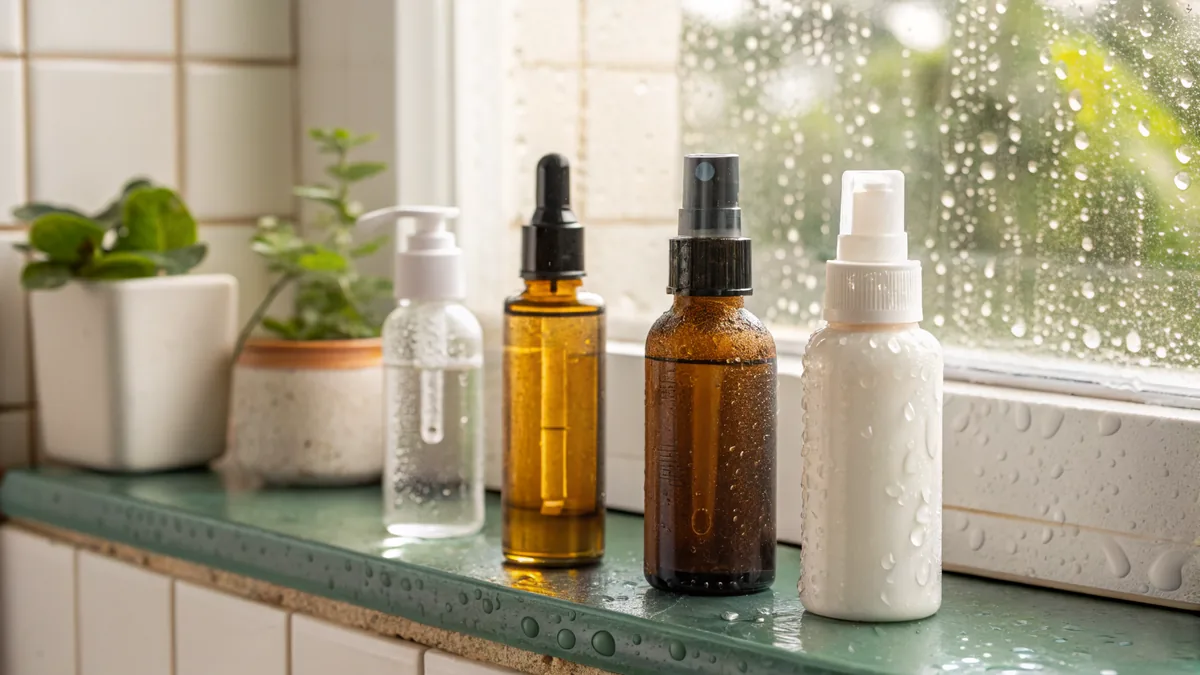
Skin flooding is one of those trends that sounds dramatic and turns out to be the gentlest thing on your feed. The short version sits in the box below. The honest version is that this is just smart layering, the kind estheticians and dermatologists have quietly recommended for years, renamed by TikTok and dressed up with a scary word. Your skin is not being flooded. It is being watered, slowly, in the right order.
I came to skin flooding the way I come to most beauty trends now: suspicious, slightly tired, and with a skin barrier I had spent two years learning to protect. I am not a dermatologist or an esthetician, and nothing here is medical advice. I am a woman with reactive, easily dehydrated skin who tested this method through a full New England winter and kept the parts that earned their place.
What surprised me is how well it suits people like me, the ones who flinch at ten-step routines and strong actives. Skin flooding asks for no acids, no retinoids, no new miracle ingredient. It asks you to apply the hydrating things you probably already own onto damp skin instead of dry skin, in order of weight. That single change is the entire trend, and it happens to be a good one.
| Method | What you actually do | Best for | Watch out for |
|---|---|---|---|
| Skin flooding | Layer mist, essence, hyaluronic serum, and cream onto damp skin, lightest to heaviest. | Dehydrated, dull, sensitive, or winter-stressed skin. | Applying humectants to bone-dry skin in dry air can pull water the wrong way. |
| Slugging | Seal your whole face with petrolatum or a thick balm as the last evening step. | Very dry or barrier-damaged skin, mostly at night. | Can trap breakouts on acne-prone skin; flooding is lighter. |
| Moisture sandwich | Alternate damp layers and creams, essentially flooding's older, simpler cousin. | Anyone who wants two steps instead of five. | Same humectant rules apply; damp skin first. |
| Basic routine | Cleanser, moisturizer, sunscreen, applied to dry skin. | Skin that is already comfortable and balanced. | Nothing. This is still a complete routine. |
What skin flooding actually means
Plain definition: Skin flooding means saturating the skin with several thin layers of water-based hydration, applied to damp skin from lightest to heaviest, then sealed with moisturizer.
The name comes from the idea of flooding the skin with moisture, and like most trend names it oversells the drama. What you are really doing is giving your skin water in small, absorbable doses instead of one heavy cream, and applying everything while the previous layer is still damp. Damp is the entire trick. A humectant like hyaluronic acid is a water magnet, and a magnet needs something to grab.
The method went viral because the before-and-afters are real in a modest way. Dehydrated skin looks dull, feels tight, and shows every fine line more deeply. Give it consistent water and seal it properly, and within days it looks calmer and more reflective. That is not transformation. That is a plant being watered, and the internet has always loved watching a plant perk up.
It helps to separate two words the beauty world blurs constantly. Dry skin lacks oil. Dehydrated skin lacks water, and any skin type can be dehydrated, including oily skin, which is the twist that surprises people. Skin flooding targets dehydration specifically. If your skin is flaky and rough year-round, you likely need richer creams too, not just more water layers.
Where it came from
Nothing about this is new, which is part of why I trust it. Korean and Japanese routines have layered watery hydrating products for decades, the seven-skin method being the most famous version. Estheticians have always told clients to moisturize damp skin after cleansing. TikTok stitched those old truths together, gave the bundle a name, and a trend was born. The packaging is new. The plumbing is ancient.
Why damp layering works
The mechanism: Humectants pull water toward the skin, damp layers supply that water, and an occlusive-leaning cream on top slows it from evaporating away.
Three ingredient families do all the work in skincare hydration. Humectants, like hyaluronic acid and glycerin, attract and hold water. Emollients soften and smooth the spaces between skin cells. Occlusives, like petrolatum, shea butter, and heavier silicones, form a film that slows water loss. A good moisturizer mixes all three, which is why Harvard Health plainly notes that moisturizers work largely by trapping existing water in the skin.
Skin flooding simply choreographs those families in the smartest order. The mist and essence supply free water. The hyaluronic serum grabs it. The cream slows its escape. Skip the water supply and a humectant can theoretically pull moisture up from deeper skin layers and lose it to dry air, which is why every dermatologist quote about this trend includes the words damp skin. The water has to come from somewhere.
There is also a quieter reason this method suits sensitive skin. Every step is passive. Nothing exfoliates, nothing stings, nothing asks your barrier to tolerate an acid. For those of us who rebuilt our skin after over-exfoliating, the whole philosophy rhymes with the one I wrote about in my skin barrier repair routine: less aggression, more support, and patience while the skin does its own slow work.
My 5-step skin flooding routine
The order: Gentle cleanse, leave skin damp, mist, press in a hydrating essence, apply hyaluronic serum to wet skin, then seal with moisturizer and morning SPF.

This is the version I actually do, most nights and some mornings. Start to finish it takes under four minutes, and three of those minutes are just letting layers settle while I brush my teeth or tidy the counter. Speed matters here, but in reverse: each layer should go on while the last one is still damp, so dawdling is the only real way to fail.
Step 1: cleanse gently and stay damp
Wash with the mildest cleanser you own, lukewarm water, no scrubbing. Then break the towel habit. Pat once, at most, and leave your face visibly damp. This step costs nothing and matters more than any product in the chain, because it provides the first and largest dose of water. My cleanser philosophy lives in my natural skincare for sensitive skin guide, and it boils down to two words: barely anything.
Step 2: mist
Spray a hydrating mist over the damp skin. The mist is partly water supply, partly a timer, because it keeps the surface wet while you reach for the next bottle. A simple glycerin or thermal water mist is plenty. If you skip one step in this whole routine, skip this one, but I kept it because it turns the routine into something that feels like care instead of assembly.
Step 3: hydrating essence or toner
Pour a few drops of a watery essence or an alcohol-free hydrating toner into your palms and press it in, rather than wiping it on with a cotton pad. Pressing wastes less and irritates less. You are looking for the texture of slightly thickened water and ingredient lists built on glycerin, panthenol, or beta-glucan, with no fragrance if your skin is reactive.
Step 4: hyaluronic acid serum
Now the famous step. Apply your hyaluronic serum while the skin is still wet from steps one through three. This is where the humectant finally has something to hold onto. Two to three drops cover a whole face. If your skin ever feels tighter after hyaluronic acid, it almost certainly went onto dry skin in dry air, which is the single most common way this trend goes wrong. If you are unsure how much pressure to use or which order serums belong in, I walk through it slowly in my guide to how to apply face serum.
Step 5: seal, then protect
Finish with a moisturizer matched to your skin, gel-cream for oily, classic cream for normal, something richer for dry. This layer is not optional, because without a seal the water you stacked up simply evaporates. On evenings when my face feels puffy or tense, I will spend a slow minute with a gua sha tool over the sealed-in cream, which doubles as a gentle massage and helps everything settle. In the morning, sunscreen goes on top, full stop. The American Academy of Dermatology's dry skin guidance repeats this trap-the-moisture logic in almost the same words, minus the trend name.
Flooding is a layering method that sits inside a normal routine, so it helps to see where every product falls, which I set out in Skincare Routine Order: The Full Guide.
The products, by type, not by brand
Shopping rule: You need four textures, a mist, a watery essence, a hyaluronic serum, and a cream. Drugstore versions of all four work beautifully.
I keep this section brand-free on purpose. Skin flooding is a method, not a shopping list, and the moment a trend becomes a product lineup, someone is selling you the expensive version of water. Every texture below exists at the drugstore for under twenty dollars, and the luxury versions mostly add fragrance, which is the one thing sensitive skin does not need.
The mist: look for glycerin high on the ingredient list, or a plain thermal spring water if you want the simplest possible option. The essence: watery, fragrance-free, built on glycerin, panthenol, beta-glucan, or snail mucin if that does not make you squeamish. The serum: hyaluronic acid in multiple weights is a nice bonus, glycerin-based serums work just as well for less. The cream: ceramides, cholesterol, and fatty acids are the words worth finding, the same barrier-builders I lean on all winter.
One honest note about hyaluronic acid itself: it is the celebrity of this routine but not actually the essential worker. Glycerin, the least glamorous ingredient in skincare, holds water just as reliably, costs almost nothing, and bothers nobody's skin. If you own a glycerin serum and no hyaluronic one, flood away. The method survives the substitution without noticing.
The texture cheat sheet
When you are standing in a drugstore aisle, ignore the marketing words on the front and check the feel and the first five ingredients instead. This is the shorthand I use:
- Mist: should feel like water with a whisper of slip. Water and glycerin near the top, no alcohol denat, no perfume.
- Essence: pours like thin syrup. Glycerin, panthenol, or beta-glucan high on the list; the bottle usually says hydrating, soothing, or barrier.
- Serum: a few drops should spread across a damp face easily. Hyaluronic acid or glycerin as the star, ideally fragrance-free.
- Cream: thick enough to hold a peak on your finger in winter, lighter gel-cream in summer. Ceramides are the keyword worth paying for.
If you wear makeup, flooding is also the best base prep I have found for the soft, low-coverage look I describe in my clean girl makeup routine. Hydrated skin grips tint evenly and stops drinking your foundation by noon. Give the last layer five quiet minutes to settle before anything pigmented goes on top.
Morning, evening, and the seasonal version
Timing rule: Evening flooding does the deep work, morning flooding is a lighter two-layer version under sunscreen, and the whole routine should shrink in humid months.
Evening is the natural home for the full five steps. Your skin loses more water overnight than during the day, the routine has time to settle without makeup waiting on it, and there is something genuinely calming about ending the day with two minutes of unhurried pressing and patting. Mine slots in right after the lights go down, and on good nights it doubles as the moment my shoulders finally drop.
Morning flooding is a shorter story. I do a two-layer version, serum on damp skin straight out of the shower, then moisturizer, then sunscreen. The full stack under SPF and makeup is too much wardrobe for one face before nine in the morning, and sunscreen needs a stable surface more than it needs a fourth water layer underneath it. If your skin wakes up comfortable, morning flooding is entirely optional.
Reading your climate
Where you live quietly decides how much of this routine you need. In a heated apartment in February, with indoor humidity hovering somewhere around desert levels, all five steps earn their place and the humidifier becomes the sixth. In August in the same apartment, my skin wants two layers at most, and the mist moves to the fridge to become a treat instead of a necessity.
The skin signals are easy to read once you start listening for them. Tightness an hour after washing means you need more layers. Stickiness at bedtime, or products pilling over each other, means you need fewer. Skin in a humid climate pulls some hydration straight from the air, which is why the same routine that saves a Boston winter can feel like overdressing in a Miami summer. Adjust by season, not by calendar loyalty.
A note on water itself
One unglamorous variable sits upstream of every product: the water you wash with. Very hot showers strip the barrier and undo half the routine before it starts, so lukewarm is the flooding temperature. Hard tap water leaves mineral residue that some sensitive skins notice as post-wash tightness. I am not going to tell you to buy a filter for a trend, but if your skin always feels stripped after washing and products sting on contact, your faucet deserves a moment of suspicion.
Skin flooding for sensitive skin
Why it suits reactive skin: Every step is fragrance-free-able, acid-free, and passive, which makes flooding one of the few trends sensitive skin can try without bracing for impact.

Most viral skincare excludes us, the reactive-skinned, by design. Acids tingle, retinoids peel, vitamin C stings, and the comment sections call it purging. Skin flooding is the rare trend built entirely from the gentle shelf. Done with fragrance-free products, there is nothing in it my dermatologist would raise an eyebrow at, which is a sentence I cannot write about almost anything else on my feed.
The sensitive-skin adjustments are small. Choose every layer fragrance-free, the same filter I apply to everything in my fragrance free beauty routine. Introduce one new product at a time, three or four days apart, so a reaction has a clear culprit. And patch test the essence and serum behind your ear first, boring advice that has saved my face more than once.
The patch test that takes one evening
Since reactive skin punishes shortcuts, here is the test I actually do, not the one I theoretically recommend. A small amount of the new product goes behind my ear and along my jaw after the evening wash, two nights in a row. If nothing itches, stings, or flushes by the third morning, it earns one cheek for two more nights. Only then does it join the full routine. Five days sounds slow until you compare it with the three weeks of recovery a bad reaction costs, a trade I have done the math on more than once, unfortunately.
If you are coming off a damaged barrier, flooding pairs naturally with repair. Water layers in the evening, richer barrier cream on top, and nothing active until the tightness and flushing settle. People with eczema or persistent redness should run the routine past a professional first; the National Eczema Association is a solid starting point for understanding when gentle still is not gentle enough.
Common mistakes
The big four: Layering onto dry skin, stacking too many humectant products, adding acids into the stack, and expecting flooding to fix actual dryness or a damaged barrier.
The first mistake is the one the trend's name invites: doing it on dry skin. Flooding only works when the skin is damp at every step. Applied to a dry face in a heated winter bedroom, a strong humectant serum has nowhere to pull water from except your skin, and people end up tighter and flakier than when they started, then blame the serum.
The second is overstacking. One mist, one essence, one serum, one cream is already generous. Five humectant layers do not hydrate five times more; they pile up, pill under sunscreen, and overwhelm reactive skin with sheer ingredient count. If your face feels sticky ten minutes after finishing, you are wearing too many coats.
The third is sneaking actives into the stack. Flooding is a hydration sandwich, not a delivery system. Exfoliating toners, vitamin C, and retinoids each have their place, but layering them between four water steps changes how much penetrates and how much irritates. Keep actives in a separate routine, on separate nights if your skin is touchy.
The fourth is expecting the wrong miracle. Flooding treats dehydration, the water problem. It does not treat true dryness, the oil problem, and it cannot repair a genuinely damaged barrier on its own. It also will not erase wrinkles, despite what the captions imply. Plumper hydration softens the look of fine lines for hours, not years, and I would rather tell you that now than have your mirror tell you in a month.
My four-week flooding diary
I kept notes the first month, partly out of professional habit and partly because I no longer trust my own memory around skincare. Memory is a flatterer. It remembers glow and forgets the Tuesday everything pilled under sunscreen. So here is the month as it actually happened, condensed from a notes app full of half-sentences written with damp hands.
Week one was clumsy. I used too much of everything, because more felt like the point of a routine called flooding, and spent three evenings vaguely sticky. The hyaluronic serum went on half-dry skin twice before the damp rule became muscle memory. By Friday I had cut my amounts in half, two sprays, three drops, a pea of cream, and the routine suddenly took ninety seconds instead of five minutes.
Week two delivered the first real change: the four o'clock tightness that I had accepted as a personality trait simply did not show up on Wednesday. I checked again Thursday. Gone. My skin was not glowing yet, but it had stopped complaining, and anyone with reactive skin knows those are different milestones.
Week three is when other people noticed, which is the only outcome the internet actually counts. A coworker asked if I had changed my foundation. I had not changed anything except the order I applied water. The reflectiveness was modest, the kind you see in good bathroom light rather than across a room, but it was mine and it was repeatable.
Week four taught the lesson I keep relearning in every corner of this site: the routine settled into its lazy, sustainable shape. Full five steps maybe three nights out of seven, the two-layer short version the rest. The results held anyway. Consistency turned out to matter more than completeness, which by now might as well be the motto of everything I write.
What actually changed for me

I tested skin flooding properly through January and February, the months my skin usually spends impersonating paper. Within the first week, the four o'clock tightness eased. By week three, my cheeks had a low, steady reflectiveness that I had previously only managed with highlighter, and my foundation stopped cracking at the smile lines by afternoon. None of this was dramatic. All of it was noticeable, to me, which is the audience that matters.
What did not change is worth equal billing. My fine lines are exactly where they were, just softer-looking by evening. My occasional hormonal breakouts arrived on schedule, indifferent to the new routine. And on the two nights I skipped everything out of exhaustion, my skin did not punish me, which I consider a feature. A routine that collapses without perfect attendance is a routine I eventually quit.
I also tracked the money, because beauty results should be audited like anything else. My entire flooding lineup, mist, essence, serum, and cream, cost fifty-three dollars and is on pace to last about four months. The serum I had been eyeing before this experiment cost ninety-five dollars alone. Whatever else this trend did, it quietly proved that my skin responds to method and consistency far more than it responds to price tags, which is the cheapest lesson skincare has ever taught me.
The honest supporting cast deserves credit too. I run a small humidifier from November to March, I drink water with the boring consistency I describe in my hydration routine, and flooding became the closing scene of my evening reset routine, right after the lights dim. Skin sits downstream of sleep, water, and stress. The layers help most when the rest of life is not actively working against them.
When this won't fit your life
If your skin is oily, balanced, and happy with a two-step routine, you do not need this. Truly. A gentle cleanser, moisturizer, and sunscreen remain a complete routine, and adding four layers to skin that never asked for them buys you nothing but a longer evening. Acne-prone readers should also go carefully: more layers means more chances to clog, so flood lightly, choose gel textures, and watch how your skin votes for two weeks.
And some skin problems are simply not hydration problems. Persistent redness, burning, flaking that never resolves, painful breakouts, or a barrier that stays angry for weeks deserve a dermatologist, not a fifth water layer. This article is gentle routine talk, not medical advice, and the kindest thing I can tell you is when to stop reading bloggers like me. MedlinePlus has calm, trustworthy overviews of when skin symptoms warrant real care, and your skin is allowed to need more than a trend.
Helpful sources and next reads
Reliable external sources
- American Academy of Dermatology: relieving dry skin
- Harvard Health: moisturizers, do they work?
- Cleveland Clinic: what hyaluronic acid does
- National Eczema Association
- MedlinePlus: skin conditions
More from Sabrina Saturno
You may also love



FAQ
What is skin flooding in simple terms?
Skin flooding means applying several thin hydrating layers, a mist, an essence, a hyaluronic serum, and a moisturizer, onto damp skin in order of weight, so the skin absorbs and keeps more water than a single cream provides.
What is the correct order for skin flooding?
Cleanse and leave skin damp, mist, press in a hydrating essence or toner, apply hyaluronic acid serum while still wet, then seal with moisturizer. In the morning, sunscreen always goes on last.
How often should I do skin flooding?
Nightly is fine, since nothing in the routine is an active. Many people, me included, flood every evening through winter and scale back to a couple of times a week in humid summer months.
Is skin flooding good for oily or acne-prone skin?
It can be, because dehydration affects oily skin too, but go lighter: gel textures, fewer layers, and noncomedogenic labels. If breakouts increase after two weeks, drop a layer rather than the whole idea.
What is the difference between skin flooding and slugging?
Flooding stacks watery hydrating layers under a normal moisturizer. Slugging seals the face with a heavy occlusive like petrolatum as a final step. Flooding adds water; slugging stops water from leaving. Dry skin sometimes benefits from both.
Do I need expensive products for skin flooding?
No. A drugstore glycerin mist, a fragrance-free hydrating toner, a basic hyaluronic or glycerin serum, and a ceramide cream cover every step, usually for less than the price of one luxury serum.
Can I use plain water instead of a mist?
Mostly yes. Damp skin after cleansing is already the water supply, and the mist is partly convenience. A humectant mist holds the surface wet a little longer, but skipping it does not break the method.
Why does hyaluronic acid make my skin feel tighter?
Almost always because it went onto dry skin in dry air, where the humectant pulls water from the skin and loses it to the room. Apply it to properly damp skin and seal it with cream, and the tightness usually disappears.
Can I wear makeup after skin flooding?
Yes, and it sits better on flooded skin. Give the final cream layer about five minutes to settle, then apply sunscreen and makeup as usual. Hydrated skin holds tint and foundation more evenly through the day.
How long does skin flooding take to show results?
Dehydration responds fast. Most people notice less tightness within days and a calmer, more reflective surface within two to three weeks. If nothing changes in a month, your issue is probably not dehydration.
Is skin flooding safe during pregnancy?
The standard version uses only hydrating ingredients, mist, glycerin, hyaluronic acid, and moisturizer, which are generally considered low-risk. As with anything during pregnancy, run your specific products past your doctor to be sure.
Does skin flooding replace moisturizer?
No, the moisturizer is the step that makes the rest matter. Without a final sealing layer, the water you stacked up evaporates, and in dry air you can end up less hydrated than when you started.
The version that lasts
Two seasons in, skin flooding has settled into my life the way the best routines do: smaller than the trend, sturdier than the hype. Most nights it is three layers, not five. Cleanse, serum on damp skin, cream. The mist and essence come out when my skin asks for them, which is usually January, and stay in the drawer through July.
That is my honest recommendation, too. Learn the full five steps so you understand the logic, then let the routine shrink to whatever your actual skin, in your actual climate, actually needs. The order matters more than the count. Damp skin matters more than any product. And the sealing layer matters most of all.
Skincare trends usually ask you to buy something, tolerate something, or believe something. This one just asks you to stop towel-drying so aggressively and put your layers on in a sensible order. Of all the things the internet has yelled at my skin over the years, this is the quietest, and I suspect that is exactly why it worked. Quiet routines usually do. They are the ones still standing when the trend cycle moves on to the next scary-sounding name.