
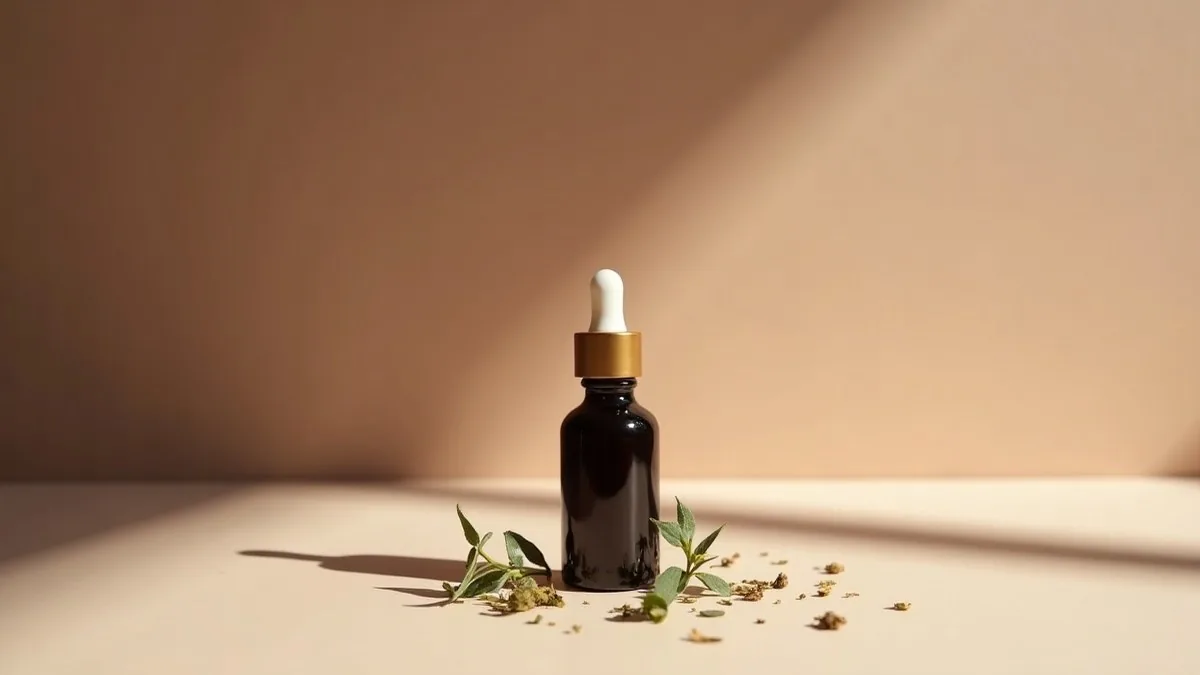
Shilajit is a sticky mineral resin from high mountain rock that some people take as a daily supplement, and the honest short answer to whether you should try it is this: only if the product is purified and third-party tested, and only after a quick word with your doctor. That caution is the entire reason I wrote this guide.
I came to shilajit the way a lot of curious people do, through a wave of confident online posts promising energy, focus, and vitality. The long traditional history intrigued me. The marketing did not, because it leaned hard on ancient-sounding language and very lightly on actual evidence. So I slowed down and started reading the careful sources instead of the loud ones.
What follows is what I found, written plainly: what shilajit actually is, what the research does and does not support, the real safety concern around heavy metals, who should skip it entirely, and how to vet a product if you decide to try one. No hype, no promises, just a calm look at a trendy resin.
| Question | Short answer |
|---|---|
| What is shilajit? | A purified mineral resin from high mountain rock, used for centuries in traditional Ayurvedic practice. |
| Is the evidence strong? | No. Human research is small and early, so it is best treated as a wellness curiosity, not a proven treatment. |
| What is the main safety concern? | Unpurified resin can contain heavy metals. Only purified, third-party tested products are worth considering. |
| Who should avoid it? | People with iron-storage conditions, pregnant or nursing women, children, and anyone on medication, unless a clinician approves. |
| Is it regulated? | Supplements are not FDA-approved for safety or effectiveness before sale, so vetting the brand is on you. |
What shilajit actually is
Key takeaway: Shilajit is a purified mineral resin from high mountain rock, used for centuries in Ayurveda. Modern human evidence is still limited, so the honest posture is curiosity paired with real caution.
Shilajit is a sticky, tar-like substance that seeps from cracks in rock across high mountain ranges, most famously the Himalayas, and also the Altai, Caucasus, and parts of the Andes. It forms slowly, over a very long time, from plant matter that has broken down under pressure and cold. Traditional Ayurvedic practice has used it for generations. Its most discussed component is fulvic acid, alongside humic substances and a range of trace minerals.
I want to be honest about the evidence, because that honesty is the whole point of this guide. Most human research on shilajit is small, early, or funded by sellers. The National Center for Complementary and Integrative Health is careful to point out that many traditional supplements simply have not been studied enough for confident conclusions. So I treat shilajit as a wellness curiosity, not a treatment, and I would gently ask you to hold it the same way.
For searchers who want a direct answer: shilajit is a traditional resin some people take as a daily supplement, the quality and purity of the product matters enormously, and anyone with a health condition or medication should speak with a clinician before trying it.
How I think about trying it
My approach: Vet the source before the idea, start from caution rather than enthusiasm, and never let a supplement stand in for sleep, food, and movement.
When a product is loosely regulated, the bottle in your hand matters more than the story behind it. The U.S. Food and Drug Administration does not approve dietary supplements for safety or effectiveness before they reach shelves, which means the work of vetting falls to you. With shilajit, that vetting is not optional, because raw resin can carry contaminants if it has not been properly purified.
So my approach starts with the label and the lab, not the marketing. I look for a brand that publishes third-party testing for heavy metals such as lead, arsenic, and mercury. I look for clear sourcing and a purification process described in plain language. If a company cannot tell me how its resin was tested, I treat that silence as my answer and walk away.
I also keep my expectations modest. Whatever a supplement might offer, it cannot outwork poor sleep, skipped meals, or steady stress. Those basics do more than any resin, and they are free.

Questions to ask before you buy
Quick steps: Name your real reason, demand third-party testing, read the contraindications, start low if you proceed, and watch how you genuinely feel.
First, name the specific reason you are curious, whether it is energy, recovery, focus, or simply trying something with a long traditional history. A vague wish to feel better is the easiest thing for marketing to exploit, so getting specific protects you.
Second, demand third-party testing. Purified, lab-tested shilajit is the only kind worth considering, because unpurified resin has been found to contain heavy metals and other contaminants. This is the single most important safety step, and I will not soften it.
Third, read the contraindications honestly. Shilajit may raise iron levels, so anyone with hemochromatosis or another iron-storage condition should avoid it. Pregnant or nursing women, children, and anyone taking medication should check with a doctor or pharmacist first.
Fourth, if you and a professional decide it is reasonable, start with the lowest suggested amount and pay attention. Fifth, keep a short note of how you feel, and stay open to the likelihood that any change is sleep, season, or placebo rather than the resin itself.
- Choose purified, third-party tested products only.
- Look for heavy-metal testing named explicitly on the label or site.
- Rule out iron conditions, pregnancy, nursing, and drug interactions.
- Start low, go slow, and track honestly.
- Let food, sleep, and rest do the heavy lifting.
Common mistakes
The first mistake is buying raw or unverified resin from an unknown seller. This is the genuine safety risk with shilajit, because contamination with heavy metals is well documented in poorly processed products.
The second mistake is believing the bigger marketing promises. Claims about dramatic energy, hormones, or detox tend to run far ahead of the actual human evidence, which remains limited and preliminary.
The third mistake is ignoring your own medical picture. Iron-storage conditions, pregnancy, nursing, and prescription medications all change the calculus, and a quick conversation with a pharmacist costs nothing.
The fourth mistake is using a supplement to paper over tiredness that has a real cause. Persistent fatigue deserves a doctor, not a bottle.
My personal take
My own relationship with shilajit has been mostly careful curiosity rather than devotion. I read about it, I was intrigued by the long traditional history, and I spent far more time vetting sellers than I ever spent actually taking it.
What I noticed most was how heavily the marketing leaned on ancient-sounding language and how lightly it leaned on evidence. That gap made me slow down. I would rather be the woman who asks too many questions than the one who swallows a confident story whole.
When I did try a purified, tested product, I held my expectations loosely and treated anything I felt as uncertain. That posture, honestly, is the most useful thing I can pass along. The specific supplement matters far less than the habit of caution around all of them.

A safety-first checklist
Use this when you are weighing whether shilajit fits your life. Keep it somewhere easy to find, and revisit it if your health changes.
Confirm the product is purified and third-party tested for heavy metals. Rule out iron-storage conditions, pregnancy, and nursing. Check for interactions with any medication you take. Start with the lowest suggested amount. Track how you feel without assuming the resin is the cause.
Because shilajit touches your health, please treat a qualified professional as the deciding voice. The National Institutes of Health Office of Dietary Supplements is a calm, neutral place to read further, and your own doctor or pharmacist knows your history in a way the internet never will.

Why the caution is the real lesson
The part people rarely talk about with shilajit is how loosely the whole supplement market is regulated. Products reach shelves without anyone confirming in advance that they are safe or that they do what the label implies. That reality is not a reason to panic, but it is a reason to slow down.
I have come to believe the most valuable thing I can offer is not a verdict on one resin. It is a set of questions that transfer to every supplement you will ever consider. What problem does this actually solve? What does the genuine human evidence say? How is it tested? Does it interact with anything I take or any condition I have?
Those four questions protect your health and your wallet far better than any single review. If you cannot answer them with confidence, that uncertainty is itself your answer. With supplements, a calm no is often wiser than a hopeful yes.
Why this matters more than it seems
The heart of it: The most useful thing I can offer about any trendy supplement is not enthusiasm. It is the habit of slowing down and asking better questions first.
Supplements arrive wrapped in beautiful stories and ancient-sounding promises, and that packaging is precisely why a calm, skeptical pause matters so much. What you put in your body deserves more scrutiny than an impulse buy, especially when the marketing is doing the heavy lifting and the evidence is thin. Curiosity is healthy. Curiosity that outruns caution is how people get hurt.
This matters beyond any single product, because the questions transfer. Learning to ask what problem this actually solves, what the real evidence says, how it is tested, and whether it interacts with anything I take, protects me from the entire endless parade of wellness products, not just one resin. The skill is the point. The specific supplement is almost incidental.
There is a broader reason this skeptical pause matters so much in wellness specifically. The supplement industry is enormous, loosely regulated, and expert at wrapping thin evidence in ancient-sounding stories and confident testimonials. Learning to slow down and ask for real evidence is not cynicism, it is self-protection in a marketplace designed to bypass exactly that caution, and the habit guards your health and your wallet against far more than any single product.
What I learned the hard way
I have absolutely been the person who bought the thing because a confident voice online promised it would change everything. More than once I spent money on a bottle I barely used, chasing a benefit I could not actually have named if you had asked me. The enthusiasm was real. The reasoning behind it was not there at all.
What I learned was to sit with the curiosity for a week before buying, and to ask the boring questions first. More often than not, the honest answer was that food, sleep, movement, and rest would do more than the supplement ever could. The lesson was humbling: most of what I was seeking in a bottle was already available, unglamorously, in the basics I was neglecting.
I also came to see that the questions themselves are the real takeaway, far more than my verdict on any one supplement. What problem does this actually solve, what does the genuine evidence say, how is it tested, does it interact with anything I take. Those four questions transfer to every wellness product I will ever encounter, which makes them infinitely more valuable than a single review of a single trendy resin.
How to know it's working
With supplements, knowing whether something is working is genuinely hard, which is itself the most important thing to understand.
- You can actually name the specific benefit you are looking for, rather than a vague better.
- You checked the product's testing and sourcing instead of trusting the marketing alone.
- You confirmed it does not interact with your medications or conditions, ideally with a professional.
- You are honest that any change could be placebo, season, or the other habits you improved.
- You feel calm and informed about the choice, not swept up in someone else's urgency.
If you cannot point to a clear reason, clear evidence, and clear safety, that uncertainty is your answer. With supplements, a confident no is often wiser than a hopeful yes.
When this won't fit your life
If you have a medical condition, take medication, are pregnant or nursing, or are managing any health issue, a trendy supplement is exactly where caution should be highest, and a doctor or pharmacist should be involved before anything else. General wellness writing, mine included, cannot account for your individual body and its risks.
And if you are reaching for supplements hoping to fix exhaustion, low mood, or a symptom that keeps returning, please let a professional look at the underlying cause. A bottle is rarely the answer to something your body is genuinely trying to tell you, and real care will serve you far better than another hopeful purchase.
Hold any supplement decision lightly and let caution be your default rather than enthusiasm. There is no urgency to buy, no harm in waiting, and usually a great deal of wisdom in concluding that the basics you already have access to will serve you better. The most empowered choice is often the quiet no, and being the person who asks hard questions first is a kindness to your future self.
Helpful sources and next reads
Reliable external sources
- NIH NCCIH: Using Dietary Supplements Wisely
- NIH Office of Dietary Supplements fact sheets
- FDA: Dietary Supplements
More from Sabrina Saturno
You may also love




FAQ
What is shilajit, in plain terms?
It is a sticky, tar-like resin that seeps from rock in high mountain ranges and has been used for centuries in Ayurveda. Its most discussed component is fulvic acid, and it carries a range of trace minerals.
Does shilajit actually work?
The honest answer is that human evidence is limited and early. I treat it as a traditional wellness curiosity rather than a proven remedy, and I would not promise you any specific benefit.
Is shilajit safe?
Purified, third-party tested resin is generally considered low risk for healthy adults, but unpurified resin can contain heavy metals. Safety depends heavily on the quality of the specific product and on your own health picture.
Who should not take shilajit?
Anyone with hemochromatosis or another iron-storage condition, pregnant or nursing women, and children should avoid it. If you take any medication or manage a health condition, check with a doctor or pharmacist first.
How do I choose a trustworthy product?
Look for purified resin with published third-party testing for heavy metals like lead, arsenic, and mercury, plus clear sourcing. If a brand will not show its testing, treat that as a reason to pass.
Where can I read neutral information?
The NIH Office of Dietary Supplements and the National Center for Complementary and Integrative Health are calm, non-commercial sources. Your own clinician, who knows your history, is the best final voice.
Conclusion
This honest beginner guide is less about selling you on shilajit and more about handing you a calmer way to evaluate it. Start with what it actually is, respect the limits of the evidence, insist on purity and testing, and loop in a professional before you begin.
The version that works is the version you can return to. Let it be simple enough to repeat and personal enough to matter.