
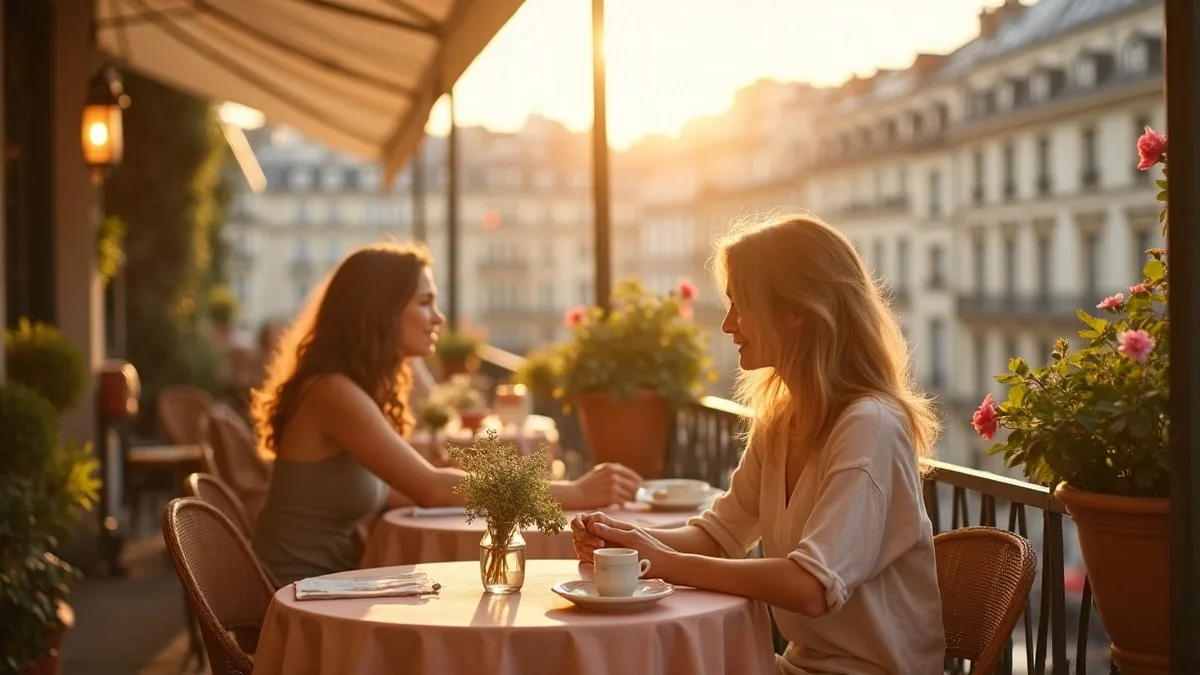
I used to come home from trips needing a vacation from my vacation. I would cram a city into three days, sprint between landmarks with aching feet, photograph everything, and remember almost none of it. Slow travel is what I found once I admitted that the way I traveled was just my anxious, productivity-obsessed daily life wearing a sundress. The places changed, but the rushing came with me.
This is the hub for everything I write about travel, and it gathers the gentle, unhurried approach I now plan every trip around. I will walk you through what slow travel really means, planning by feeling instead of checklists, why fewer stops give you more, the soft itinerary, slow travel close to home, doing it solo, staying safe, and traveling kindly. Each section links to a deeper guide if you want to go further.
My promise is simple. By the end you will have a gentler way to plan your next trip, plus permission to skip the famous thing if it does not call to you. Nothing here asks for a big budget or a packed schedule. The whole point is travel that feels like rest and wonder, not a race you are quietly losing.
One honest note first. I am a traveler, not a travel agent, and conditions change constantly. Always confirm current hours, entry rules, weather, and safety guidance from official sources before you go. Think of this as the warm philosophy and the planning rhythm, not a substitute for up-to-date logistics.
| Question | Short answer |
|---|---|
| Who is this for? | Anyone who comes home from trips exhausted and wants travel that restores rather than depletes them. |
| Do I need more time or money? | Not necessarily. Slow travel is about depth over distance, and staying in one place is often cheaper than constant moving. |
| Does it work for short trips? | Yes. A slow weekend in one walkable place can feel more restful than a week of racing across a country. |
| What about must-see sights? | You still see them, just fewer, with more presence, and only the ones that genuinely call to you. |
| Is it safe, especially solo? | Slow travel can feel safer because you settle in and learn a place, but always check official advisories and trust your instincts. |
Why slow travel beats the sprint
Key takeaway: Slow travel trades distance for depth. You see fewer things, but you actually remember them, and you come home rested instead of wrecked.
The trip that converted me was a packed week in Europe where I hit four cities and arrived home unable to recall which cathedral was in which country. I had collected photos instead of memories, and I was more tired than before I left. That was when I realized speed was stealing the very thing I traveled for, which was the feeling of actually being somewhere.
Slow travel flips the logic of the bucket list. Instead of asking how many places I can fit, it asks how deeply I can experience the few I choose. That one reversal changed everything, because depth is where memory lives. A single unhurried afternoon in a neighborhood cafe has stayed with me longer than a dozen rushed landmarks ever did.
The unhurried days I remember
When I think back on my favorite travel moments, almost none are the famous sights. They are small and slow, a long lunch that turned into the afternoon, a market with no agenda, a bench with a good view. My Paris soft travel itinerary grew entirely out of this, built around one or two neighborhoods a day with deliberate empty time, and it is the trip I most love returning to.
What rushing actually costs
Cramming a trip does not just tire your body, it flattens the experience into a blur you barely retain. You spend the visit managing logistics instead of being present, and you return needing recovery. Slowing down is not seeing less. It is finally seeing at all, and arriving home with something that feels like rest rather than another deadline survived.
What I learned the hard way
The lesson cost me a genuinely expensive trip to teach. I had saved for ages for that European loop, and I treated it like a test I had to ace, determined to extract maximum value by seeing maximum stuff. I came home with a full camera roll, sore feet, a head cold, and the strange grief of having been somewhere wonderful without ever quite arriving. I had spent a small fortune to be physically present and mentally absent the entire time.
What I understand now is that I was traveling exactly the way I lived, anxiously, productively, afraid of wasting a moment, and the result was that I wasted all of them at once. The shift was not really about travel at all. It was about giving myself permission to be enough without optimizing, to let a trip be lived rather than completed. Slowing down on the road was the first place I practiced slowing down in general, and it changed far more than my vacations.
Plan by feeling, not by checklist
My approach: I decide the feeling I want from a trip first, rest, wonder, romance, adventure, then choose the place and pace that deliver it.
The biggest shift in how I plan was starting with a feeling instead of a destination. Before I look at maps or sights, I ask what I actually want from this trip. Rest? Romance? Awe? Adventure? Quiet? The answer shapes everything that follows, and it keeps me from copying someone else's idea of a perfect trip onto my own very different needs.
The feeling comes first
When I plan around the mood I am craving, the logistics fall into place naturally, and I stop chasing experiences that look good but leave me empty. I built my America travel map around exactly this, grouping US trips by the feeling and pace you want rather than just pins on a map. A place that suits a slow, restful mood is very different from one that suits adventure, and naming the mood first saves you from booking the wrong one.
Let the feeling pick the place
Once I know the feeling, choosing where to go becomes easier and far more honest. A craving for stillness might mean a quiet coastal town rather than a buzzing capital. A craving for wonder might mean a national park rather than a city at all. The famous destination is not always the right one for the trip you actually need, and giving yourself permission to choose by feeling is how you stop traveling on autopilot.
Ignoring the should-see list
The hardest part of planning by feeling is letting go of obligation, the sense that you should see a certain monument or you have somehow failed at the trip. I have stood in long lines for famous sights purely out of duty, bored and footsore, while the little neighborhood I stumbled through afterward is the part I actually remember. Now I give myself explicit permission to skip the obligatory thing if it does not call to me, and to spend that time on whatever does. A trip planned around genuine desire rather than obligation is almost always the better one, even when it would look unimpressive on someone else's checklist.
Why fewer stops give you more
The counterintuitive truth: Cutting your itinerary in half usually doubles how much you enjoy and remember the trip.
Every instinct, especially on an expensive long-haul trip, screams to see as much as possible while you are there. I understand it, because I lived by it for years. But the more places I crammed in, the less each one meant, and the more of the trip I spent in transit, packing, and stress rather than actually experiencing anywhere.
Depth over distance
When I cut my itineraries roughly in half, everything improved. I had time to return to a cafe I loved, to take the wrong turn that led somewhere wonderful, to actually rest. My Argentina travel itinerary is built on this, a soulful, slower route that resists the urge to see the entire country and instead lets a few places breathe. Less ground, more life.
The cost of constant moving
Every move between places eats half a day in logistics and resets you to square one as a stranger. Staying longer in one base lets you cross that threshold from visitor to temporary local, where you know the good coffee, the quiet park, the rhythm of the streets. That familiarity is where the real magic of a place finally opens up, and it only comes with time you refused to spend rushing elsewhere.
The soft itinerary
A soft itinerary is my favorite invention, a plan with deliberate gaps built in. For years my itineraries were dense grids that scheduled me from dawn to midnight, and any delay collapsed the whole house of cards. Now I plan one or two anchors a day and leave the rest gloriously open, which is where the best parts of travel actually happen.
One or two anchors a day
I pick a small number of things I genuinely want to do each day, book only what truly needs booking, and let the space between them fill itself. This is the backbone of my Paris itinerary and the relaxed structure of my Miami wellness weekend. The empty hours are not wasted time. They are the room where wandering, resting, and serendipity live.
Protecting rest on the road
The most radical part of a soft itinerary is scheduling rest on purpose. A slow morning, an afternoon with nothing planned, an early night. We treat vacations as the time to push hardest, then wonder why we come home depleted. Building rest into the trip is how travel becomes restorative, and it is the part I now refuse to skip no matter how much there is to see.
How to know your itinerary is right
There is a simple test I apply to any plan before I commit to it: does looking at it make me feel excited or already tired? An itinerary so full that it exhausts me just to read is a warning, not a sign of a good trip ahead. The right plan has visible white space, a few anchors I am genuinely looking forward to, and enough room that a delayed train or a long lunch will not topple the whole day. If the schedule has no give in it, I cut something, every time, because I have never once regretted doing less on a trip, and I have often regretted doing more.
Slow travel close to home
Good news: Slow travel does not require a passport or a big budget. Some of the most restorative trips are a short drive away.
One of the kindest things I learned is that slow travel is not about how far you go. It is about how present you are, which means a weekend an hour from home can deliver the same restoration as a flight across the world, at a fraction of the cost and effort. This reframing opened up far more travel than I thought I could afford.
The weekend as a real trip
A nearby town, explored slowly with no agenda, counts as travel in every way that matters. My New England fall road trip is essentially slow travel by car, lingering in small towns rather than racing a route, and my Detroit weekend guide shows how much depth a single city can hold when you give it real attention. You do not need distance. You need intention.
Wonder in your own region
It is easy to overlook what is close, to assume the magic is always somewhere expensive and far. But approaching your own region as a curious traveler, with the same openness you would bring abroad, reveals a surprising amount. Slow travel is partly a mindset you can practice anytime, and practicing it nearby makes the rare big trips richer too, because you have trained yourself to actually pay attention. A regional weekend escape is the easiest way in, and my guide to weekend getaways in Arizona is built around exactly that unhurried, short-trip rhythm.
The microtrip habit
I have come to love what I think of as microtrips, a single slow day spent treating my own area like a place worth exploring. No packing, no flights, no expense to speak of, just the deliberate decision to be a tourist at home for an afternoon. These small outings scratch the travel itch far more than I expected, and they keep the slow-travel muscle in shape between bigger journeys. They also quietly dismantled my belief that travel has to be rare, far, and costly to count. Presence is the ingredient, and presence is free, available any Saturday I choose to give it.
Traveling slow and solo
A natural pair: Solo travel and slow travel amplify each other, because alone you can follow your own curiosity entirely, with no one else's pace to negotiate.
Some of my most meaningful slow travel has been alone, and the slow approach suits solo trips beautifully. Without anyone else's pace to negotiate, you can follow your own curiosity entirely, linger as long as you like, and change plans on a whim. Solo travel and slow travel are natural companions, both built on listening to yourself.
The freedom of your own pace
Alone, there is no compromise on when to eat, what to skip, or how long to sit somewhere doing nothing. That freedom is the whole point, and it pairs perfectly with an unhurried plan. I gathered my favorite approachable trips in my solo female weekend getaways USA guide, all chosen to be easy to navigate and comfortable to enjoy at your own gentle rhythm. And when a weekend away needs to be deeper than a change of scenery, I reach for the structured kind of rest in my solo wellness retreats USA guide, nine verified centers where arriving alone is the whole point.
Solo does not mean lonely
I used to think traveling alone would feel isolating, but slow solo travel is often the opposite. Moving slowly, you fall into easy conversations, become a regular at a cafe, and meet a place on its own terms. My favorite solo trips are not escapes from my life so much as quiet reminders that I can keep myself good company, which is a confidence that follows you home.
The confidence that comes home with you
The most lasting souvenir of solo travel is not anything I bought, it is the quiet proof that I can navigate the unfamiliar and rely on myself. Figuring out a strange transit system, handling a small mishap, deciding my own days entirely, all of it built a self-trust that did not stay behind at the airport. I came home a little braver, a little more certain that I could handle things, and that certainty seeped into the rest of my life in ways I never anticipated when I booked the trip.
Staying safe without staying anxious
The balance: A little preparation buys a lot of calm. Check official sources, share your plans, and then let yourself actually relax.
Slow travel is not the same as careless travel, and being relaxed on a trip depends on having done a small amount of preparation beforehand. The goal is to handle the logistics of safety in advance so that, once you arrive, you can let your guard down to the degree that the place allows and simply enjoy it.
Check the official sources
Before any trip I check current, official guidance rather than relying on old blog posts, mine included. The U.S. Department of State posts travel advisories by country, the CDC covers health in its travelers' health resources, and for parks the National Park Service lists current alerts. Five minutes of checking replaces a lot of vague worry.
Prepared, then present
Beyond the official checks, I share my rough plans with someone at home, keep copies of key documents, and trust my instincts on the ground. Once those basics are handled, I genuinely let go. Anxiety is not a safety strategy, it is just suffering in advance. Preparation is what earns you the right to be present, which is the entire point of going.
How to know it's working
You will know slow travel is working less by what you have seen and more by how you feel, both during the trip and after it. The signals are quieter than a full camera roll, but they are the ones that actually matter, and they tend to show up even on a short, simple trip done slowly.
The signals I look for
- You come home rested, or at least not more exhausted than when you left.
- You remember specific, sensory moments rather than a blur of rushed landmarks.
- You had unscheduled time that turned into something unexpectedly good.
- You feel like you experienced a place, not just photographed proof that you were there.
- You return with a sense of perspective or calm that lingers into ordinary life.
If a trip leaves you frazzled and forgettable, that is useful information for the next one, not a personal failure. Usually it means the itinerary was too full or the pace too fast. The fix is almost always to do less next time, stay longer in fewer places, and protect more empty time, because emptiness is where the good travel memories quietly grow.
Traveling kindly
A gentle principle: Slow travel naturally tends to be kinder travel, to places, to locals, and to the planet.
One thing I love about slowing down is that it tends to make travel gentler in every direction, almost as a side effect. When you stay longer and move less, you spend more in local cafes and shops, you create less transit pollution, and you engage with a community rather than just extracting photos from it. Kindness and slowness travel together.
Supporting the places you visit
Staying in a neighborhood, eating where locals eat, and buying from small makers means your money supports the people who actually live there. Moving slowly gives you the time to find those places rather than defaulting to whatever is fastest and most touristy. It is a small ethic, but over a trip it adds up to a very different footprint on a community.
Lighter on the planet
Fewer flights between stops, more time on foot or by train, and a single base rather than constant movement all quietly lower the environmental cost of a trip. I am not interested in travel guilt, which helps no one, but I am glad that the way of traveling that feels best to me also happens to be a little gentler on the world. That alignment is a quiet gift.
How to plan your own slow trip
Quick steps: Name the feeling you want, choose fewer places, book only the anchors, build in empty time, and stay longer in one base.
You do not need to overhaul how you travel all at once. Even loosening one trip toward slowness will show you the difference. Here is the order I would choose if I were planning a slow trip from scratch, designed to be gentle on both your schedule and your nerves.
The five-step starter plan
- Decide the feeling you want from the trip before you choose a single destination.
- Pick one or two places instead of a long list, and resist the urge to add more.
- Book only the few things that genuinely require it, and leave the rest open.
- Schedule empty time every day, and protect at least one true rest day.
- Stay long enough in one base to stop feeling like a stranger there.
Let it change with the trip
The best slow itineraries stay flexible once you arrive, bending to weather, mood, and the discoveries you make on the ground. A plan is a starting point, not a contract. I keep a light list of possibilities rather than a rigid schedule, so the trip has room to become what it wants to be, which is almost always better than what I imagined at home.
When this won't fit your life
I want to be honest, because slow travel is a preference, not a rule, and it does not suit every trip. If you have one short window to see a place you may never return to, or you are traveling for a specific event, a fuller itinerary can be exactly right, and there is no shame in it. The goal was never to follow my way. It was to travel in a way that genuinely serves you.
And if your season of life means travel is mostly logistics, with kids, work, or tight budgets shaping every choice, slow travel can simply mean bringing a little more presence and a little less pressure to whatever trip you can actually take. You do not need the perfect unhurried journey. You need the one that fits your real life, approached with as much openness as the day allows.
Helpful sources and the full travel library
Reliable external sources
- U.S. National Park Service: plan your visit
- U.S. Department of State: travel advisories
- CDC: travelers' health
- USA.gov: travel and immigration
- Transportation Security Administration: what can I bring
Every slow travel guide
- Paris Soft Travel Itinerary: My Romantic 4-Day Plan
- Argentina Travel Itinerary: My Soulful Slow Route
- America Travel Map: Gentle Way to Plan US Trips
- Solo Female Weekend Getaways USA: 9 Calm Picks
- Miami Wellness Weekend: My Soft Sun & Spa Plan
- New England Fall Road Trip: Cozy Cider Route
- National Parks First Timer Guide: 10 Soft Tips
- A Beautiful Noise in Detroit: My Warm Weekend Guide
- Solo Wellness Retreats USA: 9 Calm Escapes I Trust
FAQ
What is slow travel?
Slow travel means choosing fewer destinations, staying longer, planning by pace and feeling, and leaving room to wander, so a trip restores you rather than exhausting you.
Does slow travel require more time or money?
Not necessarily. It is about depth over distance. Staying in one base is often cheaper than constant moving, and even a slow weekend close to home counts.
Can I travel slowly on a short trip?
Yes. A slow weekend in one walkable place can feel far more restful and memorable than a week spent racing across an entire country.
Do I still get to see the famous sights?
You do, just fewer of them, and only the ones that genuinely call to you. The difference is you experience them with presence instead of rushing through a checklist.
How do I plan a slow itinerary?
Name the feeling you want first, choose one or two places, book only what truly needs booking, schedule one or two anchors a day, and leave the rest open.
Why is staying in one place better than moving around?
Every move costs half a day in logistics and resets you to being a stranger. Staying longer lets you become a temporary local, which is where a place really opens up.
Is slow travel good for solo travelers?
Beautifully so. Without another person's pace to manage, you can follow your own curiosity entirely, which pairs perfectly with an unhurried plan.
How do I stay safe while traveling slowly?
Do a little preparation: check official advisories, share your plans, keep document copies, and trust your instincts. Then let yourself relax and be present.
Where should I check official travel information?
The U.S. Department of State for advisories, the CDC for health, the National Park Service for parks, and the TSA for what you can bring. Always check current sources before you go.
Is slow travel better for the environment?
It tends to be. Fewer flights between stops, more time on foot or by train, and a single base all lower a trip's footprint, and it supports local communities more directly.
How do I know if slow travel is working for me?
You come home rested, you remember specific sensory moments rather than a blur, and you feel like you experienced a place instead of just photographing it.
When does a faster itinerary make more sense?
When you have one short window to see a place you may never revisit, or you are traveling for a specific event. Slow travel is a preference, not a rule.
The version that lasts
If you take one thing from this guide, let it be this. The best trip is not the one that fits the most in, it is the one you actually remember and return from rested. Mine are unhurried on purpose, because depth and presence are what survived once I stopped trying to win every destination.
Start by naming the feeling you want, choosing fewer places, and protecting empty time. Let the trip breathe. When the urge to cram it full returns, and it will, gently remind yourself that you are traveling to experience, not to collect. That is the whole practice, and it is more than enough.
Slow travel, in the end, is less about the map and more about how present you let yourself be while moving through the world. You are allowed to skip the famous thing. You are allowed to sit still in a beautiful place. You are allowed to call a slow, restful, deeply felt trip a success, because by the only measure that matters, it is.